What’s the Point of Pursuing Unity?
Mark A. Taylor explores Christian unity across denominations through the Stone-Campbell Dialogue, revealing how shared worship, meaningful relationships, and cooperation can help overcome historic divisions without requiring complete doctrinal agreement.

Christian Unity Across Denominations: Lessons from the Stone-Campbell Dialogue
Christian unity across denominations is explored through the Stone-Campbell Dialogue, which brings together leaders from three historically divided branches of the Restoration Movement. Mark A. Taylor reflects on a spiritual formation retreat near Dallas and considers whether meaningful fellowship requires complete doctrinal agreement. Through shared worship, honest conversations, and developing relationships, participants demonstrate how Christians can overcome prejudice and respond to Christ’s prayer for unity.
- The Stone-Campbell Dialogue builds understanding and trust among three historically divided branches of the Restoration Movement.
- Participants have discovered areas of agreement and opportunities for cooperation without requiring everyone to hold identical positions.
- Shared worship and genuine relationships demonstrate how Christian unity across denominations can extend beyond doctrinal agreement.
“So what’s the payoff you’re expecting as a result of these meetings?”
The question came from my roommate in the middle of a spiritual formation retreat sponsored by the Stone-Campbell Dialogue November 9, 10, outside Dallas.
Building Relationships Across the Restoration Movement
The Dialogue is a loosely organized group that has met at least annually since 1999 to build understanding and trust among members of a cappella churches of Christ, Christian churches/churches of Christ, and Disciples of Christ.
In the late-19th and mid-20th centuries, these three “streams” diverged from each other while remaining a part of what we call the Restoration Movement, or the Stone-Campbell Movement. Although members in each of these congregations share a common heritage, the groups were isolated from each other for many decades. The Dialogue is one effort to bridge those divides.
But many who hear about the Dialogue wonder whether it matters.
“Why would you give your time to this meeting?” one new member was asked by her supervisor. (It was not an insignificant amount of time. This year Dialogue members committed to four days of discussion, worship, and fellowship. The spiritual life retreat Friday and Saturday was attended by 18 members of the national Dialogue team as well as 13 “young leaders” from the Greater Dallas-Fort Worth area. After the retreat ended Saturday, the national team continued in meetings through Monday afternoon.)
“They’re not going to change,” a friend said to me. And to at least some degree, she’s right. The purpose of the Dialogue is not to browbeat “them” into agreeing with “our” positions.

But as Dialogue members have met together through the years, they’ve discovered a long list of positions on which they can agree. Their discussions and their new friendships have been a catalyst for cooperative ventures among members of all three streams around the country.
“It’s all about relationships,” said one team member in this year’s closing discussion. “Relationship is not an only; it’s an ultimate.” He added that participating in the Dialogue “dispels bitterness and prejudice.” And then there’s the most important reason of all: “Christ compels us to do this.”
Christian Unity Beyond Agreement
Too often we have responded to Christ’s prayer for unity (John 17:20, 21) by equating unity with agreement. “Hey, I’m all for unity! When they admit their errors, I’m ready and willing to be united with them.”
But as Gary Holloway so eloquently stated in an article first posted here last year, “God through his Spirit can work even through those who are wrong. I hope so, for I believe he works in me even when I am wrong.”
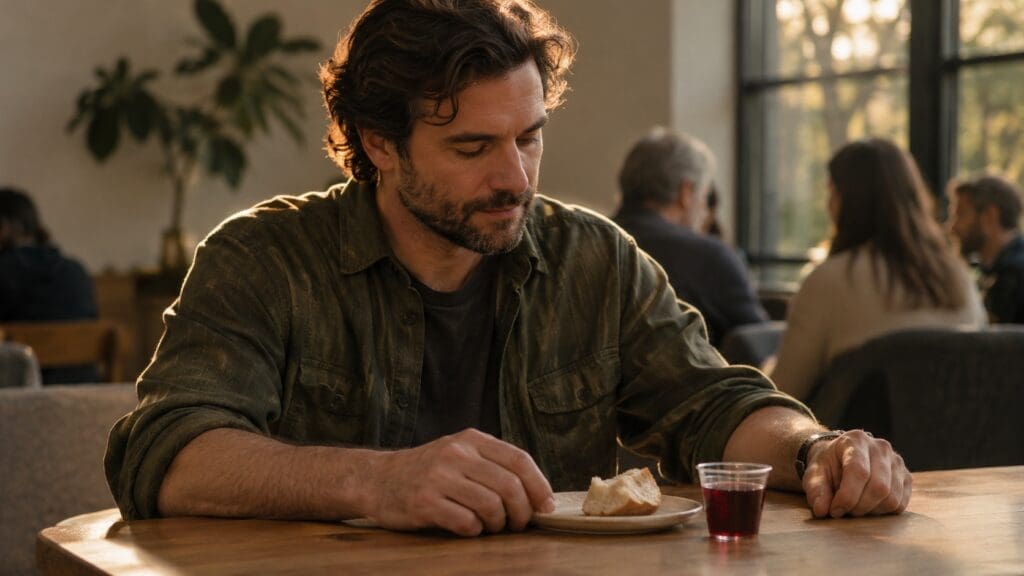
One member of the Dialogue team who has served among a cappella churches of Christ for a lifetime reflected on the unity Communion service we enjoyed Sunday evening. It was hosted at the North Davis Church of Christ, an a cappella congregation in Arlington. A choir, pianist, and cellist from Arlington’s First Christian Church, Disciples of Christ, led worship. Dusty Rubeck, president of Dallas Christian College, spoke. “To me, the fact that we can worship together transcends everything,” said this team member.
And that says it all. Perhaps experiencing and demonstrating unity is payoff enough, at least for now.

Author: Mark A. Taylor
Mark A. Taylor, who served as Christian Standard editor from 2003 to 2017, retired in June 2017 after almost 41 years with Standard Publishing (Christian Standard Media).
Sponsored

For 160 years Christian Standard has served the churches of the Restoration Movement. Your gift keeps articles like this one free for every church leader.
Sponsored

Keep reading
More in Restoration Movement History

What’s the Right Sort of Institution for an Anti-Institutional Bunch Like Us?

The NACC: A Story of Separation, Independence, and Faithfulness

A Century Ago: The Conflict and Controversy That Created the North American Christian Convention
From the archive
Christian Standard has covered this since 1866.




Imagine if a church was coming under attack, experiencing opposition or just struggling but it had a network of local churches from different denominations that it was connected to and in relationship with? How much stronger of a position would that church be in despite it’s current setbacks? There is much strength in unity…