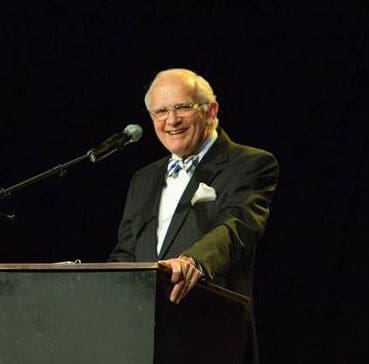
An Interview with Jessie Vaca about the Changing Landscape of Global Church Planting

By David Dummitt
When I consider all of the great things happening in the church around the world, one that really excites me is an initiative led by NewThing called “Catalyst Community.” Simply put, Catalyst Communities bring local leaders together to pray, dream, and strategize how to work together to grow God’s kingdom right where they are.
I spoke with Jessie Vaca, NewThing’s global reproducing catalyst, to learn more about how Catalyst Communities are changing the landscape of church planting around the world.
What exactly are Catalyst Communities?
At NewThing, we aim to equip local networks of churches all over the world to plant more churches. Catalyst Communities are gatherings of local, indigenous leaders that help them create strategies for reaching people far from God. I love that Catalyst Community is not just a conference or a teaching session; leaders are coming together to do real work developing aggressive strategic action plans for collaborative church planting.
A full Catalyst Community gathers three times over the course of two years. The gatherings are sequentially focused around three objectives:
- Leadership development: During session one we equip local church leaders with practical ways to develop more leaders.
- Missional culture creation: In session two we work with indigenous leaders to help them figure out how to activate people for the mission.
- Multiplication of movements and networks: Session three focuses on helping leaders understand how networks work. We also help them implement reproducing church practices like apprenticeship and coaching. This is my favorite session because it’s where leaders really gain traction to move forward. With a fresh vision that they can accomplish more through collaboration with other church leaders, these new networks quickly take off and begin multiplying churches.
What’s the overall goal of Catalyst Communities?
Catalyst Community is designed to equip networks of churches to reproduce more churches; it’s a catalyst for church planting. Our goal is to gather like-minded leaders from multiple churches that are willing to work together to advance God’s kingdom through collaborative church planting.
Our ultimate goal is to hold a Catalyst Community in every country around the world. We’ve been in about 20 so far, but we have opportunities popping up everywhere! In the last year alone, we have held Catalyst Communities in Thailand, Laos, the Philippines, Uganda, Belarus, Albania, El Salvador, Botswana, and elsewhere. Later this year we’ll be heading to Columbia, Peru, and Brazil.
How do you follow up with global networks, and what success rates are you seeing with the growth of the global church through Catalyst Communities?
Once we have launched a new church network by completing Catalyst Community, we have ongoing follow-up and coaching with the local leader. We aim to connect with the leader every month.
We are seeing off-the-charts success rates. Our network in the Philippines grew by 54 churches in one year. In Macedonia—where prior to Catalyst Community the network had planted one church in 10 years—six churches were planted in a single year. And our Laos network grew by 285 churches in two years!
You work with indigenous leaders. Why?
History tells us that when the Western church approaches global mission and church planting from an imperialist mind-set—a “we’re going to bring our white, Western Christianity to you” approach—we do a disservice to the global church. It’s ineffective, and the church then fails to grow and thrive.
Contextualization is essential, and who better understands a culture than someone who lives there already? The best way to move the global mission forward is to equip our indigenous brothers and sisters who live there, love Jesus, and want to make an impact.
How are you being introduced to these indigenous leaders?
Rather than approaching leaders who don’t know us with the attitude of, “Let us teach you our Western idea of what church should be,” we try to get to really know someone we refer to as a “person of peace”—someone with relationships and influence in their region. These individuals are natural bridge builders gifted at bringing people together from across multiple denominations. We build a relationship with that person and let it grow over time. We get to know their dream, heart, and vision for what God is calling them to do. Then we come alongside them to help them move toward that.
We are introduced to these “persons of peace” in a few different ways. Most times it’s through word of mouth or a warm introduction. Other times global leaders have read Exponential by Dave and Jon Ferguson, or Hero Maker by Dave Ferguson, or they’ve heard Dave Ferguson speak somewhere, and then they contact us.
How can churches in the United States support the church around the world?
American money still makes a big difference, specifically American money given with no strings attached . . . no dictates for how it should be used. One of the biggest problems I’ve seen is how “strings” inhibit indigenous leaders from investing money in the ways best for the local church.
One great way U.S. churches can support church planting around the world is by learning more about being part of Catalyst Community. We need apprentices at all levels of leadership.
What can churches in the U.S. learn from the global church?
Christianity is growing rapidly, and dare I say more authentically, in the rest of the world. Part of what we can learn is that just because we’re big doesn’t mean we’ve got the most influence. We can learn to both lead and follow.
I’ve had the privilege to experience the church around the world, and on a personal note, I have learned I don’t really trust God, at least not like our global brothers and sisters trust him. When I develop strategic plans for my own church, I tend to create plans that I think have a high likelihood of success whether God shows up or not.
But when I meet these pastors from all over the world, who may or may not have even a basic education, I see them trust God with crazy-big, audacious plans. They have a reckless dependence on God. There’s a trust factor, a faith factor that inspires me every time I see it. They really believe God is going to show up. And he does!
_ _ _
I am blown away by the growth of God’s church throughout the world. He’s uniting his church to do more together than would ever be possible alone and allowing leaders like Jessie to create environments that equip and empower indigenous leaders to chase their God-sized dreams. If you are a leader who is interested in learning more about how your church can partner with Catalyst Community to invest in global church planting, reach out to Jessie at je********@******ng.org.
_ _ _
David Dummitt is the lead pastor and planter of 2|42 Community Church in Michigan, one of the largest and fastest-growing churches in the country. He is also on the lead team of NewThing, a catalyst for reproducing churches worldwide.

Author: Christian Standard
Contact us at **@********************ia.com