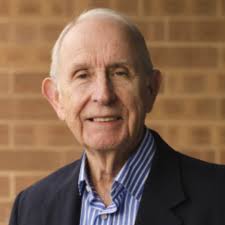
By David Faust
Self-centeredness weakens leadership, but unselfishness amplifies it. Effective leaders genuinely care about those they lead. Their goal is to serve, not to have others serve them. Jesus set the example. “For even the Son of Man did not come to be served, but to serve, and to give his life as a ransom for many” (Mark 10:45).
Immediate Needs
Nehemiah went to Jerusalem to rebuild the city wall. That was his “what,” but he had a greater “why”—to glorify God by protecting the people. When an outcry arose because the poor were being neglected and abused, Nehemiah could have said, “Look, I didn’t come here to solve your financial problems. I came here to build the wall! You figure out how to distribute grain and feed the hungry. That’s not my problem!” But instead, Nehemiah stepped into the situation with emotion, careful thought, and decisive action. He said, “When I heard their outcry and these charges, I was very angry. I pondered them in my mind. . . . I called together a large meeting to deal with them” (Nehemiah 5:6-7).
Leaders can’t always choose their battles. Sometimes unexpected challenges arise, though they’re not the primary work leaders are called to do. Nehemiah remained focused on building the wall, but he made sure the poor were treated fairly and their immediate needs were met.
Previous officials in Jerusalem laid heavy burdens on the people, but Nehemiah put others first and declared, “out of reverence for God I did not act like that” (Nehemiah 5:15). For 12 years, Nehemiah and his brothers refused to demand the food and other supplies allotted to him as governor, “because the demands were heavy on these people” (5:14, 18). Effective leaders make personal sacrifices for the greater good.
Future Needs
It’s important to keep the big picture in mind. Beyond our own lifetimes, God cares about future generations as well. The end-goal of Nehemiah’s work was not merely to build a wall; it was to equip and preserve a faithful remnant of God’s covenant people through whom the Messiah would come.
Decades ago, Russ Blowers, longtime senior minister of East 91st Street Christian Church in Indianapolis, wrote the following piece called “Who Will Be Here When You Are Gone?”
When you come to church, you sit in your favorite seat and look around at the faces of friends you’ve grown to love over the years. They have become your church family. Do you ever look ahead 50 or 100 years, and see who will be here in your church?
The lost will be here. And so will those hurt by life. And the ones for whom our church is their last hope! And the children will be here—beautiful, amazing children whose minds and hearts are open to the Word of God.
Hopefully, some will find peace here, and many will find refuge. There’s something else that all will find—and that is love. This is God’s house, and it has been built on love. It will be here for them because of our legacy.
Where else can we do so much for so many for tomorrow? The Lord’s work through our church—today as well as tomorrow—it depends on each of us. Who will be here when we’re gone? God will be here—using our legacy to accomplish great things in his name.
Personal Challenge: Do some honest self-examination and ask yourself these questions: Am I a selfish leader or a sacrificial one? Do I demand that others serve me, or do I look for opportunities to serve? What sacrifices am I willing to make for the benefit of others—now and in the future?

Author: Christian Standard
Contact us at **@********************ia.com