
By Kent E. Fillinger
It’s been said that a person can live 40 days without food, four days without water, four minutes without air, but only four seconds without hope. Hope is a power that energizes us with life. The available research on hope is limited, so Christian Standard conducted an online survey in May 2023 to assess how hopeful people are about the future of the church. The survey size was limited—just 141 responses—but the results were informative.
It’s worth noting that 87 percent of the survey participants reported attending church “more than once a week” or “once a week,” which reflects a higher level of church participation than the average U.S. adult. An additional 6 percent said they attended church “once or twice a month.”
How hopeful/optimistic are you for the future of the Church in America?
More than three-fourths of the respondents (78 percent) said they were “very hopeful” or “somewhat hopeful” for the future of the church in America. Women were more hopeful than men regarding the future of the American church (83 percent vs. 74 percent, respectively).
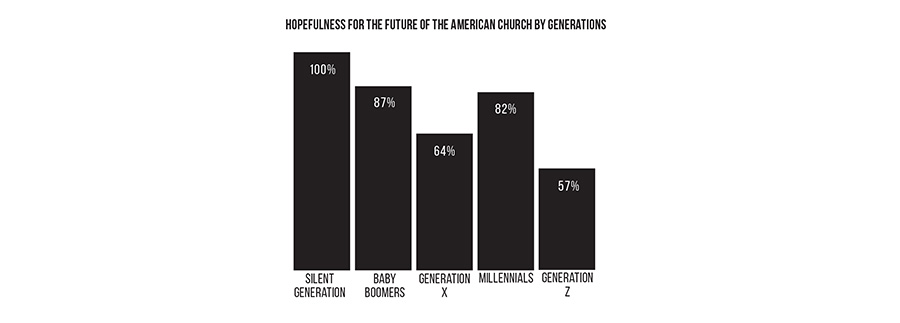
Respondents from the Silent Generation (born 1928 to 1945) were the most hopeful, while those from Generation Z (born 1997–2012) were the least hopeful (100 percent vs. 57 percent, respectively). More than four-fifths of Baby Boomers (born 1946–1964) and Millennials (born 1981–1996) were “very hopeful” or “somewhat hopeful” for the future of the American church (87 percent and 82 percent, respectively), but only 64 percent of Generation X (born 1965–1980) were equally hopeful.
Frequency of church attendance impacted hopefulness for the future of the church. Among those who reported attending church “more than once a week,” 41 percent said they were “very hopeful” for the church’s future. Among those who reported attending church “once a week” only 30 percent were “very hopeful” for the church’s future, and that percentage dropped to only 11 percent for those who attend church “once or twice a month.”
People who said they were “very satisfied” or “mostly satisfied” with the way things were going in their lives were the most hopeful about the future of the American church. Among those who were “very satisfied” with their lives, 52 percent said they were “very hopeful” about the church’s future. Of those who were “mostly satisfied” with their lives, only 29 percent said they were “very hopeful” for the church. On the flip side, more than 60 percent of those who said they were “mostly dissatisfied” or “very dissatisfied” with their lives said they were “not that hopeful” or “not at all hopeful” for the future of the American church.
How hopeful/optimistic are you that Christian Churches/Churches of Christ will be healthier/stronger in 2050 than today?
Overall, people were slightly less hopeful about the future health of Christian Churches/Churches of Christ than they were about the future of the American church (70 percent vs. 78 percent, respectively). More than one-fourth of respondents (28 percent) said they were “not too hopeful” the Christian Churches/Churches of Christ would be stronger in 2050 than today.
Women were once again more hopeful than the men in our survey (72 percent vs. 68 percent, respectively). The different generational groups responded similarly to the prior question, with the Silent Generation being the most hopeful and Generation Z the least hopeful. Again, life satisfaction levels seemed to color people’s perspective and hopefulness for the Christian Churches/Churches of Christ.
How hopeful/optimistic are you that the church you currently attend will be healthier/stronger in 2050 than today?
People were the most hopeful about the church they attend, with 79 percent of survey respondents saying they were “very hopeful” or “somewhat hopeful” their church would be stronger in 2050 than today. Women, again, were more hopeful than men about their church’s future (84 percent vs. 75 percent, respectively).
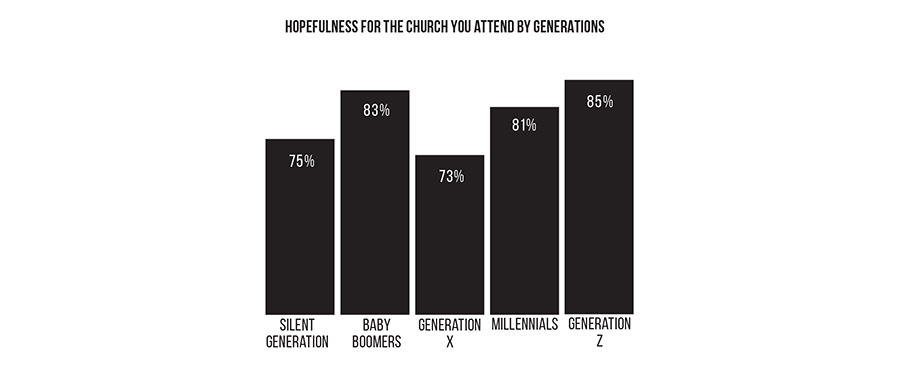
Some might be surprised that while Gen Z isn’t hopeful for “the” church, they are hopeful for “their” church; in fact, their generation was the most hopeful of any in this regard. Among the Gen Z respondents (ages 11 to 26), 85 percent said they were “very hopeful” or “somewhat hopeful.” Baby Boomers and Millennials also had a high level of hope for their local church (83 percent and 81 percent, respectively). About three-fourths of the Silent Generation and Generation X (75 percent and 73 percent, respectively) were equally hopeful.
How hopeful/optimistic are you that your children and/or grandchildren will follow in your footsteps in terms of their faith/devotion to God and his church?
The parents and grandparents in our study were overwhelmingly hopeful (87 percent) that their children and grandchildren would follow in their faith footsteps. Women continued to be more hopeful than men in this regard (92 percent vs. 83 percent, respectively).
People in Generation X were the most hopeful in their responses, with 93 percent saying they were “very hopeful” or “somewhat hopeful” their children and grandchildren would remain faithful to God. (This despite Gen Xers consistently being less hopeful than most generational groups regarding the future of the American church, the Christian Churches/Churches of Christ, and their own local church.) The Silent Generation was the least hopeful about their children and grandchildren’s future devotion to God (76 percent).
Among those who attend church “once or twice a month,” 86 percent said they were hopeful their children and grandchildren would follow in their faith footsteps. If that’s true, it means future generations may equate occasional church attendance with full devotion to God and his church.
Overall, are you satisfied or dissatisfied with the way things are going in your life today?
Among all 141 respondents, 86 percent said they were either “very satisfied” or “mostly satisfied” with their lives today. Women and men were about equally satisfied (89 percent vs. 88 percent, respectively).
All participants from the Silent Generation and Generation Z were satisfied with their lives. Among the rest: Generation X (94 percent satisfied), Millennials (85 percent), and Baby Boomers (84 percent).
People who reported attending church more frequently were more likely to be satisfied with their lives. Among people who reported attending church “more than once a week,” 93 percent said they were satisfied with their lives, while 90 percent of those who attended church “once a week” were satisfied. And among those who attended church “once or twice a month,” only 55 reported being satisfied with their lives. This corresponds to multiple other research studies that show church attendance equates to better overall health.
John C. Maxwell said, “Where there is no hope in the future, there is no power in the present.” Our ability as Christians to remain hopeful and to be dealers in hope will help to shape the future of the church and impact how others behave and believe.

Author: Kent E. Fillinger
Kent E. Fillinger serves as president of 3:STRANDS Consulting, Indianapolis, Indiana, and regional vice president (Ohio, Pennsylvania, Michigan) with Christian Financial Resources.