Restoration Movement Ideals Still Matter
David Faust reflects on the enduring ideals of the Restoration Movement and argues that they remain powerful, relevant concepts for the church today. He highlights prayer, every-member ministry, and racial reconciliation as areas where churches must continue pursuing New Testament faith and practice.
- Restoration is an ongoing labor of love, not a finished achievement.
- The New Testament church models prayer, active service, and cross-cultural gospel witness.
- Churches should keep pursuing neglected ideals with humility, courage, and purpose.
by David Faust
Great enterprises are not built on deals; they are built on ideals. And it’s hard to think of more noble ideals than these:
- “No book but the Bible, no creed but Christ.”
- “In essentials, unity; in opinions, liberty; and in all things, love.”
- “Where the Scriptures speak, we speak; where the Scriptures are silent, we are silent.”
- “We are not the only Christians, but we are Christians only.”
I heard these slogans when I was a child. I’ve analyzed and admired their truth as an adult, and I’ve found them useful over and over again in my ministry.
These ideals aren’t dusty relics to keep on the museum shelf. They are powerful, relevant concepts for today. They still light up the eyes of earnest seekers who discover the exciting freedom of our Christ-centered message and our undenominational plea.
Last year I preached a series of sermons in chapel at Cincinnati Christian University about the ideals of our movement. I called the series “Roots” and gave my messages titles that mirror our great slogans, including “Rooted in Christ,” “Rooted in Scripture,” “Rooted in Love,” “Rooted in Freedom,” and “Rooted in Purpose.” All of our students at CCU take a required course called “History of the Restoration Movement,” but I also want them to personally embrace the ideals of our heritage and communicate them with passion and relevance in our current culture.
Restoring the New Testament church is an ongoing labor of love, not a finished task—a movement, not an achievement. We haven’t restored the church simply because we inscribe the right name on our buildings or follow the right formula in our worship services. Restoration is more than a history lesson; it’s our present and future calling.
If we are serious about restoring the faith and practice of the early church, we must constantly assess our behavior to see if we are truly pursuing the ideals we espouse. May I highlight three areas where improvement is needed?
Prayer
In the book of Acts, God’s people were devoted to prayer (2:42). They prayed on a roof, by a river, in a prison cell, at the beach, in times of singing and times of weeping, when engaged in fellowship meals and solemn fasts. They prayed when they experienced the favor of all the people and when public opinion turned against them.
In today’s American church, are Christians gathering and praying for boldness to preach the gospel as they did in biblical times (Acts 4:23-31)? Do we devote ourselves to prayer and fasting before sending out missionaries or selecting elders (13:1-3; 14:23)? How many elders meetings today include such heartfelt prayer that grown men end up in tears (20:36, 37)? Do our busy leaders keep “prayer and the ministry of the word” at the top of their priority list (6:4)?
If we want to be like the church of the New Testament, then ideally we need to:
- Devote more time to corporate prayer in worship gatherings.
- Give prayer more priority in staff and elders meetings.
- Make sure our small groups, Bible classes, and one-on-one discipling efforts include lots of time not merely to talk about God, but to talk with God.
The Ministry of All Believers
At baptism all Christians enter the ministry. No matter how we make our living, we are part of the “royal priesthood,” responsible to use our gifts “to serve others, faithfully administering God’s grace in its various forms” (1 Peter 2:9; 4:10). Since this is true, why do so many Christ followers assume it’s acceptable to be spectators but not participants in the work?
An “inactive member” is an oxymoron. A car has four tires; if one of them goes flat, you can no longer drive the car. Inactive church members become flat, passive, and apathetic. Or worse, they’re reduced to mere consumers and critics.
Some contemporary models of church leadership rely so heavily on paid staff they actually work against the concept of every-member ministry. We don’t believe in the clergy-laity system, so why do we lay the laity aside and keep our “clerics” on the clock night and day? Instead of couch potatoes, we are cultivating rows of pew potatoes. The majority of our team rides the bench while a few key players stand exhausted on the field. The bystanders are many but the workers are few.
Not so at The Carpenter’s Christian Church (TCCC) in Harrodsburg, Kentucky. This church averages about 400 people in worship services each Sunday, yet its staff consists entirely of part-time bivocational leaders. The preacher, Greg Warren, has discovered many opportunities for ministry in the community because he also serves as a history teacher in a local middle school. Part-time associate ministers include Perry Dressler, who has a full-time job with a financial planning firm, and Richard McKinley, who retired after years of service with Standard Publishing. Other part-time staffers at TCCC handle visitation, youth and children’s ministry, and secretarial functions. Unpaid volunteers lead handyman services, aerobics classes, and other ministries including music, audio and video, senior adults, prayer, parking, and health services.
Church leaders there acknowledge their way of getting things done isn’t for everyone, but they see many advantages—especially when staff salaries account for less than 20 percent of TCCC’s annual budget, and more than 80 percent of the members are directly using their gifts for ministry.
Even the church’s name reflects its commitment to every-member ministry. “Jesus was a carpenter,” says Chigger Flynn, one of the church’s elders, “and our name ‘The Carpenter’s Christian Church’ reminds everyone that since the Lord himself was a worker, all of us should be workers too.”
If we really believe in every-member ministry, then ideally we need to:
- Teach and model the biblical concept that unselfish service is the norm for every believer.
- Set a clear and positive expectation that every member of the church—from the newly baptized believer to the aging saint—will focus on doing the Lord’s work, not critiquing the other workers.
- Enthusiastically recruit men and women of all ages to pursue the noble work of ministry as a full-time vocation, while also honoring and encouraging those who serve the Lord in the public marketplace.
Racial Reconciliation
The New Testament church crossed ethnic barriers with the gospel. Do we?
In a nation still struggling with racial tension, the church needs to be part of the solution, not part of the problem. Political correctness isn’t the goal; biblical correctness is. And the Bible is clear: “God does not show favoritism but accepts men from every nation who fear him and do what is right” (Acts 10:34, 35).
Do our congregations reflect this ideal? Is moving beyond racial and cultural barriers an intentional priority in our congregations?
Energetic cross-cultural evangelism is a missional opportunity as well as a theological necessity. Some demographers predict minorities will outnumber whites in the United States by 2043. In the urban area where I live, Cincinnati’s Hispanic (Latino) population has increased by 77 percent since 1990, and the city’s total population is now 46 percent African-American. Restoration remains incomplete until we become a church where “there is no Greek or Jew . . . barbarian, Scythian, slave or free, but Christ is all, and is in all” (Colossians 3:11).
If we’re serious about imitating the New Testament church, then ideally we need to:
- Reflect more ethnic diversity in our church’s leadership and public worship gatherings.
- Implement a strategy of planting many new churches among ethnic minority populations.
- Learn from and partner with churches that are already modeling racial reconciliation.
- Recruit and equip more minority students to attend our Bible colleges so they can prepare to lead the church in the years to come.
These steps aren’t easy, but they are achievable. The great ideals of our movement will always be worth the pursuit—including the ones we tend to neglect.
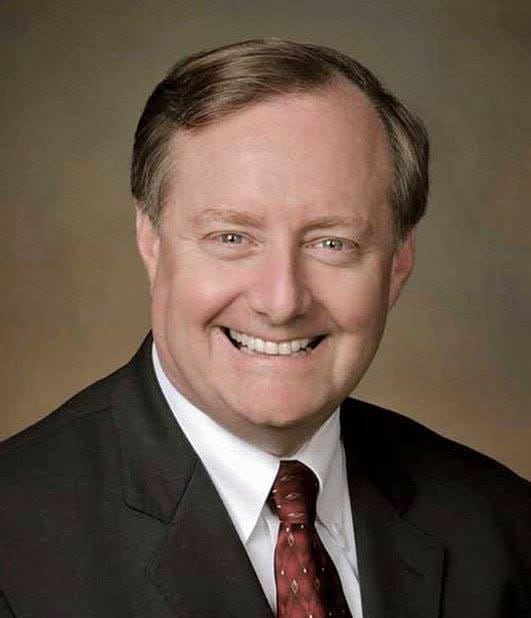
David Faust is president of Cincinnati (Ohio) Christian University and executive editor of The Lookout.

Author: David Faust
David Faust serves as contributing editor of Christian Standard and senior associate minister with East 91st Street Christian Church in Indianapolis, Indiana. He is the author of Not Too Old: Turning Your Later Years into Greater Years.