Interview with Darryl Bolen
Darryl Bolen reflects on 40 years at Greenville First Christian Church, sharing lessons about pastoral leadership, evangelism, congregational relationships, family challenges, and the enduring rewards of serving one community.

Darryl Bolen Interview: 40 Years of Pastoral Ministry in Greenville
This Darryl Bolen interview with Paul Boatman explores four decades of ministry at First Christian Church in Greenville, Illinois. Bolen reflects on how relationships, evangelism, and community involvement have shaped his pastoral leadership. He also shares the personal challenges, family experiences, and encouragements that have sustained him through 40 years of service.
- Bolen began serving the Greenville congregation in 1973 and became its senior minister in 1977.
- He emphasizes personal relationships, pastoral care, and evangelism as central to congregational growth.
- His reflections highlight the importance of family support, community involvement, and perseverance through ministry challenges.
 By Paul Boatman
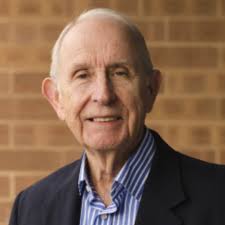
Darryl Bolen recently celebrated 40 years as a minister at Greenville (Illinois) First Christian Church.
Four Decades of Ministry at First Christian Church
Forty years? How did that happen?
I never would have guessed. I was a Bible college student at Lincoln Christian College when my baseball coach, Dr. Marion Henderson, told me about a youth ministry opportunity at this church two hours away. Tom Van Meter, the preacher, and the elders talked with me. On October 1, 1973, I began a relationship that is still going. Big doors swing on small hinges.
You transitioned from the youth ministry fairly soon.
In 1977 the senior minister left and the elders asked me to take the position. I said yes, even though I felt under qualified. It’s been a wonderful journey—I’ve fallen in love with these people, and they have loved me and my family as we have developed a great ministry with the church and community.
Your “journey” has had many transitions.
The church was strong, but much smaller, about 300. We’ve run around 1,000 for the past 10 years. We’ve had five building programs, added a day care and preschool, and said tearful “good-byes” to many wonderful people. Most of today’s church was not here when we started. Our town has had relatively few transitions. The population has grown a little—we now have two stoplights—but most of the growth to 7,000 came when a new federal prison added 1,600 incarcerated residents. The people living inside the walls are not likely to come to our church.
Church Growth Through Relationships and Evangelism
What is your approach to church growth?
Our church is built on relationships. I’m not a great preacher, but more of a pep rally cheerleader. We work together to do what we believe God wants us to do.
The specifics have changed over the years. Early on I was primarily an evangelist. Now I’m more of a vision caster and pastor. I do about 40 or 50 funerals a year and a lot of weddings. I’m a pastor for much of the community. Showing the love of Christ to the whole community opens the doors of the church. Every person who comes to church should get at least five warm greetings—face-to-face, a strong handshake, even a hug—whatever is appropriate to let people know they are loved and cared for.
Is this a philosophy you developed or is it just who you are?
Paul, it’s my heart. My personality style is “wooer.” I grew up in a loving family in a loving church in Havre de Grace, Maryland. That small church has encouraged many young people into ministry. In my early years in Greenville, I had some amazing encouragement. Two elders in particular just would not let me fail. Chick Patton listened with me to tapes of my sermons to help me improve. Gerald Turley was my partner in pastoring. And your in-laws, Bob and Stella Kinney, nurtured me at their dinner table . . . and fattened me on Stella’s crescent rolls. I have been loved here. I have never gone to a board meeting worried about my job.
Some people put “pastor” and “evangelist” in opposite corners.
I don’t. I see those as my two key roles. As a pastor, I have no greater joy than to see someone come to Jesus. I help cast the vision for this model in our church. It concerns me that many churches just have no evangelistic fervor. That troubles me for the future of churches. I like Amy Carmichael’s statement, “We shall have all eternity to celebrate the victories, but we have only the few hours before sunset in which to win them.”
Does your “community pastor” role stretch you too far?
I struggle to draw the line. For example, I try to limit my official community service to three boards: Bond County Board of Health, Bond County Senior Citizens Board, and the Community Relations Board for the prison. But I fear disinvolvement more than I fear overinvolvement. My wife also serves some community boards.
Family, Leadership Challenges, and Lessons from 40 Years
People often speak of you and your wife, Sally, as a single entity.
She’s phenomenal. I wish I had her spiritual depth. She does so much behind the scenes in the church. I have been sustained by her patience. Her cancer has reminded me of how precious she is to me. Is it OK to talk about that? Last May she was diagnosed with breast cancer. She had a lumpectomy, radiation, and chemotherapy. She has completed treatment and is now called “cancer free.” Her motto is Psalm 29:11: “The Lord gives strength to his people.”
We’ve chosen to deal with the cancer openly. We never wanted to be facing this battle, but we have been so beautifully lifted up by the congregation. She is an inspiration to the church family as a fellow struggler who serves with joy. I cannot imagine doing ministry without her.
Have you faced any depressing struggles?
Management of staff is not my strength. When people are doing their jobs, I am their cheerleader. But when they are not, that’s tough. My heart just aches, but I don’t play “bad cop” very well. Having an executive pastor to oversee staff is a great relief.
I also struggle with people’s lack of loyalty. Some of what is seen as “church growth” in our area is really just the shuffling of the saints among the churches. When people are troubled by something, they should try to work it out, but too often they just carry their resentment to another church.
How do you and First Christian relate to other churches?
I know a big church can intimidate small churches, but we try to be a resource. We serve as the mission and business hub for Stanley and Dolly Lall [of Mid India Christian Mission]. I know we are a pillar for Bond Christian Service Camp in both finances and personnel. We really try to encourage and celebrate with the other churches.
Darryl, everyone says you work very hard. Any “drivenness” there?
As others have said, “I’d rather burn out than rust out.” I know I’ve had to learn to not overstress myself. But I’m not ashamed of working hard. Lola Brown was a dear old saint whose last words to me were this: “You’re not a handsome man, not even a good-looking man, but it served you well. If you’d been better looking you wouldn’t have worked so hard.”
What highlights come to mind as you reflect on 40 years?
Seeing people’s lives transformed excites me above all. And the way things have fallen into place in the building programs is phenomenal. One day we needed $70,000 to continue a building program. The offering that day came to $70,100! I think we need to move some dirt every five years just to keep people talking. Also, seeing the congregation gather for each service is wonderful—they come early and stay late so they can talk to each other. Looking back on 40 years of joy, sadness, hurt, and celebration, I would do it all again, and I would do it right here in Greenville.
Paul E. Boatman serves as chaplain at Safe Haven Hospice in Lincoln, Illinois.

Author: Paul Boatman
Sponsored

For 160 years Christian Standard has served the churches of the Restoration Movement. Your gift keeps articles like this one free for every church leader.
Sponsored

Keep reading
More in Church Leadership


From the archive
Christian Standard has covered this since 1866.






It’s good to read in the Christian Standard of Christians who love Jesus and serve Him by loving others. The testimony of this brother who has been at Greenville for these many years is good to hear.