By Rick Chromey
“I believe what I believe is what makes me what I am,
I did not make it, no it is making me.”
Rich Mullins, “Creed”
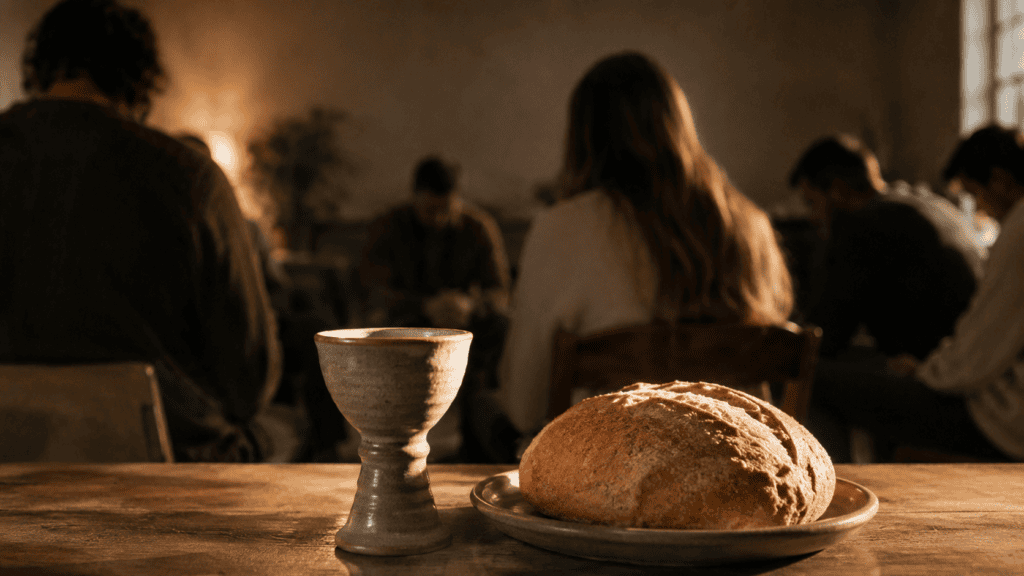
I grew up in a small independent Christian church in remote central Montana. I cut my teeth in a wooden pew, sandwiched between my grandmother and brother, listening to sermons, learning hymns, and loving the saints. I washed Communion cups as a preschooler, passed offering plates as a child, and led song services and served Communion to shut-ins as a teen.
I loved my church family. They made me who I am.
My recognition of a Restoration Movement actually emerged by consequence. As a bored boy in church, particularly when the sermon got tedious, I religiously retreated to Christian Standard to pass the time. I devoured stories about other Christian churches and read about inspiring leaders, teachers, and missionaries. I learned our glorious history, including what unified and divided us. I studied the news from our churches: obituaries, ordinations, baptisms, changes of ministry, new church plants. I dreamed of becoming a preacher and wondered if my name might one day be published.
In college and seminary, my loyalty to Restoration history, churches, and doctrine only deepened. Later I would rub shoulders with many of our churches’ greatest preachers, professors, leaders, missionaries, writers, and musicians: Bob Russell, Wayne Smith, Don DeWelt, Ben Merold, Jack Cottrell, Eleanor Daniel, Sam Stone, Jeff Walling, Ajai Lall. I watched as independent Christian churches led the 1980s megachurch movement and our leaders guided national church conversations. I participated in various church camps, state conventions, Christ in Youth conferences, North American Christian Conventions, and International Conferences on Missions. I eventually taught at several Restoration colleges and universities.
This is my tribe. These are my people.
So why do I love this Restoration Movement? What makes it appealing, special, and notable? Why do I faithfully attend and promote Christian churches?
A HISTORY WORTH CELEBRATING
No other purely American-born church, save the Mormons, has grown faster, larger, and more influential than the Christian churches of the Restoration Movement.
Essentially, we are a unity movement of independent Christians. We’re not locked inside labels, captured by creeds, or dictated by denominational edicts. We’re a refuge for all believers from all corners of Christianity. We were founded at the turn of the 19thcentury by Methodists, Presbyterians, and Baptists on the frontiers of Pennsylvania, Kentucky, and Ohio. Within a half century, Christian churches and churches of Christ populated the American landscape. We were tagged as Campbellites but preferred to be called Christians or Disciples.
Like any family, we’ve had our historical squabbles, fights, and divisions. We’ve endured our weaknesses, failures, and scandals, but our story remains gloriously rooted to unity, grace, love, and peace.
We aren’t the only Christians. We’re just Christians. We’re disciples of Christ. We’re the church of Christ.
A MESSAGE WORTH REPEATING
At the heart of our Restoration message is Alexander Campbell’s appeal to “restore the ancient order of things.” In the process, various slogans have shaped us:
- “We are not the only Christians; we are Christians only.”
- “Where the Scriptures speak, we speak; where the Scriptures are silent, we are silent.”
- “In essentials, unity; in opinions, liberty; in all things, love.”
- “The church of Jesus Christ on earth is essentially, intentionally, and constitutionally one.”
- “No creed but Christ. No book but the Bible. No law but love. No name but the divine.”
It’s a gospel message that’s personally appealing and one that many others welcome too. In my own pastoral work, I often operate outside of Restoration circles. I regularly write, consult, and speak for denominational events, conferences, and schools. Consequently, I’ve had countless opportunities to share our values, church practices, doctrine, and perspectives with Roman Catholics, Episcopalians, Methodists, Presbyterians, Baptists, Pentecostals, Nazarenes, Quakers, and many other denominational flavors.
Last year I spoke to influential children’s ministry leaders in the Seventh-day Adventist Church. In various conversations, I was afforded opportunities to share my Restoration heritage and doctrinal views. I was surprised to learn the Adventist position on baptism is essentially the same. I’m discovering many churches are open to weekly Communion. As an interim minister a few years ago for an Evangelical Free church, I preached on Acts. The church proved surprisingly open to my baptismal views and even started to practice the Lord’s Supper more regularly.
We have a great message that the wider church hungers to hear.
A FUTURE WORTH FOLLOWING
While many denominational churches across America are struggling and the influence of Christianity is clearly in decline in Western culture, I think the best days lie ahead for Restoration congregations.
It’s because we prefer to build bodies more than brands. We generally aren’t limited by facilities, personalities, or geography. Our independent structure doesn’t stop us from changing, adapting, and moving. Even though our historic, central message hasn’t changed, it’s becoming clear our strategies must evolve. We can no longer operate like it’s 1975, 1995, or even 2005.
We may worship differently. We may have different preachers. We may enjoy different local traditions. But at our heart we’re still one church. We’re one body of believers. We’re immersed into one baptism, and weekly partake of one Lord’s Supper.
We may go to different Bible colleges and seminaries. We might disagree over certain topics. We may be loyal to particular teachers and preachers. But we are still one church. The culture might change, political views might shift, new ideas might come, but we remain essentially, intentionally, and constitutionally the church of Christ.
We are disciples of Christ.
This is why I love the Restoration Movement.
We are constantly striving to restore the “ancient order” even as we build bridges into today’s culture to impact tomorrow’s world. No, we’re not perfect. We haven’t arrived. We’re still seeking. But we’ve found biblical Christianity sets us free.
It’s what’s made us who we are.
And that’s something to love.
Rick Chromey is president of MANNA! Educational Services International (www.mannasolutions.org) in Meridian, Idaho.

Author: Christian Standard
Contact us at **@********************ia.com