November 8, 2021

Nov. 14 | Grow Up
Ongoing growth was a challenge for the Hebrew Christians. In this section of the Epistle (Hebrews 5:11–6:12), the writer inserted this aside to exhort people to Christian maturity.
November 8, 2021
Ongoing growth was a challenge for the Hebrew Christians. In this section of the Epistle (Hebrews 5:11–6:12), the writer inserted this aside to exhort people to Christian maturity.
October 18, 2021

This text (Hebrews 8:1–9:10) is at the heart of the writer’s argument about how the high priesthood of Jesus interfaces with the old and New Covenants.
October 11, 2021

As the writer moved his argument along about Jesus’ priesthood and New Covenant, Melchizedek became the perfect type of Christ in the Old Testament to connect some interpretative dots between Jesus and his non-Aaronic tribe.
October 11, 2021

What proofs does the writer provide for why the order of Melchizedek is superior to the order of Aaron?
October 4, 2021

No one can simply decide they want to be a priest, let alone the high priest. God alone can do this. Not even Jesus just showed up and expected to serve in that office. He needed to be designated by God—and he was.
October 4, 2021

How do these passages (Hebrews 5:1-10; 6:13-20) assure you that God will always keep his promises?
October 17, 2019

This article from 1964 obviously wasn’t the last word on the appropriate level of Christian giving, but it did contain interesting information and the writer effectively applied Scripture to make her points. Before diving in, here’s some context that should help with the section of the article titled “Sacrificial?” The writer says her family’s “take-home pay” in 1964 was $600 per month, or approximately $7,200 for the year. A U.S. Census Bureau online document says, “The median income [not take-home income] of all families in 1964 was about $6,600.” From this we can conclude that the writer’s family was earning
September 25, 2017

Dr. Mark Scott wrote this treatment of the International Sunday School Lesson. Scott teaches preaching and New Testament at Ozark Christian College, Joplin, Missouri. This lesson treatment is published in the September 24, 2017. issue of The Lookout magazine, and is also available online at www.lookoutmag.com. ______ By Mark Scott God made covenants regarding creation (rainbow), about days (Sabbath), in bodies (circumcision), and within the spiritual parts of bodies (heart)””all last month”s lessons. But he also made covenants with individuals (Abram and David) and with groups of people (ancient Israel and post-exilic Israel)””this month”s lessons. The God of the Bible loves to work an
October 17, 2016
Dr. Mark Scott wrote this treatment of the International Sunday School Lesson. Scott teaches preaching and New Testament at Ozark Christian College, Joplin, Missouri. This lesson treatment is published in the October 16 issue of The Lookout magazine, and is also available online at www.lookoutmag.com. ______ By Mark Scott How long is forever? On this side of eternity, forever is difficult to define. Sometimes in the Bible forever just means a long time (Nehemiah 2:3; Psalm 13:1). Sometimes in the Bible forever means time unending (Psalm 29:10; 115:18). The Old Testament predicted several aspects of the Messiah. At the very least he was to be
October 10, 2016
Dr. Mark Scott wrote this treatment of the International Sunday School Lesson. Scott teaches preaching and New Testament at Ozark Christian College, Joplin, Missouri. This lesson treatment is published in the October 9 issue of The Lookout magazine, and is also available online at www.lookoutmag.com. ______ By Mark Scott The Bible is full of priests. There is a sense in which all of God”s people are priests (Exodus 19:6; 1 Peter 2:9; Revelation 1:6). But there is another sense in which certain people were called especially to represent God to the people and to represent the people to God. Some of these priests were exemplary
August 27, 2012
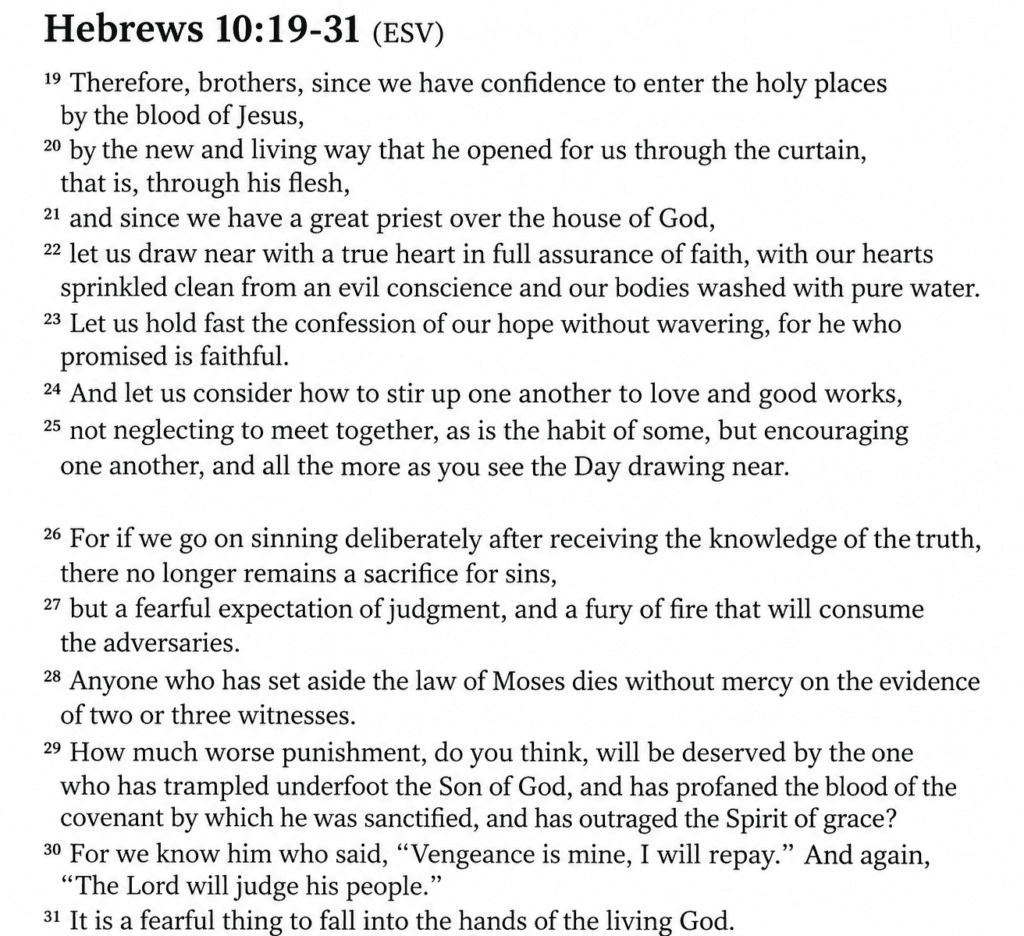
Explore Hebrews 10:19-31 with Sam E. Stone as he explains how Christ's sacrifice gives believers confidence to approach God, encourages faithful fellowship, and warns against deliberate sin while emphasizing the importance of perseverance.
Sponsored

Sponsored

Sponsored


Learn how to turn the sermons you’re already preaching into searchable, shareable content that helps people discover and connect with your local church. Access Be Seen, Be Heard on demand with Wes Woodell and Trey Sheneman. A two hour course for preachers, church media and website teams, and anyone who wants to help their church reach more people online.
October 6, 2026
Rick Cherok

October 6, 2026
Landon Shuman

October 6, 2026
Doug Redford