Articles for tag: Postmodernism

Jack Cottrell on Truth (from Our Archives)

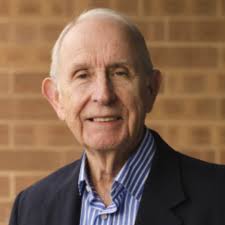
Jack Cottrell (April 30, 1938—September 16, 2022) wrote many articles for Christian Standard over the years, and one of his favorite topics was truth. While we do not have space to include all his articles on different aspects of this important topic, we have excerpted from several of them here.  We’ll let Dr. Cottrell introduce himself. In “What I Have Learned in 50 Years as a Theologian (Part 1),” published in our February 7, 2010, issue, he wrote,  Since receiving my AB degree from Cincinnati Bible Seminary in 1959, I have been either preparing to teach or teaching theology (Bible

If You Lead Alone, You're Doing It Wrong

A Cutting-Edge Way to Find New Ministry Partners Online . . . and in Person By Mark Kitts I’m still smarting from the recent closing of my alma mater, once known as “the Flagship College” of the independent Christian churches (ICC). Our schools, publications, and national gatherings have historically been unifying bastions of the Restoration Movement. But these institutions have been losing influence as people have voted with their feet and their wallets. Is it because Restoration ideals have lost their relevance? I don’t think so. I see these ideals being adopted as never before. Denominationalism is declining at an

Ravi and Me

By Jack Cottrell Several years ago Ravi Zacharias and I were on the same program. Ravi accepted an invitation to speak at Cincinnati Christian University on April 29, 2014. He spoke twice, once in morning chapel and once for an evening banquet. About three weeks before the event, the school president, David Faust, sent me a request that said, in part, “As part of the program prior to Ravi’s speech in the evening, I would like to interview you briefly about the ongoing relevance of apologetics, especially as it relates to our work at CCU. . . . If you

Do Not Call Conspiracy Everything This People Calls a Conspiracy

By T.R. Robertson I saw a comedy skit in 1970 that blew my adolescent mind. Two news producers were tasked with faking the Apollo 11 moon landing. They argued over whether the fuzzy picture made the story more believable or less. They laughed about other big events they”d faked over the years. I knew it was only comedy, but it triggered a strong enough hiccup in my adolescent worldview that it stayed with me all these years. What if? A 2015 CBS/Vanity Fair poll found 14 percent of Americans believe the moon landings were staged. That same poll found 70

Listen

By Jim Tune Earlier in my ministry, I viewed evangelism as almost entirely an act of proclamation. Evangelism meant “telling.” It was shaped by modernism and was largely “proof” oriented in its content and approach. A logical argument would be presented following defined lines of traditional apologetic thought. Equipped with the facts and bolstered by books such as Josh McDowell”s Evidence that Demands a Verdict, I could boldly offer “five arguments for the existence of God” or “seven reasons why we can believe that Jesus really did rise from the dead.” The problem with this approach is its reliance on

It’s OK to Be the ‘Away Team’

By Jim Tune In the fifth century, Romans reclined in their villas in the south of England feeling secure that their world was intact and would remain that way for years to come. Life was good. Sure, the army was busy, always off to subdue an uprising here or resist a barbarian raid there. But the roads still bustled with trade, the public baths were thriving, and the harvest was under way. Meanwhile the Saxons were already crossing the English Channel with designs on the land that once seemed to be the permanent possession of the mighty Roman Empire. Soon

For Such a Time

By Jim Tune “I wish I had never seen the Ring! Why did it come to me? Why was I chosen?” laments Frodo, after discovering the power of the mysterious inheritance that has come into his possession. In response, Gandalf offers a sober appraisal: “Such questions cannot be answered. You may be sure that it was not for any merit that others do not possess. But you have been chosen, and you must therefore use such strength and heart and wits as you have.” In challenging Queen Esther to act on behalf of the Jews, Mordecai offers similar counsel. He

Real Hope

By Jim Tune Last spring I taught a course on apologetics. We devoted considerable attention to the resurrection. I wanted students to sink deep roots in the ground of real hope””not optimism, not wishful thinking, but hope! I remember a story about a painful time in the life of a young missionary woman. This woman had married a Rwandan pastor, a Tutsi, and they had established a home together in that country. She was visiting Kenya on a mission trip when the dreadful Rwandan tragedy erupted. Hutu militia moved in, butchering men, women, and children wherever they went. The ensuing

Postmodernism & Apologetics

By Bob Mink As postmodernism”s influence continues to grow, many wonder what impact it is having on Christian apologetics. Does it require an approach different from what Christian apologists have been saying for the past 500 years? The short answer (given in a way postmodernists might appreciate) is yes and no. Three relatively recent books directly and indirectly address the issue.   Direct Answer Ironically, the oldest of these books most directly answers the question. Christian Apologetics in the Postmodern World (IVP Academic, 1995) is a collection of essays edited by Timothy R. Phillips and Dennis L. Okholm. The 11

Deep Impact: The Cultural Challenge of Biblical Illiteracy

By James Riley Estep Jr. You”ll find it in almost every hotel room, usually in the top drawer next to the bed. While most studies indicate a majority of Americans hold the Bible in high regard, those same studies indicate Americans are increasingly ignorant of what”s in the Bible. A lack of biblical literacy is a challenge for the American culture and also the American church. It poses a crucial test for the Christian community”s identity, distinctives, and ministry in the 21st century.   Increasing Unfamiliarity with the Bible George Gallup and Jim Castelli have concluded, “Americans revere the Bible

Why Are Christians SO Intolerant?

From the new book by David Faust Natalie started attending the church I led in New York. A quiet, pleasant person, she seemed to appreciate the biblical teaching and friendly atmosphere she found in our church. After some time, she dropped by my office one day. She said, “I like this church very much, but from listening to the messages each week, I get the impression that you think it”s necessary to believe in Jesus Christ in order to go to Heaven. That sounds awfully intolerant to me.” “We do believe it”s necessary to trust and obey Jesus,” I replied,

Emerging for the Rest of Us

By Josh Tandy In 2003 I was in college and reading Brian McLaren”s A New Kind of Christian. It was unlike anything I had ever read in Christian literature. The book simultaneously bothered and encouraged me. I thought I understood about half of the issues discussed, but I actually grasped far less. Despite my ignorance, I was hooked””even though I didn”t fully know why. To varying degrees I think many church leaders, whether paid or unpaid, have had a similar experience with their first contact with the emerging church movement. Perhaps you were like me and had no context to

What I Have Learned in 50 Years as a Theologian (Part 1)

By Jack Cottrell Since receiving my AB degree from Cincinnati Bible Seminary in 1959, I have been either preparing to teach or teaching theology (Bible doctrine) in CBS”s (now Cincinnati Christian University”s) graduate school. I was recently challenged to sum up what I have learned during this lifetime of study. Here are my thoughts. FADS vs. FUNDAMENTALS First, I have learned that theological fads come and go, but the “fundamentals” are still fundamental. A fad is a seemingly new idea that bursts on the scene and receives lots of attention, especially by authors and publishers. Once the latter have milked

Interview with Perry Stepp

By Brad Dupray From an early age, Perry Stepp was captivated by the complexity of Scripture. “As a kid I would listen to my dad preach and I was fascinated with doctrine and how different parts of the Bible connected with each other.” He followed that path to a lifelong study of the Word culminating in the recent release of Reading Paul”s Letters to Individuals, a commentary on Philemon, 1 and 2 Timothy, and Titus (cowritten with Hulitt Gloer; Smyth & Helwys Publishing). Perry is an alumnus of Dallas (Texas) Christian College and holds a master”s degree from Lubbock (Texas)

Is It Time to Move Beyond Truth? (Part 3)

by Robert C. Kurka In the first article in this series, we explained a nonfoundationalist approach to theology given shape by Stanley Grenz”s and John Franke”s 2001 book, Beyond Foundationalism. As we noted then, their work contributed a number of helpful insights to those committed to making an impact upon the postmodern world. But it is also fraught with a number of serious problems restorationists should consider. Last week we looked at two areas where Beyond Foundationalism encounters critical difficulties: the Bible itself and church history. We conclude this week by considering two more of these areas: philosophy, and missions

Is It Time to Move Beyond Truth? (Part 2)

  By Robert C. Kurka Read part one   In the previous article, we observed that a new wave of “post-conservative” theology has made its mark in both the academy and the church. In large part, this nonfoundationalist approach was given shape by the 2001 book Beyond Foundationalism, coauthored by Stanley Grenz and John Franke. This defining work contributed a number of helpful insights to those committed to making an impact upon the postmodern world, not the least being a necessary caution that a previous generation”s preoccupation with “proving the Christian faith” may actually betray an unintended concession to a non-Christian

Is It Time to Move Beyond Truth? (Part 1)

by Robert C. Kurka Logic . . . reason . . . rationality . . . truth.  While such terms were fairly common””and desirable””depictions of biblical faith in the literature of 19th- and 20th-century Christians (especially restorationists), they are increasingly being abandoned by theological writers during this new millennium. In fact, in today”s religious climate, if a conservative theologian ventures to talk about “absolute truth,” chances are he may be ridiculed by the evangelical academy, or at least those “younger evangelicals” (to use the late Robert Webber”s designation) who deride such language as the antiquated baggage of a bygone modernism.1

The Emerging Church: A Brief History and Helpful Resources

By William R. Baker See the Main Article: “The Emerging Church and the Stone-Campbell Movement: Some Striking Similarities (Part 1)”     What is now dubbed the emerging church began with a few prominent, young, evangelical church leaders in the early 1990s who became disenchanted with the megachurches with which they were involved. It has grown now to an expanding network of mature, culturally savvy church leaders and thinkers who minister with congregations, mostly in large cities.  These leaders are attempting to embody the gospel within the challenges of a postmodern world. The crisis these leaders were experiencing, it turns

Restoration Movement Q&A 5

Answers from Ethan Magness Does the Restoration Movement Matter? Answers from EthanMagness. Ethan Magness is spiritual formation pastor at Mountain Christian Church, Joppa, Maryland. Do you feel as strongly about being a part of the Restoration Movement today as you did fifteen years ago?  What, if anything, has changed? My interest in and commitment to the Restoration movement has steadily grown.  Fifteen years ago I definitely took the Restoration movement for granted.  Having been raised inside the movement, I saw its flaws more clearly than its strengths.  I have come to be more and more committed that the Restoration movement is

Interview with Lee Snyder

By Brad Dupray Lee Snyder can observe the positive effect of campus ministry firsthand as faculty sponsor of Christian Student Fellowship (CSF) at the University of Nebraska, Kearney, a campus ministry supported by the Christian churches and churches of Christ of Nebraska. Lee is in his 22nd year as a professor at Nebraska and has been active as a local church elder, in pulpit supply, and as a board member of CSF. Lee and his wife of 37 years, Vicki, are alumni of Kentucky Christian University. Lee holds a PhD from The Ohio State University and has done graduate-level work

Help Keep Christian Standard Free & Accessible with a Tax Deductible Donation

We can do more together!

Every gift makes a difference!

No, thank you.
100% secure transactions - receipts provided.
Does Your Church Want to Support Christian Standard?

Would your church consider including support for Christian Standard in its annual missions budget? Your support would help us not only continue the 160-year legacy of this unifying ministry, but also expand the free resources, cooperative opportunities, and practical guidance we provide to strengthen churches in the U.S. and around the world.

We can do more together!

Every gift makes a difference!

No, thank you.
100% secure transactions - receipts provided.
Secret Link