Presidents, Preachers, Passion, and Public Speaking
A young voter’s desire for “relatable” language raises a deeper challenge for the church. Compelling speech matters, but lasting influence requires substance—especially for preachers seeking to reach a generation that’s often absent from church.

Preaching and public speaking: When style matters—and when substance must
A student’s preference for “relatable” language in politics raises a bigger question for the church: how will the gospel be made understandable to a rising generation that often isn’t attending? The article weighs the power of compelling speech while insisting that lasting impact requires meaningful ideas—especially in preaching.
- Charisma can move a crowd, but it can’t replace clear, meaningful content.
- If young adults aren’t in church, the church must consider how it communicates.
- Preachers should pursue both compelling delivery and substantive truth.
Tiondra Bolden spoke enthusiastically. She was supporting her candidate, she said, because he doesn’t use “all those . . . dictionary-type words.”
According to the radio news feature, this 21-year-old student at the University of North Texas in Austin is typical. Many on campuses like hers are flocking to support the same candidate in this year’s presidential race.
“Before it was, like, insurgents this and that, and we were just like, huh?” she said. “Now it’s, like, wait a minute, I can actually think about what I’m doing when I go to the polls and I vote for someone. I know what they stand for, and it makes it more relatable to me.”
Whether this young person is actually thinking about her candidate seems debatable to me. Like many who plan to vote for him, she seems more swept away by his charisma and rhetoric than his positions. (Sorry to use dictionary-type words there. Translation: She likes his looks and his talk more than she knows what he stands for.) Alas, we may be in for another presidential campaign that hinges on style more than substance.
But if this young adult is truly typical of any portion of her peers, there are bigger issues to consider than who wins the next election. I clicked off my radio and wondered whether she goes to church. Research shows that growing numbers of her generation don’t. How will the church make the beauty of the gospel “relatable” to her and her friends?
For starters, preachers might note all the debate this year about a candidate’s public-speaking ability. It’s remarkable to see a speaker move a crowd just with the cadence of his sentences and the impact of his presence. No PowerPoint, movie clips, or skits here. Just carefully prepared, powerfully presented talk.
But to last for the long haul—to contribute something not only for now, but also for history—there must be a fresh idea or an important thought in those well-crafted phrases. The speeches of John F. Kennedy and Martin Luther King, Jr., for example, are as moving to read as they were to hear.
Whether I need a dictionary to understand some of their words is beside the point. They were pressed by their passion more than their desire to project a certain image.
We need the same in a president. And even more in a preacher.

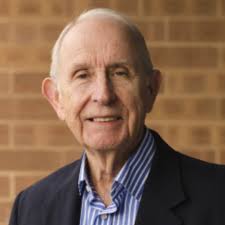
Author: Mark A. Taylor
Mark A. Taylor, who served as Christian Standard editor from 2003 to 2017, retired in June 2017 after almost 41 years with Standard Publishing (Christian Standard Media).
Sponsored

For 160 years Christian Standard has served the churches of the Restoration Movement. Your gift keeps articles like this one free for every church leader.
Sponsored

Keep reading
More in Church Leadership


From the archive
Christian Standard has covered this since 1866.





