Church Leadership Teams Can Help Congregations Grow
Leonard Wymore encourages congregations to recognize and strengthen the leadership already present within the church. By developing teams of associates and ministry teams, churches can share responsibility, improve communication, and move ministry forward with purpose.
- Every congregation already has potential leaders who can help stimulate growth.
- Ministry teams should be organized, communicative, and focused on making things happen.
- Healthy change requires patience, clear communication, and shared ownership.
By Leonard Wymore
Every congregation already has in place the leadership to stimulate growth—it just needs fine-tuning! Every church, no matter the size, has a staff of associates. These will relate and serve together as a TEAM (Together Everyone Accomplishes More). The preacher is the coach and the volunteers are the associates.
A Team of Associates
For example, even small churches usually have a leading elder whose role is shepherding the congregation, a Bible school superintendent, a youth coach, a music leader, a missions chairperson, and a preacher. Why not give associate status to all such leaders? Each could prepare written task/work descriptions, and all could begin holding regular meetings to develop and coordinate the ministry of the body, the church.
Each associate leader could be encouraged to enlist at least two people to assist: one to be a prayer partner, and the other to search through resource materials and to suggest ideas for the ministry.
Preacher, you will need to spend quality time with each associate and share your vision and resources. Say “thank you” often, and provide encouragement. Do the work and don’t worry about who receives the credit.
This staffing strategy can succeed with churches of all sizes. It will enhance all areas of ministry by providing for development and growth, along with the resources to guide the accomplishment of new goals. All of this—and more—will be accomplished because the church is taking into consideration the needs, talents, hopes, and aspirations of the congregation.
A great text to study is Ephesians 4:11-16: build up the body of Christ in knowledge, love, and unity, with each part doing its job.
Preacher friend, please consider this idea of sharing the ministry workload with well-chosen persons who will volunteer their talents, freeing you to spend more time in community activities and winning the lost to Christ!
A Team of Ministry Teams
Another method of increasing the number of associates in ministry is to select a leader and recruit a ministry team for each area of ministry. Since this will require participation of many church members, it is best to have no more than six workers plus the leader on each ministry team. This number assures the opportunity for adequate communication during and in between meetings. Here are some possible ministry teams:
- Administration
- Small and special groups
- Building and grounds
- Christian education (all ages)
- Worship
- Fellowship and benevolence
- Missions and parachurch ministries
- Outreach/evangelism
Each team should review the history of the congregation in relationship to its area and search resources for help in stating its vision and moving forward. Team members will be those who are currently involved in or have talent and interest in the area. No one should serve on more than one team. The leader generally will be someone who is already serving in that area.
These teams exist to make things happen. They shouldn’t ignore a great ministry idea just because it seems impossible. Their job is to study the idea to discover how it could be implemented.
Leading Change
A few tips for communicating decisions and leading change:
- Always say “we” and “our,” not “I” and “my.”
- Speak of changes as “additions” rather than “replacements.”
- Discuss potential changes informally with those most affected before announcing the changes publicly.
Building Your Team
You can strengthen the teamwork and build enthusiasm as you grow. Here’s how:
- Develop positive ideas and communicate dreams. Create a thirst in church members for something better.
- Test new ideas and concepts while keeping the communication lines open without “arm twisting.”
- Be patient; allow the team to discover other solutions to problems as everyone helps to choose the best.
- Watch for good ideas from other congregations. Visit, ask questions, and talk about how your church’s members might adopt such a procedure.
- When you present something new or revive a former practice: See it clearly, say it continually, and show it creatively.
For those in the congregation who are able, it is time for all to take off the “feed bag” and put on the “work apron” and live the gospel as you share the good news. “Go ye therefore, and make disciples” (Matthew 28:19).
Sidebar: Meeting With Your Team
Meetings are essential to growth. The minister/coach should meet with the ministry team leaders as a group at least once a month. This keeps everyone informed. The following is a suggested model agenda for all meetings, large and small.
Begin on time; keep the agenda moving; and close on time. Set times and time limits for each item on the agenda; encourage participants to prepare in advance, keeping these times in mind.
- Call to order—by leader or chairperson.
- Prayer—choose a person in advance and inform him or her of some of the items for discussion. The person who prays can mention these items, thereby seeking God’s will in these areas.
- Review what is new and current with the congregation—every meeting has a great bearing on the life of the congregation. Sharing news should create joy and concern for the well-being of all in the family.
- Devotional and Scripture—these should be applicable to the reason for the meeting.
- Written minutes (from the previous meeting) and financial report.
- Reports—review all projects that are in progress or finished.
- New business—introduce new projects or items of business and make decisions and delegate to those who will carry the work forward.
- Closing prayer
- Optional: refreshments, fellowship, sharing life stories, humor, getting to know one another.
—LM
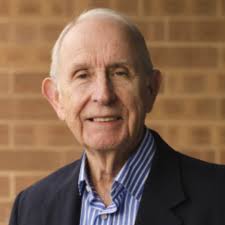
Leonard Wymore, former longtime director of the North American Christian Convention, is retired in Johnson City, Tennessee.