By Brad Dupray
Rural Church Leadership: Lessons from David Bycroft
Rural church leadership requires vision, commitment, and strong relationships within the congregation and surrounding community. In this interview, David Bycroft shares how his long-term leadership helped Tyro Christian Church grow from a small congregation into a regional church drawing nearly 1,000 worshippers. He discusses developing future leaders, encouraging volunteer involvement, and using community outreach to reach people beyond the church building.
- Effective rural church leadership grows through long-term commitment, shared vision, and leaders who welcome congregational growth.
- Intentional leadership development and volunteer involvement help sustain church ministries and prepare future leaders.
- Creative outreach events and personal relationships allow rural congregations to connect with people throughout surrounding communities.
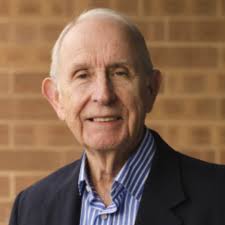
Tyro, Kansas, is a city of 250 people with a post office, a secondhand store and a church: Tyro Christian Church. David Bycroft started preaching at the church as a weekend minister in 1969 while a junior at Ozark Christian College in Joplin, Missouri. After graduation he was called by the church to preach full time and he has been leading Tyro Christian ever since. David’s wife, Kathy, grew up in the Tyro church and was baptized there in her youth. David and Kathy recently celebrated their 40th wedding anniversary. Their three children are involved in local church ministries and they are the proud grandparents of eight grandchildren.
A Rural Church with a Regional Reach
What makes Tyro Christian Church unique?
It’s unique from the standpoint that we’ve got almost 1,000 people attending in a town of 250. The church draws from a radius of 30 to 35 miles, for the most part, with even a few outside of that. Wherever our people work, they invite, and those people come from those different cities. We are in a county of 40,000 people. The reason we can draw so many people is because of the surrounding towns.
It must make for an interesting conversation when someone invites a friend to drive 30 miles to visit his church.
Sometimes, but trying to get a friend to try another church is probably harder than it is to get them to drive the distance. We’ll find families that drive 60 to 70 miles to Tulsa just for the evening to go shopping. It’s no problem getting them to drive 30 miles. Even when gas was at its highest a year and half ago, we weren’t seeing the problem with people driving the distance to come here. The majority of our visitors that we can connect with, and help think about a relationship with Christ, don’t have a problem with the distance.
How did you start with this church?
I began as a weekend minister in my junior year of college. I was hired full-time upon graduation. The church was running about 40 in worship and about 60 in Sunday school.
Did you see some success from the start?
I think it all started from the spark in our youth group. Of course I was just 20 at the time. I worked heavily with the four teenagers we had. The excitement from the teenagers flowed over to the rest of the church. People started getting excited when they saw it happening.
Was your plan to stick with the church for the long run?
The original plan was to get some experience and then, as soon as I graduated, to go find a real church somewhere. When I got ready to graduate we thought, What would happen to a church that’s had a weekend ministry if someone went and stayed there full time? And of course, now 40 years later, we know what happened.
Leadership That Made Growth Possible
What was the leadership like when you arrived?
Kenny Boles was the preacher here before me and that was an advantage. He was preaching part-time and decided to go to graduate school. Kenny laid the groundwork for what happened here, because he sowed the seeds among the leadership that the church was about growth. He even took the leadership to a conference about evangelism.
So you had a core to work with.
When I arrived here we had two elders, Clyde Koger and Melvin Betts, who had the mind-set that the church was about reaching the lost, so I didn’t have to fight about church growth. They were conservative in nature but they were more than willing to let church growth take place. They encouraged it and they weren’t afraid of it.
You’ve seen the opposite?
Many of these little, small-town churches, if they start growing, the leaders get scared that they’re going to lose their power. The funny thing about Clyde and Melvin is that they maintained their leadership positions until they were in their late 70s. Clyde has already gone to Heaven, but both of their influences are still strong in the congregation. At a meeting last night, as we talked about the future of the church; we realized what we have is because of our strong leadership in the past.
And what about your leadership today?
Right now, our leadership pushes me rather than me having to push them. We’re at the point where they’re saying, “Why aren’t we doing this?” The vision is coming from the leadership rather than it always having to come from me. That didn’t happen overnight. That took years to develop. Long-term, big payoff.
Developing Leaders for the Future
How about the future?
Another very important area to me is developing men for future leadership. In December, I will send out about 50 letters to young men or newer men in the congregation and invite them to be in a study with me for a year. We meet once a month for a lesson and once a month for a service project. During that year these men will develop. In the last five years every new man in leadership has come from such a group. We didn’t plan it that way, it just happened. Because of their personal relationships with the Lord they have risen to this level.
How do you keep your current leadership grounded?
I think one of the things that has been most beneficial over the years to keep this church in steady growth has been our “spiritual board meeting.” It involves our elders, deacons, and staff. We challenge ourselves by going through some leadership material—things by people like Bob Russell, Ben Merold, Rick Warren.
It’s learning and bonding?
It is. We have two or three wives who make dessert. We begin with our study and end with a time to pray about specific needs.
Volunteers and Outreach in a Rural Setting
With church members living in a 35-mile radius, how do you get them connected into the ministry?
That’s an ongoing issue we deal with, but we try to find ways for people to be involved in ministry in daily life, not so much at the church building. When people discover their giftedness, we encourage them to put it into use in their daily activities and to let their light shine. That obviously opens up the door to witness.
Do people end up lingering at church on Sundays?
Yeah, there’s a lot of fellowship that takes place during the Sunday school hour, before church and after church. It’s tough to shut the church down because people are standing around talking!
Is your staffing that different from a suburban or urban church?
Our staffing has gone much slower than an urban church. We don’t have as many staff members as many churches our size, but we rely on volunteers to pick up that slack. We work very hard at getting people to pick up those responsibilities. We have six full-time people and a secretary.
That sounds like a “throwback” to the days when churches relied more heavily on volunteers.
We use volunteers for all of the teaching aspects of the church, running all the extra programs with youth, and leading home Bible study groups. We have a very big Vacation Bible School program and that’s all volunteer. We also have several outreach opportunities, all led by volunteers.
For example . . .
Our car show is one of them. We do a rodeo, we do a golf scramble, we do a whole hog roast at the city park. We do a Galilean service . . .
What’s a Galilean service?
It’s where we have a cookout, and then a lighted cross on a boat comes across the lake at dark, and we have music and preaching from the boat. It always brings in a few visitors because it’s a beautiful scene.
Is outreach the ultimate purpose of all of these events?
We use them to bring people on the church campus and then we find a way to invite them to come and be a part of the church on Sunday. These are tools to attract the unchurched—baiting the hook with things they’re interested in and then using these same things to present the gospel. We try to use Jesus’ “fishers of men” illustration. What are you baiting the hook with? A fish isn’t going to bite on an old shoe. But if you bait with a little frog you’ll get a bite. You use the car show or the rodeo as a transition to be able to witness with them.
Do you think churches rely too much on staff and not enough on volunteers?
It looks like it’s out of need. People have such a time crunch in their lives that they have difficulty giving up their time. They’d rather give their money than their time—especially when they live in a major city. Church leaders have taken the cue from the congregation and have staffed to take up the slack. In a rural setting we don’t have as many things to control people’s lives, and the result is we’re still able to garner volunteers. For instance, a lot of churches go to evening Vacation Bible School because they don’t have ladies to work. We still do daytime VBS and have close to 150 volunteers to run the program. We have people who take their vacations to do it and others who are just available.
Long-Term Ministry and Community Trust
How does having a long-term ministry make a difference in connecting to the community?
I think it’s extremely important, especially in rural communities. You become an established fixture. I am known wherever I go in the area. Sometimes that has a negative side to it—churches in the area become jealous, or if someone has a burr under their saddle about us.
What can aggravate other churches?
Obviously we have attracted people from other churches. We don’t try to. Our intent is to reach the lost. But there are people who get dissatisfied with going through the motions at church and they end up here. I make it a personal point, if anyone shows up from one of our Christian churches in the area, to call that preacher and let him know. Our intent is not to gather Christians from other churches, but to reach the lost—that’s our focus.
Brad Dupray is senior vice president, ministry development, with Church Development Fund, Irvine, California.