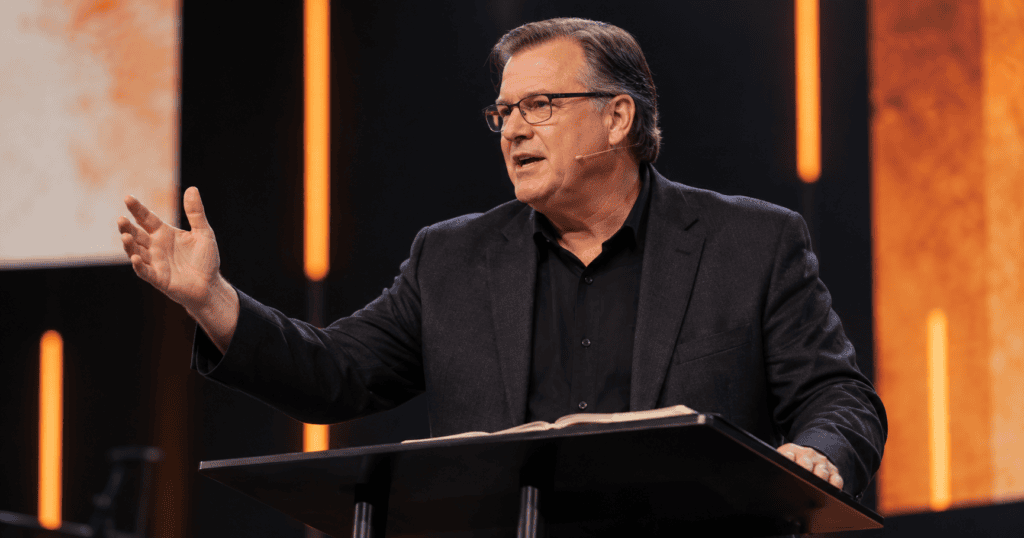
Mike Claypool Preaching: Preparation and Life Change
In this context, Mike Claypool preaching emphasizes the importance of authenticity and connection with the audience. Mike Claypool reflects on the enduring value of preaching in a media-saturated world and explains how sermon preparation has become more collaborative over the years. In this interview, he discusses conversational preaching, applying Scripture to daily life, and how personal suffering shaped the way he connects with people’s hurts.
- Claypool says the methods of preaching may change, but the message of the Word remains central.
- His sermon preparation includes team evaluation, long-range planning, background study, and practical illustrations.
- His experience with leukemia and the church’s relocation challenges deepened his sensitivity to people’s pain.
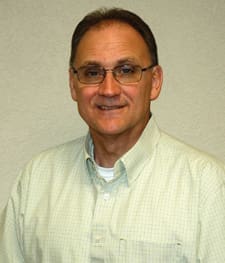
By Brad Dupray
Mike Claypool was 30 years old when he and his wife, Cindy, attended “Summer in the Son” at Kentucky Christian College as youth sponsors. The preaching there convicted them to make the life-changing decision for Mike to leave the printing industry and attend Lincoln Christian College to pursue his passion to preach. Mike loved the teaching he received from mentors like Chuck Sackett at Lincoln, and has served as preaching minister at First Christian Church in Newburgh, Indiana, for 18 years. Mike and Cindy have celebrated 35 years of marriage and have two grown children, C.J. and Jessica.
What is the value of preaching in a world that offers every form of media stimulus imaginable?
It comes back to the value of the Word. The culture is going to change, but the teaching of the Word is not. No matter the impact, the Word is always going to have the last say. As long as we make the Word as applicable as possible, applying it to everyday living, that’s the real value.
Has preaching changed in the years since the media has become so dominant?
Yes. I can see that, even in the short time I’ve been preaching. The style of preaching is different now than it was 20 years ago. I’m much more conversational now. With technology, the methods are going to change but the message is going to stay the same.
Has your preparation changed over the years, or do you still rely on the basics of homiletics you learned in seminary?
I think it’s a mixture. We still must rely upon the homiletics we were taught. I work with a team now and I don’t know that I would have done that 20 years ago. We work with graphics now; we work with props now; we work with guys who are constantly looking for video clips. That shows how things have changed over the years.
It sounds as if sermon prep has become more of a group effort.
We have four people on staff who meet every Tuesday afternoon, and we not only evaluate the previous Sunday but we look a month ahead. What can we do to make this a more meaningful experience for people on Sunday morning? That’s a great asset to our teaching, to have three other guys working on it.
How do you prepare?
We chart out a year at a time for our Sunday morning teaching. I begin in the afternoon on Monday looking at the text and walking through it and praying through it. Tuesday morning I put my outline together, and then I do background study. I’m usually done by Thursday at noon. The rest of the week is looking for videos, stories, illustrations, and sometimes I’ll send an e-mail to our staff asking, “Do you have anything that will help touch people on Sunday?” A lot of times they’ll have something I never thought about.
What do you want to see happen as a result of your sermon?
The second half of our mission statement is, “We want to see people become more completely devoted to Christ,” so anything we can teach on Sunday that’s going to point toward that goal is a win for us. We still have an open invitation at the conclusion of all three of our morning services. If someone surprises us by responding to the invitation when we had no idea they were coming, that’s a hallelujah day! If something happens on Tuesday, that’s a win as well! It motivates me when there is life change and people draw closer to Christ.
Do you adjust the message between services?
Oh yeah, I sure do. Sometimes it’s a deletion; our three services are totally different. Our classic service is a totally different feel, so for the modern services I may use something I haven’t used all morning. In our classic service I may not use an illustration I’m going to use in the second service because of the demographics.
How closely do you stick to your notes?
I preach from a manuscript, but I hardly ever look at it (the slide guys hate me for it, but that’s life—they’re really good!). I’m usually done with the sermon on Thursday afternoon. I take Friday off and don’t look at it. On Saturday morning I go to Panera Bread and take a couple of hours reading it through. Then on Sunday morning I come to my office and preach it through. I’ve been living with it all week, so it becomes a little easier to present the material because of that.
Do you find it hard to preach on something you might be struggling with?
I feel guilty at times. I don’t feel like a failure, but I think I acknowledge the fact that I could have done some things a whole lot better. At the same time it creates genuineness or some authenticity when the preacher doesn’t have it all figured out . . . and that’s OK.
I suppose that strengthens your relationship to the church.
From day one, in 1992, I said I want to break down the barriers between the preacher and the people. At that time we had about 160 people and we painted that mind-set. We took all the furniture off the stage; I think it created a better listening ear. There was a banister across the front of the platform that was almost like a fence, and we got rid of that; it was a physical thing that helped reinforce what I was trying to teach here.
Do you find yourself preaching to particular people?
No, I really don’t. Maybe a particular set of hurting people. There are so many masks worn on Sunday morning, and people are looking for a way to get out of that. The Bible is the way out. We just need to find a way to present the Word so people can believe it and buy into it.
Tell us about personal experiences that have influenced your preaching.
In October 2003, I was diagnosed with acute myelogenous leukemia (AML). I had a stem cell transplant at Indiana University Medical Center in August 2004. At the same time, the church was in the relocation process, and three months from moving in, we got whacked by a tornado. From that time my preaching kind of changed. I was able, and still am (I think), to connect with people’s hurts so much more now than I ever did before. I think that still is reflected in the way I teach today, simply because there are so many things going on and people are searching for the answers, and we have them. We have to be sensitive about how we give it to them.
How important is the impact of preaching compared to all of the other “ministry things” your church does?
I want to say it all works hand in hand, but the preacher in me says the Word needs to be one of the most fundamental things we do. We get people in here, most of them, one hour a week, so we feel very responsible to give them the best representation of the Bible we can in that one hour.
How would you encourage a young preacher who is just getting started out?
I can only share things people have shared with me over the years. There is a tendency to try to be somebody else in the pulpit, but you have to figure out who God made you and go with it. Some of our folks would love for me to preach in a different style and not be so down-to-earth, application-wise, but that’s who God made me and I’ve got to do that! Don’t try to be somebody else.
Brad Dupray is senior vice president, ministry development, with Church Development Fund, Irvine, California.