Momentum Christian Church and the Risk of Church Planting
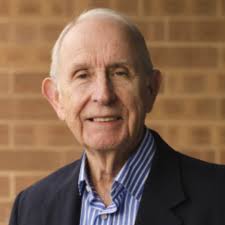
Bart Stone describes how Momentum Christian Church began in a leased warehouse south of Atlanta after he and his wife, Jodi, left established ministry in Kentucky. The interview highlights the church’s launch, growth, community outreach, staff unity, and plans for a second campus.
- Momentum Christian Church launched in January 2007 after delays and quickly grew from its warehouse location.
- Stone emphasizes risk, community service, children’s ministry, small groups, and authentic church culture.
- The church’s next major step was preparing for a second campus in 2011.
 By Brad Dupray
After graduating from Cincinnati (Ohio) Christian University, Bart Stone spent 13 years on staff at Northeast Christian Church in Louisville, Kentucky. Sensing a call to risk something greater for the gospel, Bart and his wife, Jodi, left the comfort of ministry at Northeast to heed the call of starting a new church in a community south of Atlanta, Georgia. Momentum Christian Church held its first service in January 2007, and has not looked back. The church is now running more than 400 in attendance in a warehouse. Bart and Jodi have two children, 9-year-old Keaton and 4-year-old Addison, whom they adopted from China.
Did Momentum Christian Church start in a school or a movie theater?
Neither. In Henry County you cannot meet in the school system unless you own property, and the movie theater was too close to McDonough Christian, which was a sponsoring church. With Henry County growing so fast, there weren’t any other meeting places here—no YMCA or clubs or other facilities, So God led us to lease space in a warehouse.
How did you arrange for the warehouse space?
We simply called the landlords and they showed us a space in the same building as their offices, which was half the size of theirs. My wife looked at one of the guys and said, “Why don’t you move out of the big space and use the smaller space?” My first thought was, what are you saying? But then they said, “OK.” So we turned their office area into children’s space. The warehouse was just an empty shell. We had to paint, put in heat and air conditioning and carpet, and we put glass in the warehouse doors to make a front entrance. The associated costs were about $50,000 more than our stated fund-raising goal, and we were praying, “God, you’ve got to show up!” We raised about $62,000 that month. God made it happen.
Were you afraid the new plant might not work?
Our only fear was due to the fact that our launch was delayed three times; instead of launching in October we launched in January. I think the fear was just finances—how much longer can we go? But we had done a good job fund-raising and had a great team.
How did things go?
We had 250 on launch Sunday. We expected a drop-off after the launch, and the next Sunday we were in the high 170s. We just grew from there. Unlike most church plants, we had a permanent facility. The fear was getting started with no offerings, and could we grow to handle the lease payment?
When did you begin to think this new church would stick?
We were steady until the one-year anniversary, but from then on we had some explosive growth. That’s when people thought, These guys are for real. This is our home. They seem to be who they say they are. People bought in at that point and really started inviting their friends.
Did you ever think it would fail?
No. It wasn’t that we wouldn’t make it; it was just how fast we would grow. We were where we needed to be financially; we were self-sustaining. The difference of having a new facility from the beginning—that was the stress for us. Once we were in the space and affording it, we weren’t afraid of where we were going to meet or what we were going to do.
Once you got rolling, how did you maintain the momentum?
One of the questions we ask is, “What’s the next risk?” Three couples from Kentucky and another couple from Chicago came here in the biggest faith jump any of us had ever taken, and now it’s what’s next to keep from getting comfortable?
What is the next risk?
The biggest risk now is we’re starting a second campus in 2011. We’re talking to our people and praying about locations. We’re not just about growing one thing here. We’ve got to keep doing what we think we’re called to do. We talk openly about that kind of stuff. We don’t have all the answers, but it’s what we do to keep people thinking.
How do you challenge people to take personal risks for their faith?
We push our people to be in the community—this is not just a place you can come and sit. We call membership “partnership,” to communicate that each person is an active part of this thing. We do a lot with serving our community. We’re not just about Sunday morning.
How do you keep people on board with the direction of the church?
We do vision nights every six months or so to talk about where God is leading. It’s sometimes a celebration of victories—here are some numbers, the budget, attendance—we just spell out some of that. Then I’ll talk about specific plans for the next six months. The last part is a list of things we’re thinking about.
Are the vision nights geared specifically to the leadership?
Everyone is invited. It’s a way to communicate to our body, and we want them to be a part of the solution. As we grow, the vision night attendance has been declining. We did the last one on a Sunday morning. We wanted everybody to be there. We record them and podcast them; we provide child care to try to get people there.
Have things gotten easier as time has gone by?
The complicated part is just leading a larger organization. There was some simplicity in the early days of a small group of people when you kind of know everybody. Now I see staff roles change; I don’t know everybody and everything anymore, and that’s different. But the cool side is really seeing people take off. We give people a green light, and we’ve seen them step up and lead things and own things. It’s becoming a leader of leaders and creating pastors and leaders. It’s fun, but it’s a little more challenging.
Has staffing been a challenge for you?
Our excellent team has been one of the keys to Momentum. A lot of church plants go through staff changes. We’ve had only one change, but they and another couple in our church moved to the inner city of Atlanta to reach people. It was a real sending time for us. That was our only change and it was a good change. Solidarity and unity of staff has been huge for Momentum. We’ve got spouses who are fully on board like staff members. There’s a great unity, and our church sees that across the board.
What were some of the initial ministries that really made a difference for the church?
We said we wanted to do three things well. We wanted to provide a great Sunday morning, we wanted to do small groups well, and we wanted to do children’s ministry well. There’s definitely a strong contingency of young families and kids, and I think we’ve built a great children’s ministry. We’ve done a great job with life groups; the hard part is developing leaders for them. On Sundays, we’re pretty real and authentic. We keep challenging people and preaching the Word, and we try to use Sunday morning for sending the people out for the week. The things that took off for us are our “out there” ministries. We’ve built a good reputation in our community.
How have you done that?
We’ve started our provision ministry to provide furniture and household items. In our county, distribution of clothing and food is handled well, so we provide larger items like furniture and beds. We have an ice cream truck and give away free ice cream. That was, at first, a marketing thing. Now we get requests for it to come to community events. It’s a trust builder. We’re seeking to reach our community, to be trusted by our community, and to serve our community.
What were some things you wanted to do but couldn’t when you were smaller?
One thing was student ministries—middle school and high school. We didn’t have an overwhelming number of those kids right off the bat. We had a lot of young families, but there weren’t a lot of people in their 40s with middle schoolers and high schoolers. We said we’re not going to do it until we can do it well. We have started it now. It’s going really, really well.
How did having a permanent meeting place from the beginning change your ability to minister?
A lot of times a new church expends a lot of energy in set-up and tear-down. We didn’t have to fight that battle. We have used our building as much as possible for the community. We were able to do things like Financial Peace University. In the last three years we have taken more than 150 people through Financial Peace University, and that has reached people in the community too. We fight to get people out of debt.
What does the warehouse say about you as a church?
The biggest thing is it validated us in a way I didn’t fully understand at the time. It also communicates who we are. Our building is not everything, but now that we’ve bought it, it prepares us to do the next thing. It communicates our vision—we may not be like churches you’ve always known.
Describe Momentum’s personality.
There’s a real culture of authenticity and transparency. We don’t have it all together, but we serve a God who does. One thing we’ve really tried to do is to be still and listen to the Spirit. I’m not sure that I grew up with that mind-set, but slowing down to listen has helped me understand it’s OK that you can’t do everything. Sometimes listening to where God is leading means we’re planned six months in advance but next week isn’t planned.
How is the church’s personality displayed in action?
We’re creating a real culture of serving. We had our first mission team go to Mexico in October and we have a group going to Africa. We’re part of a new church launch in Chattanooga this fall. We’re taking care of those in the body and in our community, too. That’s one reason there’s been very little pushback on a second campus, because we really want to serve our community.
What’s next for Momentum Christian Church?
The new site in 2011 is the main thing. We also want to plan for when our management team will dissolve and we develop an eldership. That funnels down to more life group leaders and to launching the second campus. That’s kind of our master plan for growth.
Brad Dupray is senior vice president, ministry development, with Church Development Fund, Irvine, California.