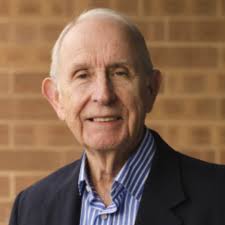
The Future of Church Planting with Brent Storms and Greg Nettle
Orchard Group’s Brent Storms and Stadia’s Greg Nettle discuss church planting strategies, assessment, collaboration, and emerging models for developing reproducing churches. They explore how urban ministry, lower-cost approaches, leadership development, and partnerships could shape the future of church planting.
- Orchard Group and Stadia use partnerships, assessment, coaching, and leadership development to support new churches.
- Storms and Nettle see opportunities for lower-cost and rapidly reproducing church planting models.
- Both leaders emphasize collaboration between organizations rather than competition.

Brent Storms became president of Orchard Group in 2009 and CEO this past July. Greg Nettle joined the Stadia team as president just a few months ago. These two young leaders recently sat down with us for a candid conversation about the future of church planting and the future of the church.
Church Planting in Urban Communities
Brent, what is Orchard Group’s niche and overall mission?
STORMS: Our mission is to plant growing and reproducing churches in New York, the Northeast, and beyond, which often means strategic urban settings. We began in the New York metro area and in the last 20 years we’ve started churches in other areas of the Northeast like Boston and Philadelphia. Now we’re planting in urban environments in Salt Lake City and Phoenix.
So urban church planting knowledge is transferable between cities?
STORMS: There is so much movement of people from city to city, especially among the creative class, so it becomes ministry to a culture or demographic instead of a geographical area. For instance, Kyle Costello, the lead pastor of Missio Dei Community in Salt Lake City, met a guy in a coffee shop who said, “The only church I’ve liked was in Brooklyn.” And Kyle said, “I’ve got a friend in Brooklyn.” Soon they realized they were talking about the same place—Church of Park Slope, another Orchard plant. Today that guy is plugged into Missio Dei.

Greg, what about Stadia?
NETTLE: Stadia’s vision is to bring people and churches together to transform lives and communities through church planting. We empower existing churches to plant new churches and we bring networks of churches together.
Stadia also assesses planters and offers ongoing care and coaching for planters and their spouses. It’s enabled Stadia to have a 90 percent success rate.
One thing I’m really excited about right now is Stadia’s partnership with Compassion International. Our goal is to plant a church in the Third World every time we plant a church here in the U.S. Compassion operates out of local churches, so new churches allow Compassion to begin working in new areas. At the same time, new U.S. plants partner with one of these overseas churches, so from day one missons is part of their DNA.
Does Stadia decide where to plant based on the location of effective networks?
NETTLE: It’s a combination of factors. Sometimes it’s because an existing network is ready to go. But we’re doing a church plant in West Virginia because we believe in the planter God’s called there and we’ll form a network around him. On the other hand, some leaders in Baltimore want to start a new network, and we’d love to partner with them.
Brent, what’s the strategy or philosophy behind the Orchard Group plants?
STORMS: There are commonalities [with Stadia]; we haven’t used the language of “forming networks,” but in practice it’s much the same process. Each of our new churches has started with a partnership of several churches cooperating financially and sharing oversight.
The difference is we’re often working in contexts where there aren’t enough healthy churches to form a regional network. So the “network partners” for a church in Manhattan might be in Indianapolis and Dallas and Louisville.
Like Stadia, there are three ways a new church project develops for us: We may see a place and look for a planter. We may find a planter. And churches in a region may ask for our help.
Assessing, Training, and Supporting Church Planters
Tell us about assessing and training.
NETTLE: If someone thinks God is calling him to church planting, we ask him and his wife to go through our assessment process to determine if they have the gift set, if their marriage is solid, if they have the theological background. The point is to find areas for growth.
After the couple is assessed, we either give them the green light, tell them “no for now” and here’s what to work on, or tell them no, this isn’t going to happen with us.
STORMS: For the initial assessment we use the same process with the Church Planting Assessment Center. That’s something both of our organizations, and many other church planting groups, have learned. These assessments make all of us better.
But they’re not perfect. So the things that follow—the coaching relationship, the management team—are critical. A new church will have a team in place with sponsors from the financial partners, and that team will stay with the church until it’s self-supporting and has developed local leaders.
Do the management teams for Orchard plants function as sounding boards or as elders?
STORMS: They’re usually not local leaders so it’s impossible for them to have a spiritual shepherding role. But in every other way—serving as the accountability structure for the staff, helping set direction and vision, and providing financial accountability—they do function as elders until an eldership is formed.
Stadia also provides project management and back-office services. How does that interface with what’s happening at the local level?
NETTLE: We walk our church planters through a really helpful process, covering everything from mission, vision, and values to setting up their insurance and nonprofit status. These steps are extremely important because entrepreneurial leaders typically aren’t detail people.
However, we’re looking at a new model of church planting in which everything has to be redesigned. If the appeal of the new church will not be in attracting seekers to weekend services, what do the assessment and checklist need to look like?
In an economy where much of the country can’t support the big church launch, it’s forced us to consider ways to launch with a $30,000 budget instead of a $300,000 budget.
The Future of Church Planting
So what is the future of church planting? How will it need to adapt?
STORMS: The model that Orchard and Stadia have been using—resource a project, put a team in place, build toward a public launch, and get the church up and running as quickly as possible with as large an attendance as possible—can still work.
Six years ago we started two churches in New York that required more than a million dollars in outside support. And those churches have already invested more than a million dollars in missions and outreach. So there are places where the expense is extremely high, but it broadens the base of missions support for years to come.
However, that’s not going to happen everywhere. We need to think about new methods and lower costs.
NETTLE: I think there are some bigger questions we have to be wrestling through. The church in North America is at a crisis point. We’re not producing disciples, and I believe planting new churches is one way to transform the church in the United States.
So this is the great opportunity: what do these new churches need to look like to be rapidly reproducing, to make disciples, and to transform their communities?
Greg, you also serve as senior pastor at RiverTree Christian Church in northern Ohio, where you’re creating a culture of smaller missional communities. Is that going to become a trademark of Stadia churches?
NETTLE: Here’s what I know: if we could go into the Ohio State University area and launch a traditional church plant that becomes a core, and from that church could have other planters creating smaller communities while working bivocationally, we could hugely influence that city very inexpensively and launch churches with a huge success rate.
To plant four new churches in Columbus would cost about $1.2 million. What if we could plant 30 new churches for that same budget? I think we can.
Brent, I’m guessing this is consistent with the weekly ministry of your church planters, as well.
STORMS: Twenty-five pastors from across New York City and across denominations pray at our offices every Wednesday. If you asked them how they plan to multiply their efforts, they’d all say it’s about developing leaders and empowering them to start new groups.
They might use different language, but it’s the same approach. And the most important thing Orchard can do is find and develop the people with entrepreneurial leadership ability, find the resources they need, find the coaches they need, and let them develop the new models.
International Planting and Collaboration
Greg mentioned the Stadia partnerships with Compassion. What’s Orchard doing internationally?
STORMS: We had been thinking and praying about planting in a European city, and earlier this year we were contacted by Christ’s Church of the Valley in Arizona. A member of their staff from Ireland wanted to go back and start a church. The timing was perfect, and it’s ideal to help someone plant in his home city. We plan to have the church launched by next fall, and hopefully it will be the first of several.
When strong organizations with similar missions coexist, there can be a perception of competition. What’s your take on the relationship between Orchard Group and Stadia?
NETTLE: One of my personal life values is collaboration. And that’s a key value of Stadia, as well—doing everything together with partners. It’s amazing what God can accomplish when we truly don’t care who gets the credit. I’m watching that in healthy churches and networks, and I can’t wait to get to know Brent better and see how we can work together.
STORMS: Absolutely, and I think it’s already happening. Stadia and Orchard are partnering on two active projects in the Baltimore area, with others in the works. This week I’ve talked to Stadia leaders about churches that want to give to both of our groups and the best ways to do that. We also work together to help potential planters find the best fit. It’s not competition—it’s truly collaboration.
Jennifer Taylor, one of CHRISTIAN STANDARD’s contributing editors, lives in Nashville, Tennessee.