Communion Meditations Sponsored by …

In the Painting
A mysterious painting reveals the guilt hidden in every heart. Nancy Karpenske explores how Communion reminds believers that through Jesus Christ, they can find forgiveness, grace, and freedom from condemnation.

Guilt and Grace in Communion: Finding Freedom from Guilt
Guilt and Grace in Communion is the central theme of this reflection on a fictional painting that reveals each viewer’s guilt. Nancy Karpenske explores how Scripture exposes our sin while Jesus Christ offers grace and freedom from condemnation. The Communion service reminds believers that they do not have to face their guilt alone.
- A fictional painting illustrates how confronting personal guilt can affect the human heart.
- Christ’s death and resurrection offer freedom from guilt and condemnation.
- Communion invites believers to acknowledge their sin and remember God’s grace.
William E. Barrett’s novel The Shape of Illusion tells a story about a painting. The scene depicted on the canvas is Pilate’s courtyard. Jesus is there, beaten and bloodied. He is surrounded by the angry mob screaming insults and throwing rocks.
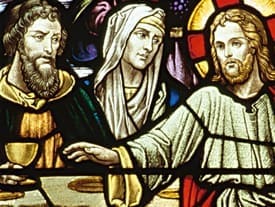 This fictional painting is no ordinary work of art. It seems that everyone who looks at it finds his or her own face in the raging crowd. Saints, sinners, priests, paupers: all instantly see themselves acting despicably in the gruesome scene.
How would you respond if you saw your own likeness in that setting? What if you found your face as a willing participant in the mob shouting, “Crucify him!”? Some who view the painting react in hurt or anger, even terror. Others are haunted by overwhelming guilt. Over the centuries the painting destroys lives and ruins friendships.
In the story two men are discussing the painting. Why does this painting have such an impact? Because the painting brings each person face-to-face with his own guilt. He must deal with the reality that he could have acted in such a way. Each man must face this fact alone.
That’s where the story misses the point. Jesus, the guiltless Son of God, endured humiliation, pain, and torture so that none of us must ever face our own personal guilt alone.
The painting doesn’t exist. It’s just a story. James 1:24 describes the Bible as a mirror. When we read it, we can see ourselves in our true condition: guilty. But that’s where grace comes in. Romans 5:8 says, “God demonstrates his own love for us in this: While we were still sinners, Christ died for us.
Guilt and Grace in Communion: Remembering God’s Grace
The Communion service is our painting. When we touch and taste and handle the emblems representing Jesus’ body and blood, we are both admitting our own guilt and testifying to our faith. We believe that through Jesus’ death and resurrection, we can live without guilt, without fear. As you wait for the emblems to be passed to you, consider Romans 8:1: “Therefore, there is now no condemnation for those who are in Christ Jesus.”
Nancy Karpenske serves with the staff of LifeBridge Christian Church, Longmont, Colorado.

Author: Nancy Karpenske
Sponsored
For 160 years Christian Standard has served the churches of the Restoration Movement. Your gift keeps articles like this one free for every church leader.
Keep reading
More in Theology & Bible



From the archive
Christian Standard has covered this since 1866.





