College: It”s Different These Days
How are college students changing Christian higher education? Steve Richardson examines shifting technology habits, academic expectations, spiritual perspectives, and parental priorities—and the challenges these changes present for Christian universities.
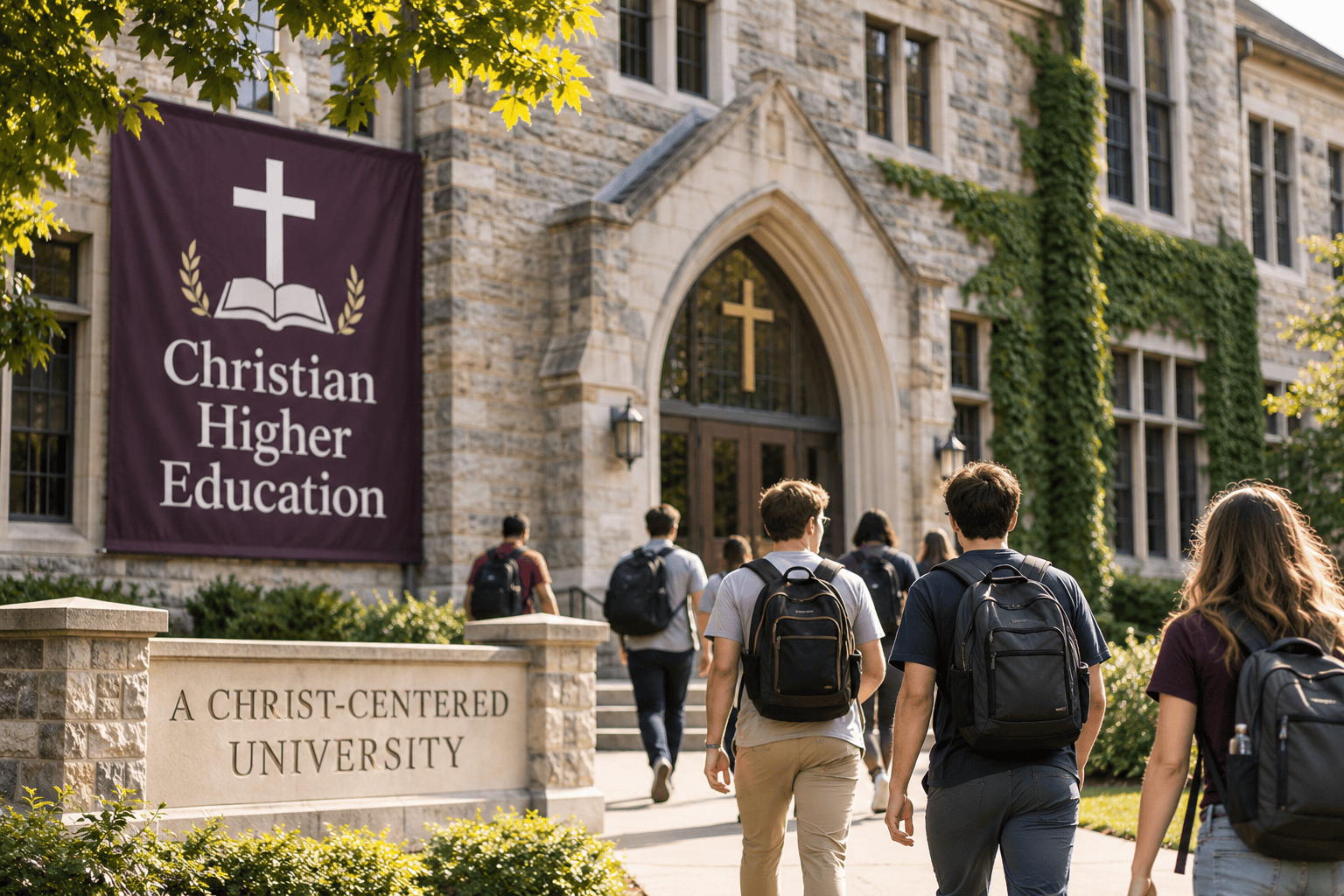
How College Students Are Changing Christian Higher Education
College students are bringing new expectations, habits, and challenges into Christian higher education. Drawing on observations from longtime faculty at Hope International University, Steve Richardson examines changes in technology use, academic preparation, spiritual perspectives, and parental involvement. These shifts challenge Christian universities to adapt their teaching while preserving their core values.
- Constant digital connectivity is changing classroom engagement, research habits, and students’ ability to evaluate information.
- Faculty observe challenges involving reading, writing, critical thinking, and biblical literacy, alongside students’ intellectual ability and commitment to compassionate service.
- Rising educational costs and changing family expectations are pushing Christian universities to rethink how they prepare students for meaningful careers and servant leadership.
By Steve Richardson
Chair of the Biblical Studies Department,
and Associate Professor, Pacific Christian College
of Ministry & Biblical Studies
at Hope International University, Fullerton, California
These observations are anecdotal and generalized. They are not the result of research but impressions shared by several faculty members who have taught more than 20 years at Hope International University in Fullerton, California. Many students vary from these generalities, of course.

On the whole, today’s students are different in significant ways from their counterparts 10 to 15 years ago, and this presents challenges to teaching staff. Some of the statements may seem critical of students, but instructors continue to love them deeply and value their impressive gifts. Though the impressions are placed in categories, the categories clearly intertwine.
Technologically
The ability to be “connected” constantly via portable devices has altered students’ demeanor in the classroom as well as their study methods. Electronic tablets are ubiquitous; finding a student without a smart phone is as unlikely as discovering the Ark of the Covenant. Students have become addicted to connection through texting, and many become noticeably uneasy without access to the world outside the classroom for 50 to 75 minutes when phone use is prohibited.
Students are adept at manipulating the devices, but not always discerning about their use. For example, using tablets or phones at inappropriate times distracts others and removes the user from meaningful engagement in the class session. (Students pride themselves in being efficient multitaskers—but they aren’t.) Some professors use applications that enable productive use of tablets and smart phones in classroom instruction.
Additionally, electronic devices give students instant access to a staggering amount of information. Students carry libraries in their pockets. Methods of research have been revolutionized. Students know how to access information, but many are not discriminating about the quality of the material they have accessed. Students once were taught how to judge a book beyond its cover. But now students must be convinced that information may not be valuable merely because it resides on a website.
Academically
An alarming number of students admit freely they do not enjoy reading and do very little of it unless coerced. Though this phenomenon was evident 10 to 15 years ago, my colleagues agree the problem is intensifying. It is difficult to entice students to read textbooks consistently. We presume their saturation in excellently produced, dramatic visual media has played a role. Many seem to have traded discovery of information and stimulation of imagination through reading for the entertaining impact of visual media. This also challenges faculty, who often feel it necessary to become performers to engage learners who are accustomed to entertainment.
As reading skills diminish, breadth of vocabulary is shrinking, spelling is poor (often humorously phonetic, since students encounter words aurally rather than from the written page), and writing skills are suffering.
Students are less academically prepared for independent critical thinking. They are, however, as intellectually capable as ever, many exceptionally bright, and do respond to the challenge and instruction toward critical thinking skills.
A word often used by faculty to describe students is entitlement. This manifests itself in several ways. Students are often offended, for example, by average grades, even when their work is mediocre. They reason that if they finished the assignment described in the syllabus, they deserve high marks notwithstanding quality. They completed the task; they should get a ribbon.
Another challenge affecting students is the increasing cost of their education. Students routinely tell me they are employed 20, even 30 hours a week to help pay for life and school. Those demands affect academic performance, but I have great respect for students who care enough about their education to make remarkable sacrifices to acquire it.
Spiritually
Like college students on most campuses (not just Christian campuses), increasing numbers of our students describe themselves as “spiritual”—with a rather vague definition of the term. Ironically, “spiritual” students are coming to us with less knowledge of Scripture. They are fine young people, most of them from Christian homes and involved in church, but their diminished biblical literacy is notable.
There is no doubting the genuineness of their faith in Christ. Yet they struggle with the tension of knowing the instruction of the Lord, to whom they have pledged allegiance, and navigating in a culture that advocates nondiscriminating tolerance as the highest value. Admirably, they intend to bring agape into all relationships, but their aversion to being perceived intolerant and judgmental trumps their inclination to apply Christian values, however graciously, to evaluation of cultural trends.
Our students are idealistic and altruistic, with a strong sense of justice. The culture’s drumbeat of criticism aimed at the church’s supposed legalism has caused them to be jaded about church as they have experienced it. Many respond by gravitating toward ministries specializing in compassionate service bringing the gospel’s hope to marginalized and underserved communities. I find it hopeful that they are attracted to experiences of genuine fellowship that strikes them as more authentically Christlike.
Parents
It should be no surprise that parents have become attentive to managing the high cost of their children’s education. As a result, parents are more consumer minded as they search for a suitable school. The market is very competitive. Parents insist that the Christian university offer degrees that are substantive and marketable. It is no longer true (if it ever was) that Christian parents encourage their children who do not anticipate earning their living serving in the church to attend Bible college for a smattering of biblical studies before transferring to a university that prepares them for a career.
Our university is facing dramatic changes in a competitive market. Our challenge is to preserve core Christian values that undergird every major, offer excellent education that prepares degree holders for lives of productive servant leadership, and employ innovative methods that address the demands of changing learners.
Steve Richardson serves as chair of the Biblical Studies Department, and associate professor, Pacific Christian College of Ministry & Biblical Studies at Hope International University, Fullerton, California, where he has taught for more than 26 years.

Author: Steve Richardson
Sponsored

For 160 years Christian Standard has served the churches of the Restoration Movement. Your gift keeps articles like this one free for every church leader.
Sponsored

Keep reading
More in Church Leadership


From the archive
Christian Standard has covered this since 1866.






Dr. Richardson was a prof of mine and I can still recall some of his lessons on the theology of ministry from 18 years ago. He is a great teacher who leads by example. His comments are truly insight that are not only affecting the collegiate world, the church is becoming more and more filled with complacent believers suffer some of the same fates. Special thanks to all that are willing to speak up and encourage us to strive for excellence because He is an excellent God.