Communion Meditations Sponsored by …

Hallowed Ground
What does Gettysburg teach us about the Lord's Supper? J. Michael Shannon reflects on Abraham Lincoln's words and explains why Communion calls believers not only to remember Christ's sacrifice but to dedicate themselves to him.
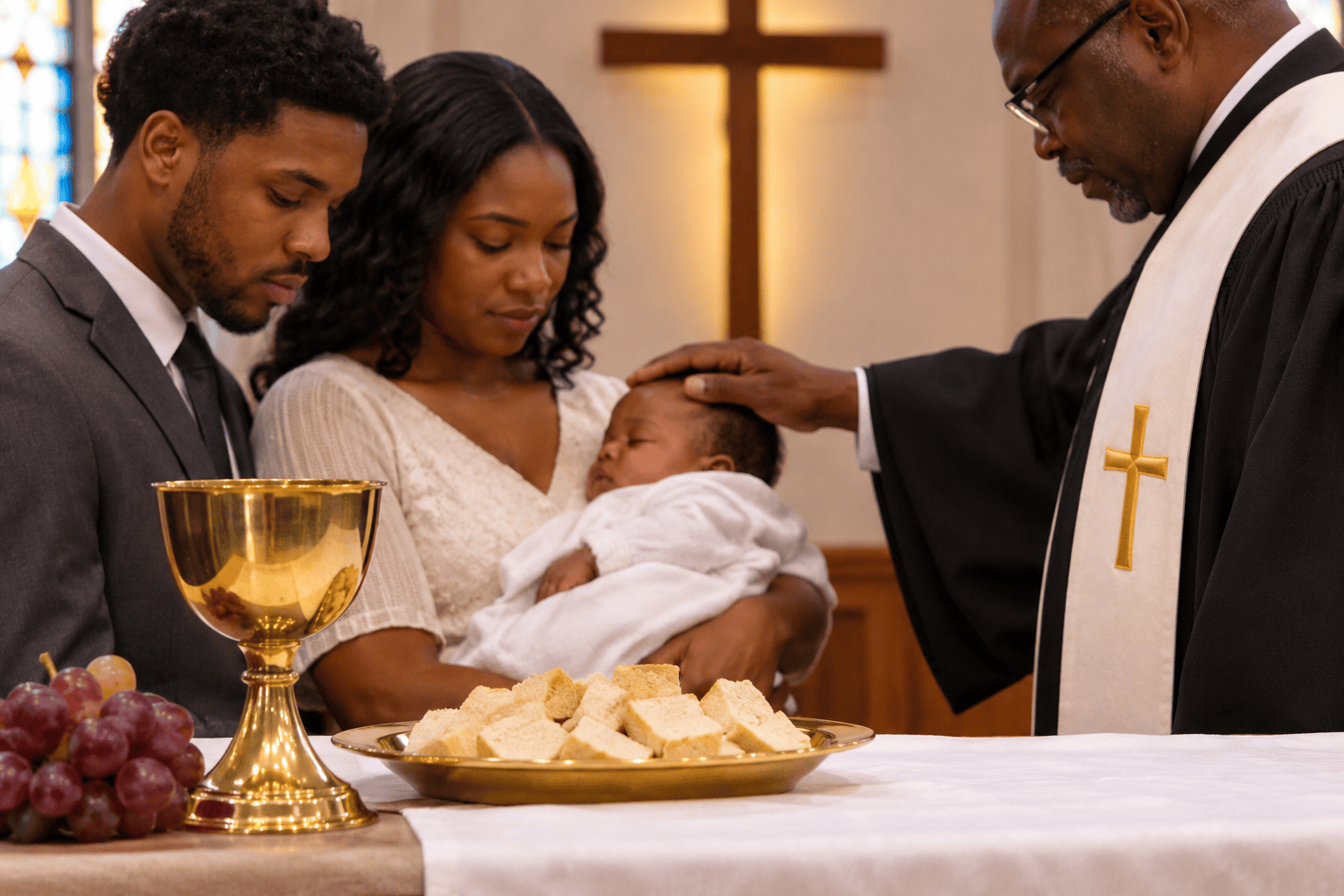
Communion and Dedication: Remembering Christ’s Sacrifice
The Lord’s Supper calls believers to examine themselves and remember Christ’s sacrifice. Drawing on Abraham Lincoln’s Gettysburg Address, J. Michael Shannon explains why Communion is more than a memorial. It is an opportunity to dedicate ourselves to Christ and his continuing work.
- Paul instructs believers to examine themselves before partaking of the Lord’s Supper.
- Gettysburg’s memorials illustrate the lasting significance of sacrifice and remembrance.
- Communion calls Christians to dedicate themselves to living for Christ and continuing his work.
By J. Michael Shannon 
“Therefore, whoever eats the bread or drinks the cup of the Lord in an unworthy manner will be guilty of sinning against the body and blood of the Lord. A man ought to examine himself before he eats of the bread and drinks of the cup” (1 Corinthians 11:27, 28).
No one who visits Gettysburg, Pennsylvania, can leave unchanged. In a three-day period, two great armies struggled there in an epic conflict. There were approximately 50,000 casualties from both sides.
What makes Gettysburg significant today is that the entire town and county stand as a reminder of sacrifice. The region is filled with monuments, historical markers, and businesses related to the battle. There are 1,328 memorial markers. Nearly every aspect of that calamitous struggle is commemorated. People make pilgrimages to this city. It is considered by many to be hallowed ground. I suppose as long as that town stands, people will remember the battle.
When President Abraham Lincoln came to inaugurate a national cemetery in Gettysburg, he made a brief speech that has been memorized and analyzed for generations. Standing before the crowd he said, “We cannot dedicate, we cannot consecrate, we cannot hallow this ground. The brave men, living and dead, who struggled here have consecrated it far above our poor power to add or detract. . . . It is for us, the living, rather, to be dedicated here . . .”
Dedicate Ourselves at the Lord’s Table
When we come to the Lord’s table, even though we will pray over the elements, there is a sense in which we cannot dedicate the bread and the cup. It is for us, when we eat the bread and drink the cup, to dedicate ourselves. We dedicate ourselves to promote the cause of him who died for us. We dedicate ourselves to continue his work. We dedicate ourselves to live a life pleasing to him. When we partake, we are on hallowed ground. That is why we dedicate ourselves.
J. Michael Shannon is professor of preaching at Cincinnati (Ohio) Christian University.

Author: J. Michael Shannon
Sponsored
For 160 years Christian Standard has served the churches of the Restoration Movement. Your gift keeps articles like this one free for every church leader.
Keep reading
More in Theology & Bible



From the archive
Christian Standard has covered this since 1866.





