Communion Meditations Sponsored by …

Believing Is Seeing
What does it mean to believe without seeing? Through Thomas, the road to Emmaus, and the breaking of bread, Robert F. Hull Jr. explores how faith reveals Christ's presence in Communion.

Believing Is Seeing: Faith, Resurrection, and Communion
Believing is seeing in the Gospel of John, where Jesus promises a blessing to those who believe without seeing him. Through Thomas’s encounter with the risen Christ and the disciples’ experience on the road to Emmaus, this Communion meditation explores how faith opens our eyes to Jesus’ presence in the breaking of bread.
- Jesus promises a special blessing to those who believe without seeing him.
- The disciples on the road to Emmaus recognized Jesus when he broke and blessed the bread.
- Communion invites believers to recognize the living presence of Christ through faith.
“Seeing is believing,” we say, but in the logic of the Gospel of John, it works the other way around: Believing is seeing. It is true Peter and John did not believe Jesus had risen from the dead until they entered the tomb and saw the abandoned grave clothes (John 20:6-8). It is also true Mary Magdalene and 10 of the disciples were permitted to see the risen Lord. But was this a privilege all disciples should have?
 Thomas seemed to think so. He wanted the same experience the other disciples had, or an even greater one: not only to see the wounds of Jesus, but to touch them. Otherwise, said he, “I will not (not I cannot, but I will not) believe.” Jesus gave his blessing to Thomas, but he promised an even greater blessing to “those who have not seen and yet believe” (John 20:29, Revised Standard Version).
That promise echoes down the generations to embrace all of us who do not have the luxury of seeing and touching the wounds of Jesus, but who are willing to believe in him and commit ourselves to his way. As 1 Peter 1:8 says: “Without having seen him, you love him; though you do not see him you believe in him and rejoice with unutterable and exalted joy” (RSV).
Recognizing Jesus in the Breaking of Bread
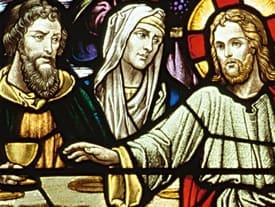
The story of Thomas reminds us of the two men walking to Emmaus (Luke 24:13-32), who were joined by the risen Lord. Even though they walked and talked with Jesus for some time, they did not recognize him. Jesus later said they were “foolish, and slow of heart to believe” what the Scriptures had taught. But when they sat together at the table and Jesus broke and blessed the bread “their eyes were opened and they recognized him” (24:31).
An old Communion hymn says, “Here, O my Lord, I see Thee face to face. Here would I touch and handle things unseen.” In our breaking of the bread we do not really see Jesus face-to-face, but we know his presence is among us. Perhaps we see him “faith-to-face,” but that’s enough.
Prayer: Almighty God, who brought again from the dead our Lord Jesus Christ, thank you for the great joy that comes to us through trusting in him. We ask now your blessing on this loaf and this cup that, as we take them in faith, our eyes may be opened to the living presence of Jesus in our midst. To him be all glory and praise. Amen.
Robert F. Hull Jr. serves as professor emeritus of New Testament with Emmanuel Christian Seminary, Johnson City, Tennessee.

Author: Robert F. Hull Jr.
Sponsored
For 160 years Christian Standard has served the churches of the Restoration Movement. Your gift keeps articles like this one free for every church leader.
Keep reading
More in Theology & Bible



From the archive
Christian Standard has covered this since 1866.





