Communion Meditations Sponsored by …

Unworthy at the King’s Table
What does Mephibosheth's place at King David's table teach us about Communion? Tom Claibourne connects an unexpected act of royal kindness with God's gracious invitation to the Lord's Supper.

Mephibosheth and the Lord’s Supper: Welcomed to the King’s Table
The story of Mephibosheth and the Lord’s Supper offers a picture of grace and an undeserved invitation to the king’s table. Tom Claibourne reflects on King David’s kindness toward Jonathan’s son and connects that welcome to the Communion table. Through Jesus Christ, believers are invited to remember God’s grace and look forward to a greater banquet.
- King David welcomed Mephibosheth to his table because of a promise made to Jonathan.
- Mephibosheth’s story illustrates kindness and grace extended to someone who did not expect such an honor.
- The Lord’s Supper invites believers to remember Christ’s sacrifice and respond to God’s grace with humility and gratitude.
Mephibosheth’s Invitation to King David’s Table
He had no business eating at the king’s table. His family background, physical infirmities, and utter helpless-ness should have barred him from such an honored place. But there he sat, day after day, like one of the king’s own sons.
Mephibosheth had experienced more than his share of physical and emotional pain. Second Samuel 4:4 briefly recounts the tragic accident that left him unable to walk on the very day he learned of the battle deaths of his father, Jonathan, and his grandfather, King Saul.
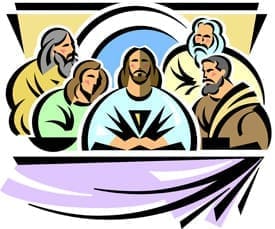
Now, years later, David ruled as king over all Israel. Second Samuel 9 tells us Mephibosheth was living an obscure life a safe distance from Jerusalem. The usual custom in the ancient Near East was for new kings to wipe out the entire family of the previous king to prevent any possible political comeback. It is likely that Mephibosheth was also aware of his grandfather’s attempts to kill David years before.
So when messengers from King David arrived at his house to escort him to the king, Mephibosheth probably expected the worst. What he found when he arrived, however, was a king who understood grace; a king anxious to keep a promise he had made to Jonathan, Mephibosheth’s father, many years before.
When Mephibosheth son of Jonathan, the son of Saul, came to David, he bowed down to pay him honor. David said, “Mephibosheth!” “At your service,” he replied. “Don’t be afraid,” David said to him, “for I will surely show you kindness for the sake of your father Jonathan. I will restore to you all the land that belonged to your grandfather Saul, and you will always eat at my table.” Mephibosheth bowed down and said, “What is your servant, that you should notice a dead dog like me?” (2 Samuel 9:6-8).
Grace at the Lord’s Supper
You and I share a lot in common with Mephibosheth. We are unworthy servants who do not deserve any special favors from God. We and members of our family have sometimes treated him like an enemy. Crippled by the sin in our life, we are spiritually like dead dogs.
Yet God’s invitation remains open for a seat at his table. Each week we are invited to rejoice with our King at his table of remembrance. Because of the sacrifice of Jesus Christ, God takes us from the gutter of sin and seats us at his royal table, with a promise of an even greater banquet someday in Heaven (Revelation 19:9).
So today as we sit at this table like one of the King’s sons or daughters, let’s celebrate the grace and kindness that allows us to be here. Let’s bow before the King and humbly respond to him as Mephibosheth did to David, “Your servant.”
Tom Claibourne celebrates the Lord’s Supper with the Bethlehem Church of Christ in Winchester, Ohio, where he serves as preaching minister.

Author: Tom Claibourne
Sponsored
For 160 years Christian Standard has served the churches of the Restoration Movement. Your gift keeps articles like this one free for every church leader.
Keep reading
More in Theology & Bible



From the archive
Christian Standard has covered this since 1866.





