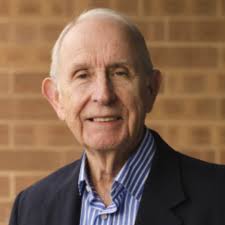
Dr. Mark Scott wrote this treatment of the International Sunday School Lesson. Scott teaches preaching and New Testament at Ozark Christian College, Joplin, Missouri. This lesson treatment is published in issue no. 4 (weeks 17-20; April 28–May 19, 2019) of The Lookout magazine, and is also available online at www.lookoutmag.com.
______
Lesson Aim: Trust Jesus’ power to protect you.
______
If Jesus can conquer death (last week’s lesson) then he can certainly calm a storm. And not just figurative, metaphoric, or spiritual storms, but real, physical, honest-to-goodness storms. When sin entered the world, creation experienced a separation from its creator (Genesis 3:17b-19; Romans 8:22). The coming of Jesus into the world began the process of setting things right and restoring creation. When Jesus performed miracles over nature, as in our text today, we witness the beginning of him making all things new (Revelation 21:5).
Prior to our narrative miracle-story text, Jesus had been preaching all day. The genre of his discourse was parables (Mark 4:1-34). But preaching will wear any preacher out, so Jesus was exhausted. At day’s end he instructed his disciples to get into the boat and sail to the other side (which meant across the very northern tip of the Sea of Galilee). Even though Jesus gave the orders to leave, it seemed as though the disciples took charge of Jesus. The text says, “They took him along, just as he was.” How was he? Bone tired. One detail that Mark gives is, “There were also other boats with him.” Did these boats miss the storm somehow? Did they perish at sea? Did they witness this stunning miracle? Perhaps others gave their eye-witness testimony to the calming of the storm. And this will be just the first of three miracle stories (Mark 4:35–5:43).
A Sunday school teacher once asked her class, “What is faith?” A little girl responded, “Faith is believing God without asking any questions.” That answer is not wrong, but it is inadequate. An informed faith contains scores of questions. Questions can stimulate a vigorous faith. Cliché answers to serious questions can make faith anemic and pale. We should notice that the sub-genre of our text is questions. Three are asked in the text, two asked by the disciples and one by Jesus.
The Question of Despair—“Don’t you care if we drown?”
While Jesus and the disciples were sailing toward the eastern side of the Sea of Galilee, a furious squall came up. This was not uncommon as the cool breeze from the hills combined with the warm moist air from the Sea of Galilee (650 feet below sea level) created tornadic-type winds. The storm was so severe that waves broke over the boat. Interestingly enough, Jesus slept through it. His preaching and ministry had exhausted him. He slept on the rower’s cushion. (This is the only time in the Gospels where we are told that Jesus slept.)
The disciples let Jesus sleep at first, but when desperation turned to despair, they woke him out of his sleep with a most odd question (see Jonah 1:4-6). “Don’t you care if we drown?” These experienced fishermen were scared. Jesus’ sleep displayed his trust in his heavenly father. But the disciples wanted action. Have you ever felt that God was asleep in regard to your situation (Psalm 22:1)? The question of care is most odd. Jesus came all the way from Heaven because he cared. In this instance, Jesus came out of a deep sleep, rebuked (the same word for his rebuking of demons) the wind by speaking to creation, and calmed the storm. The miracle itself took one verse to tell.
The Question of Fear and Faith—“Why are you so afraid? Do you still have no faith?”
In Matthew’s account of this story (Matthew 8:23-27) Jesus asked this question before calming the storm. But Mark has the actual calming first, and then this penetrating question. Matthew’s Jesus is ever the teacher first. Mark’s Jesus is ever the powerful wonder worker first. Matthew’s account spoke of “little” faith. Mark spoke of “no” faith. Clearly Mark is a bit harsher with the disciples. Fear and faith actually go together. The disciples had both. Yet they continued to follow Jesus.
The Question of Identity—“Who is this?”
Facing a storm is pretty scary, but facing the one who can calm the storm is even scarier. The text says the disciples were terrified (literally, “feared a great fear”). Can Jesus calm the trouble and storms in our lives? Of course. But that is not the point of this text. The storm was a real physical storm. The disciples were awestruck—not by their storms being calmed but by the identity of the one who calmed them. Psalm 89:9 says, “You rule the raging of the sea; when its waves rise, you still them” (English Standard Version). Psalm 107:29 says, “He made the storm be still, and the waves of the sea were hushed” (ESV). All of our questions of faith disappear when we focus clearly on the object of our faith.H
_______
Lesson study ©2018, Christian Standard Media. Print and digital subscribers are permitted to make one print copy per week of lesson material for personal use. Lesson based on the scope and sequence, ©2018 by Christian Standard Media. Scripture quotations are from the New International Version, ©2011, unless otherwise indicated.
Image: Detail of Christ in the Storm on the Sea of Galilee, an oil painting by Ludolf Bakhuizen (1630–1708). Courtesy of Wikimedia Commons

Author: Mark Scott
Dr. Mark Scott wrote this treatment of the International Sunday School Lesson. Scott teaches preaching and New Testament at Ozark Christian College, Joplin, Missouri. He also serves as minister with Park Plaza Christian Church in Joplin.