By Andrew Alesso
“Wait. So, you’re a minister, right?” she blurted out in the middle of our book club’s group discussion.
“Ha ha. Yeah, something like that,” I responded nervously.
“I’m surprised you’re being so nice to me,” she said. And then—with no hint of sarcasm—she asked, “And you really don’t hate me?”
I’d recently started the book club as a way to meet people in my city. I moved to Los Angeles to facilitate conversations like this. She had just told the group she was an evolutionary biologist. I had just acknowledged she must have a fascinating job.
“Wait. Why would I hate you?”
She explained she didn’t know any church people personally, but every day on her way into work she walked past picketing, screaming protesters who sometimes threw bananas at her.
“I’m trying to cure diseases to help humanity,” she said, “but they hate me because of what they think I’m doing to their religion.”
I apologized for how she’d been treated. She was amazed. She could hardly believe I didn’t hate her.
Several weeks later, I shared the gospel one-on-one with a guy who had been at the book club that night. He told me about his life. He shared different details, but the same story. He said, “I understand about God’s justice and standards. I just never would have guessed in a million years that Christianity is about loving your enemies.”
Then he said, “I’ll have to think about whether I want that,” before quickly changing the subject.
A Church for the City
I moved to Central LA with my wife, Katie, and son, Dax, in December 2016 to begin the process of launching a new church with the help of Stadia Church Planting. We moved to Silverlake—a trendy, up-and-coming neighborhood filled with rock stars, famous movie directors, and homeless encampments under every overpass. The neighborhood is next to Dodger Stadium between Hollywood Hills and Downtown Los Angeles.
City life is energizing. I live in the entertainment capital of the world with professional sports, music, comedy, art, book signings, and so much more right down the street. I love meeting people from many different walks of life. The diversity and culture of city life are incredible.
But city life can be hard too.
It is incredibly cramped and expensive. We sold our house and doubled our monthly payment to move into a one-bedroom apartment in East Hollywood. We can hear our neighbor’s television at all hours. There are more than 9 million people in Los Angeles. This is just normal life for a whole lot of people.
City life is fast-paced and transient. People either work at big-time, control-your-whole-life jobs or they are hustling with multiple jobs to pay the rent. One quarter of our neighbors work in the arts, which is a never-ending grind because every relationship is a networking opportunity. Forty percent of city residents are from another state or country. One in four residents has no high school diploma. The long work hours, social climbing, transience, and distance from family add up to this: People are incredibly isolated.
Imagine being surrounded by people all the time but being desperately lonely.
The city’s residents press on because of their dreams. But when life can’t match the dream, they need family and they need hope. We all do.
God designed the church to meet this need, but most old church buildings are being turned into housing and clothing stores. Affordable housing gives people some hope, at least. What has a church ever done for them?
Where’s the Church that Does Good?
My journey to planting a church in urban Los Angeles started when I was a teen and would visit my mom in a women’s recovery home in East Hollywood. She told me about the change God was orchestrating in her life. I discovered God had the miraculous power to put our broken family back together. I also discovered how much poverty and desperate need exists in the city.
But the city also has many educated, liberal, career-aged singles and young families who are changing the world. They genuinely want what’s good for society, but they aren’t sure what God or church has to do with that.
I decided to name our church “Thrive” while eating brunch with my sister in West Hollywood. We didn’t grow up in a Christian home, but we started attending youth group together while teens. I got really involved. She had some negative church experiences before leaving to pursue her goals in the city.
I enjoyed serving on staff at a suburban megachurch for the previous eight years, but knew of few churches reaching the city. Who was showing God’s love to the poor there, or to the single, educated world-changers like my sister?
I asked her, “What do you think God feels about you?”
“I don’t believe in God,” she reminded me.
“I know. That’s fair,” I said. “But if you did, then what would you guess?”
“Well, I feel really bad about myself when I go to church,” she confessed. “I guess he’s mad at me . . . or maybe he’s just ashamed of me?”
My sister doesn’t hate God—doesn’t even believe in him—but was concerned God hated her. It was a common story throughout the city.
It’s not enough for a church to have a good band or a dynamic preacher when the Video Music Awards are happening across the street. If I thought God hated me, it would take a lot more than a preacher and a band to get me in the door.
We knew that if we were ever to lead our neighbors to faith in Jesus, our church must help them believe that the God of the Bible is actually for them and that his laws are beneficial to them. That’s why our mission is to invite our neighbors to belong, contribute, and thrive in the family of God as we make Jesus our Savior and King. This requires selfless Christians who believe God’s provision is found by seeking first his kingdom (Matthew 6:33).
Love for the Long Haul
We’ve found God’s words to the Babylonian exiles to be helpful as we proclaim and demonstrate the gospel in our city.
God told his people, “Build houses and settle down; plant gardens and eat what they produce” (Jeremiah 29:5). For Israel to make an impact in Babylon, they needed to put down roots. In a fast-paced, transient setting we need churches and church leaders ready to build a life with people. I’ve already seen four new churches come and go in my neighborhood. We can’t just be a flash in the pan. Success requires consistency and stability. Too often, people and churches throw resources at urban ministry and then pull back when they realize the return on investment falls far short of a suburban outreach. Our cities need people committed for the long haul.
God also told the exiles, “Seek the peace and prosperity of the city to which I have carried you into exile. Pray to the Lord for it, because if it prospers, you too will prosper” (Jeremiah 29:7). God wanted the exiles to love and pray for their enemies. He wanted them to do good. At Thrive, we say our whole community should miss us if we leave. To that end, we serve the needs of kids through our local schools. We’ve remodeled a teacher’s lounge at the school where our church meets. We deliver groceries to families with needs, and we pray for them in their homes.
In Jeremiah 29, God also warned the people not to fall for the simplistic, feel-good religion of the false prophets, but to trust God’s eternal plan as they suffered for the good of their neighbor. On days when it’s hard, when we feel like giving up, we rest in knowing that God asked us to love the city. We aim to do right by every person and trust God with the results. We’ve had some hard days, but he’s never failed us.
The guy who works the counter at my favorite burger spot—he grew up in church but doesn’t spend time with many Christians now—gave me some advice: “Just do some good without wearing your T-shirts to get credit for it. If you’re genuinely good to us for long enough, we’ll eventually start to trust your message.”
Sounds like a plan to me.
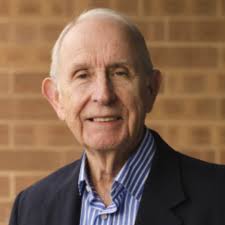
Andrew Alesso planted Thrive LA Church in the Silverlake neighborhood of Los Angeles in September 2017. He’s passionate about Jesus, empowering others to reach their potential in Christ, and rooting for the Los Angeles Lakers.

Author: Christian Standard
Contact us at **@********************ia.com