By Chris Moon
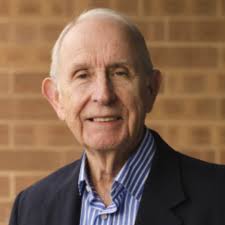
Dave Richmond was standing in the parking lot of his church in rural Virginia.
In one direction, he could hear chainsaws. Someone was cutting down a tree. In the other direction was a tobacco field.
Asked whether living and ministering in a remote environment proved to be an advantage during the COVID-19 pandemic, the preaching minister at Cool Spring Christian Church near Keysville, Va., said he sensed that it was—for the most part.
“We’re naturally spread out,” Richmond said. “There have not been a lot of cases in our area. We’ve had very little impact because of the disease itself.”
But that doesn’t mean there’s been no impact. Christian Standard interviewed Richmond and two other small-church pastors about their experience leading their churches during the pandemic.
CONSTANT COMMUNICATION
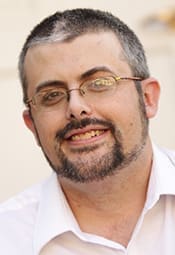
Richmond said Cool Spring Christian Church hasn’t met in its building since March 20—similar to many churches around the country. Virginia state regulations continue to prevent the church from resuming regular services.
During the first six weeks of the shutdown, the church offered prerecorded services online. It couldn’t stream its services live because of bandwidth restrictions in its rural area, Richmond said.
After that, the church obtained an FM transmitter and began offering drive-in church services.
“We were averaging more coming to drive-in church than to regular services,” he said.
Church attendance before the pandemic was between 90 and 100.
The last couple of weeks, the church has offered “Church on the Lawn” in front of the Cool Spring building. Family groups have been siting six feet apart.

“So far, we’ve had great weather to be able to do this,” Richmond said.
Continual communication with church members has been important. Richmond said he contacted every member of the congregation personally during the first week of the shutdown, and the elders have helped with that responsibility since then.
“We were able to keep in touch with everybody,” he said. “We determined early on that trying to have a post on our Facebook page every day was important.”
The church also has been serving its community. It launched a food pantry in its building for those in need with a simple strategy—“If you have food, bring it. If you need food, come get it,” Richmond said.
Another Christian church on the opposite end of the county is doing the same thing.
“Between the two of us, we like to say we are keeping the county fed,” Richmond said.
USING GOD’S WORD
David Braxton, the preacher at Caledonia (Ohio) Church of Christ, said the overall impact of COVID-19 has not been all that significant in his town of about 400 residents.
Even though schools closed and the governor issued public health orders with various restrictions, people continued to get out and about, and children could be found playing with each other in town, Braxton said.
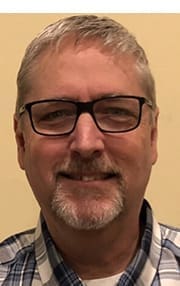
“I think most people here in this little town were pretty skeptical,” he said.
Still, not everyone doubted what the national experts were saying about the potential severity of COVID-19, he said.
Churches were not ordered to close in Ohio, and Caledonia Church of Christ opted not to officially cancel its in-person services. Instead, it put a halt to Sunday school classes and youth and children’s activities and began streaming its services online, giving people the option to stay home.
Braxton said most of the congregation of about 65 attendees did just that, at least initially.
A handful of members showed up those first few weeks in March, and that number grew in April. Today, 35 to 45 people attend the Sunday service. Some older and immunocompromised members are remaining home.
Braxton said the decision to continue with services did cause some “consternation” among people who worried the church might be endangering people’s health by not completely shutting its doors. Braxton’s answer was to turn to God’s Word.
The church used the pandemic as a teaching moment about the need to maintain love and unity within the church. Braxton said the church also looked at the idea of being submissive to governing authorities.
“For me, it’s about using the Word of God,” he said, adding, “for us, [the divisiveness] has definitely calmed.”
NEW TECHNOLOGY
John States leads two small churches in southeast Nebraska—Stella Community Church and Nemaha Christian Church. Those congregations also never officially canceled services because of the virus.
When gathering sizes were restricted to no more than 10 people, Nemaha Christian Church simply kept meeting. It only averages 10 to 15 in attendance anyway.
In Stella, the church held three services on Sundays to accommodate the 40 to 60 who typically attend.
Not everyone was happy the churches continued gathering. Some church members thought a total suspension of services was warranted considering the COVID-19 concerns.
“At first, I did have some folks in my office,” States said. “The good thing is I have backing from my leadership.”
States said he pointed out to critics that they didn’t need to attend the services. No one would judge them if they chose to stay home. States said he encouraged people to treat the services like “snow days”—only those who felt safe getting out should come.
He also noted the unique circumstances in Stella (population 150) and Nemaha (population 170). Rules crafted for churches in larger cities didn’t necessarily make sense in very small towns.
“We’re not heavily populated, and we don’t really have people traveling a lot out of the area that we’re able to contract the virus as easily as if we lived in Omaha or Lincoln or any of those towns,” States said.
As the pandemic has continued—and as States’ churches continue to meet—States said he’s been pleased that some of those who were concerned early on have come back to the church’s gatherings.
States did say the pandemic has bolstered the church’s use of technology. The church at Stella had been pondering upgrading its sound and video system, he said, and “this really sped that up.”
The church has been streaming its services on Facebook. Eventually, the church will post its services on its website.
States said he’s been pleased by church members’ embrace of technology like Zoom meetings.
“To me, that’s kind of a pleasant surprise,” he said. “Our people have responded pretty well to using technology, but they are getting tired of it.”
Chris Moon is a pastor and writer living in Redstone, Colorado.

Author: Christian Standard
Contact us at **@********************ia.com