
By Doug Redford
Matthew 21:33-44 records Jesus’ parable of the tenants. A landowner planted a vineyard, rented it to some tenant farmers, then moved to another location. When the harvest time drew near, the landowner sent some of his servants to collect his share of the fruit. But the tenants treated them shamefully, even killing one of them. So he sent another group of servants (even more), and they received the same treatment. Then the landowner decided to send his son, thinking, “They will respect my son.” Sadly, the tenants saw the son’s arrival as an opportunity to kill him and then claim his inheritance. And that is what they did: they threw him out of the vineyard and killed him.
When Jesus got to that part about the son being thrown out of the vineyard and killed, did his voice begin to quiver? Did tears begin to form in his eyes? For at that moment, he was talking about himself! He was the son, and this was how he would be treated in just a few days.
The religious leaders recognized that Jesus was talking about them; they were the wicked tenants in his parable (Matthew 21:45). But he was also talking about us in the parable. We are meant to be the “other tenants” (v. 41), the people who should be producing the fruit that Jesus desires (v. 43).
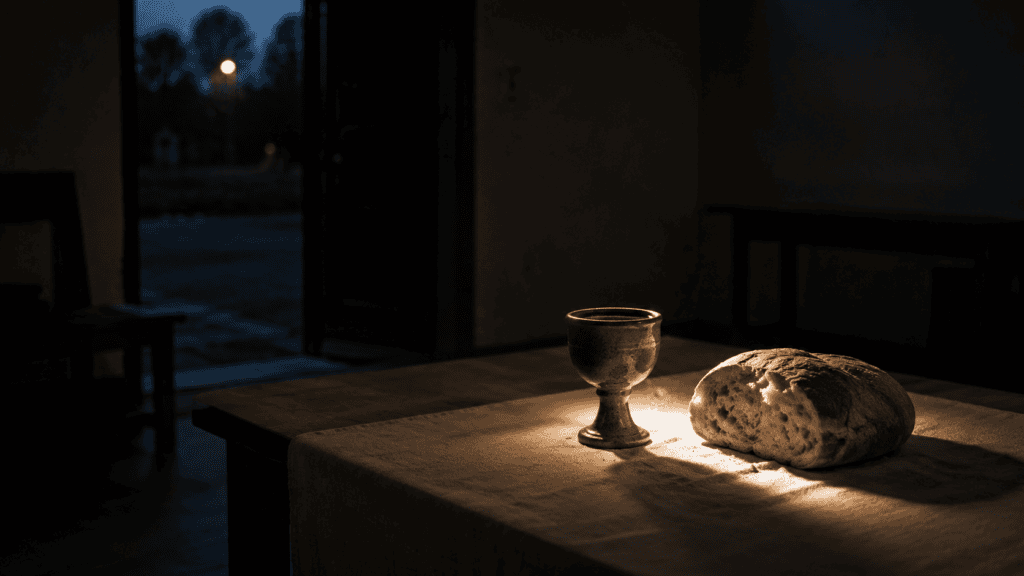
As we observe Communion today, we honor the Son of God who was represented by the son in Jesus’ parable. We should keep in mind, however, that while the son in Jesus’ parable was killed by the wicked tenants, Jesus was not really “killed” by the religious leaders. Jesus made it clear that his life would not be taken from him; rather, he was giving his life: “No one takes it [my life] from me, but I lay it down of my own accord” (John 10:18, New International Version). Jesus was carrying out what Peter later described as “God’s deliberate plan and foreknowledge” (Acts 2:23). Jesus was giving his life for the sins of all humanity, including those who demonstrated no respect whatsoever for the Son.
As we take these emblems of Communion, let us do so with deepest respect and reverence for the Son and his sacrifice. Our eyes may not well up with tears, as perhaps Jesus’ eyes did when he described how the tenants treated the landowner’s son, but our hearts should well up with gratitude.
Doug Redford has served in the preaching ministry, as an editor of adult Sunday school curriculum, and as a Bible college professor. Now retired, he continues to write and speak as opportunities arise.

Author: Doug Redford
Doug Redford has served in the preaching ministry, as an editor of adult Sunday school curriculum, and as a Bible college professor. Now retired, he continues to write and speak as opportunities arise.



This is a good rendition of this parable. I’m going to use the thoughts of it in a meditation that I’m going to give. Thank you Mr. Doug Redford
Thankful for the blessing of this support