
By Dan Schaeffer
“Hide and seek,” is a children’s game where you look for clever places to hide from the person looking for you. The goal is not to be found. But when we get older, the game becomes real.
When I was a young boy, I grew up in a series of broken homes. I would dream of escape. There was wallpaper in my bedroom with designs of vintage trains, planes, boats, and a wonderful old balloon with a gondola beneath it. I would dream of having that balloon with a rope that reached from my room to the balloon.
I imagined when everything was stressful and frightening I could just pull that rope over, get into the balloon, and float away. I’m not alone.
David had the same feeling. In Psalm 55, when threatened with danger, he wrote, “Oh, that I had wings like a dove! I would fly away and be at rest. Behold, I would wander far away …” (Psalm 55:6-7).
Sadly, our problems find us in the best of hiding places. This feeling of wanting to escape is nothing new. Fortunately, in Psalm 46, we come across the best hiding place in the world. The psalmist wants us to consider some essential things as we face trouble in our life.
The Relationship You Have With God
“God is our refuge and strength, A very present help in trouble. Therefore we will not fear, though the earth should change, And though the mountains slip into the heart of the sea Though its waters roar and foam, Though the mountains quake at its swelling pride. Selah.” Psalm 46:1-3.
Have you ever wondered why we have to have trouble at all? It’s great to know God cares, but why doesn’t he just make it go away? That would certainly get my vote!
The story was told of a man confined to his bed with a lingering illness. He wondered why he had to be bedridden. All he could do was look out of his bedroom on his sunlit windowsill. One day he spied a butterfly cocoon. Soon, the butterfly began struggling to escape the cocoon. Hours went by, and the insect made no progress. The man couldn’t help identifying with this poor insect. Feeling empathy for the poor trapped creature, he took a pair of scissors, and snipped the opening larger for the butterfly to escape.
The butterfly eventually crawled out of its cocoon, but that was all it was ever able to do. God designed the pressure of the struggle to push colorful, life-giving juices back into the wings, but the misguided man had short-circuited that process. The insect would never be anything now but a stunted aberration, condemned to remain crawling in the dust.
God sometimes allows trouble, or grief, to grow and mature us. But he also knows that the trouble frightens us, and wants us, in the middle of our dangers, to find peace in him.
The psalmist describes earthquakes, and ocean storms, but he’s not really talking about those kinds of dangers. In the Bible earthquakes and oceans are frequently symbolic of man and his claims of power. The psalmist is using two of the most powerful images that a human could imagine, an earthquake and the sea, which can both unleash devastating fury.
Both of these describe the kind of terror we can feel when problems arise in our lives, especially in the form of people. The psalmist shows he is not talking about the power of nature, but the power of wicked people. “The nations made an uproar, the kingdoms tottered, He raised His voice, the earth melted.”
But he reminds us, even before the problems are described, that God is our refuge. A refuge is a place where no matter how weak and powerless you may be, you are safe from danger.
Isaiah the prophet wrote, “For Thou hast been a defense for the helpless, A defense for the needy in his distress, A refuge from the storm, a shade from the heat. (Isaiah 25:4). David wrote, “Thou art my hiding place; Thou dost preserve me from trouble; Thou dost surround me with songs of deliverance. Selah. (Psalm 32:7).
When trouble hits, God wants us to trust that he is present with us, protecting, and delivering us. He wants to be our refuge. Then the psalmist tells us that God is our strength, not that God makes us strong, but that he is our strength.
“Therefore,” the psalmist says, “we will not fear.” We will not fear when our spouse wounds us, friends leave us, the stock market crashes, sickness comes, we lose our home, or our children go south. “Though the earth should change.” Though the worst possible thing we could imagine happen, we should not fear, because our trust is in God, not mutual funds, bank accounts, relationships, pleasures, drugs, or anything else.
He is a very present help in times of trouble. The word trouble could also be translated, “tight places.” Are you in a tight place right now? When you are worried or afraid, in order of importance, where do you go for help first? Family? Friends? Your Visa card? The police? The doctor? Where does God come in? Where we place Him on that list is a measurement of our faith.
We who say that we are trusting God with our eternal destiny, often don’t trust Him to meet our financial needs, marriages, or our children. What’s wrong with this picture?
We need to think about the relationship we have with God. But we also need to consider…
The Presence of God and His Provision
“There is a river whose streams make glad the city of God, The holy dwelling places of the Most High. God is in the midst of her, she will not be moved; God will help her when morning dawns. The nations made an uproar, the kingdoms tottered; He raised His voice, the earth melted. The LORD of hosts is with us; The God of Jacob is our stronghold. Selah.” (Psalm 46:4-7).
The psalmist dramatically changes the scene. Gone are the earthquakes and the pounding ocean waves. Now we’re sitting beside a quiet river, but this is not meant to be taken literally. Jerusalem had no river running through it. In scripture, a river is symbolic of God himself, his presence, like continually flowing water.
This river doesn’t endanger us. It’s a place of peace. God is the river, his mercies never ceasing, his grace ever flowing, his provisions never ending. We could no more stop that flow than we could hope to hold back the waves of the sea. But this isn’t a place, it’s an attitude of heart and peace that is being described.
“God is in the midst of her, she shall not be moved.” We are often terrified by the threat of imminent disaster in our lives, the movements of circumstances and chorus of voices around us that insist that we are alone and unprotected.
“God will help her when the morning dawns.” Have you ever noticed how much bleaker things feel at night than they do with the light of morning? Darkness seems to exacerbate fears and anxiety within us. God knows that, which is why he uses the picture of morning as the coming of his help. The darkness (danger) will be forgotten, because God’s deliverance has come.
To experience this morning of God’s deliverance in our life, we need to cultivate, nurture, and water our faith in God. Because that morning of deliverance, that peaceful existence by that gently flowing river, even while all about you is coming apart and threatening your peace, is experienced only by those who are willing to exercise their faith in God. Faith is a spiritual muscle that needs exercising.
I am reminded of Kathryn Koob, a Christian who was one of the American hostages held by the Iranian government for almost two years in 1979. She said of those days, “Even though I wasn’t talking with my friends and family, I knew that they were praying for me. You use those resources you have, and you deal with the unexpected in your life one day at a time, or 15 minutes at a time. Sometimes, it was just, ‘Dear Lord, get me through the next 15 minutes.’”
That’s what the psalmist is trying to remind us of. “The Lord of hosts is with us; The God of Jacob is our stronghold.” “Hosts” is the word for armies, and the God of Jacob refers to the God who keeps his covenantal promises. God is with us, and his power is greater than the greatest danger we might face.
What promises of God are you clinging to in times of trouble? What power or attributes of God do you remember when you’re facing difficulties?
The Works of God
Come, behold the works of the LORD, Who has wrought desolations in the earth. He makes wars to cease to the end of the earth; He breaks the bow and cuts the spear in two; He burns the chariots with fire. “Cease striving and know that I am God; I will be exalted among the nations, I will be exalted in the earth.” The LORD of hosts is with us; The God of Jacob is our stronghold. Selah. (Psalm 46:8-11).
The psalmist is saying, “let this information quiet your heart and soul and bring you peace. Quit reciting to God all your problems, and all your enemies, and realize who he is.”
“Come, behold the works of the Lord.” Israel’s history was full of miracles and God’s provisions and protection. But it is so easy to forget all that when you face danger again, and fear boils up in your heart. This is a call to remember.
When you feel fear beginning to take over your heart, remember what God has done in your own past. When I am tempted to be afraid of some new danger, I have learned to get historical (rather than hysterical). I simply remember all the ways God has delivered me in the past. And very quickly, I find peace again.
Simply put, you learn to trust God by … trusting God.
Then follows one of the most famous verses in the Bible. “Cease striving, and know that I am God.” The word “cease striving” literally means, “let your hands sink down.”
The message is “Stop acting as if I was not God, as if I was not able to handle the biggest concerns of your heart.”
You have a hiding place, a refuge. You need to come to the river of God, and reacquaint yourself with the eternal God who by a word moves mountains, destroys armies, and calms seas.
Let him be your hiding place.
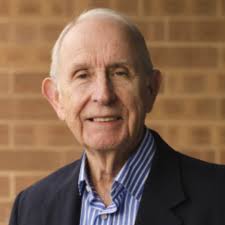
Dan Schaeffer is a retired minister and author of over 10 books and hundreds of articles.

Author: Christian Standard
Contact us at **@********************ia.com






This is so timely, having arrived in my inbox on the morning when tsunami waves from the earthquake off the coast of Russia were expected to hit the west coast of the U.S. Truly God is our refuge. When I was in fourth grade, our public school teacher required everyone in our class to memorize Psalm 46 and recite it in front of the class. That wouldn’t happen today in 2025, but I’m sure it helped all of us even though at the time it seemed unpleasant.
This touched me. I lost my Boyfriend September 17 to Liver Cancer. Depression is trying to get the best of me. Please pray Cousin