By James Thompson
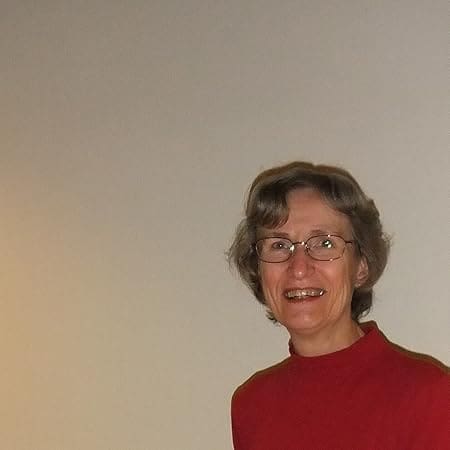
It took Karen Rees almost forty years to finish her first novel.
She started working on The Ruby Ring: Battle for an English Bible not long after moving with her husband, Benjamin, from Missouri to Hong Kong in 1975. There, they began a ministry as missionaries and were soon also busy raising their two children.
“I didn’t have a whole lot of time to write, but I had a lot of time to think,” she recalls. When she could find a few spare minutes, she worked to get her ideas onto paper. After much research, writing, and rewriting over four decades, the book was published by CrossLink Publishing in 2013. It was listed as a National Indie Excellence Award Finalist the next year.
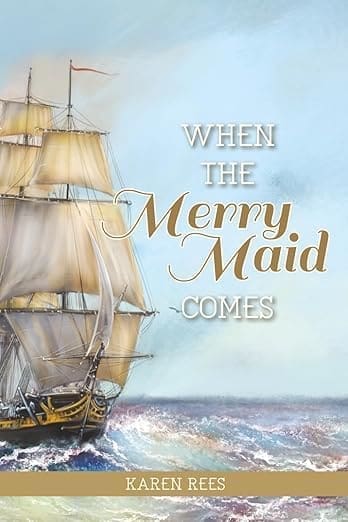
She has finished her subsequent projects, including her most recent book, much more quickly. When the Merry Maid Comes, published in February, tells the story of Sabrina, a young woman from Boston, who has joined her uncle, a sea captain, on a voyage to Hong Kong. The plan goes awry, though, when her uncle dies and the ship’s first mate seizes control. He steers toward the Philippines intending to solidify his claim to the vessel by marrying Sabrina, who is now the rightful owner.
The story is set in the mid-19th century when the Philippines was still a Spanish colony. The Spanish brought Roman Catholicism with them when they arrived several centuries before, and the church was still restricting the laity’s access to the Bible. After Sabrina arrives and begins to get to know the island chain and its inhabitants, she encounters a world where owning a Bible— and, of course, reading one—is considered a serious crime.
While the setting of this novel is far removed from Rees’ earlier works, readers will recognize some of the themes. The Ruby Ring and her next two books (A Tale of Souls and This Tangled Skein), which form a trilogy, center on William Tyndale and his struggle for an English-language Bible. Translating and distributing a Bible that could be read by the general population was also illegal in 16th century England. Rees hopes that by bringing Tyndale’s struggle to life through the medium of historical fiction, her work can help “people value the Bible.”
“[Tyndale] knew that the Bible changes people,” Rees said. “And that’s what I know, too.”
Rees’ protagonist in When the Merry Maid Comes also experiences this dynamic firsthand, as she begins to understand and appreciate the Bible much more during her involuntary sojourn in the Philippines.
In the story, Sabrina also comes to admire Filipinos and their culture. This mirrors Rees’ own experience. When she and her husband began their ministry in Hong Kong, they worked with a Chinese church that Benjamin’s parents (who were also missionaries) had started years before. The Reeses taught the congregation “how to do the church work themselves,” allowing for the Chinese Christians to learn and develop as leaders. Eventually, they realized that chapter of their work was ending.
“After about six years, [the Chinese congregation] decided they were ready to try it on their own,” Rees recalls. “So then we were praying … what do we do next?”
God didn’t wait long to provide an answer. Around this time, many Filipinos were coming to Hong Kong to work as maids. On the Reeses’ final Sunday with the Chinese congregation, several Filipino women sought them out for help finding a church to join. This seemed like a clear sign from God, and it was the beginning of the New Testament Church of Christ, where the Reeses have been shepherding a mostly Filipino congregation for almost forty-four years. Rees says she “wove a lot of Filipino culture” into the plot of When the Merry Maid Comes “in appreciation of knowing Filipinos all these years.”
One way that Asian cultures often differ from the West is their stronger focus on family or community rather than the individual. Rees tried to illustrate this and other cultural differences in her novel so that American Christians can learn about another way of understanding the world, even if they never go to Southeast Asia.
“So many people, if they never travel outside their home area, they never are exposed to any other culture, to any other way of doing things, any other way of thinking, even,” Rees said. “And so this is one reason I put in what I did with the Filipino culture, to introduce them to a culture that works differently.”
In addition to writing novels, Rees has also contributed articles to the Christian Standard and Lookout. She says she may eventually start working on another book, perhaps a prequel to her Tyndale trilogy. When asked what she enjoys about working on one of her many writing projects, she laughs and gives a quick answer: “Getting it finished!”
Along with her newest book, When the Merry Maid Comes, Karen Rees’ books are available for purchase on Amazon.
James Thompson is an international campus minister and a freelance journalist.

Author: Christian Standard
Contact us at **@********************ia.com