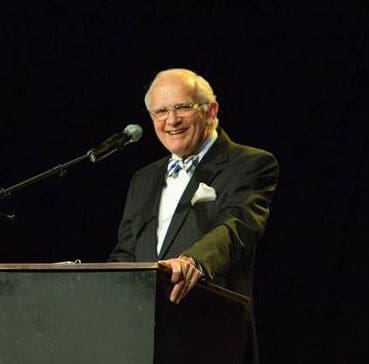
By Jerry Harris
Back in January of 2018, I wrote a column entitled “The Tyranny of Numbers.” Here is the front end of that column:
I live every day with the tyranny of numbers. It’s everywhere I look, around every corner, in every closet, reminding me of the truth, the often painful truth. When I get up in the morning, the tyranny of numbers is waiting on the bathroom scale display. It’s in my Weight Watchers app on my phone, in my budget, my bills, and my bank balance. As a pastor, I face the tyranny of numbers when I see last week’s attendance, the offering number, and the number of baptisms. I live with the tyranny of numbers when I look at how our church numbers compare with others, whether the trend is up or down, and what I might do to improve them. When the numbers are good, my whole day seems better. The reverse is also true.
With that in mind, the following thoughts might seem counterintuitive, but an article from Youthworker Journal magazine (https://www.youthworker.com/an-invitation-to-the-slow-club/) really got my attention. It caught me with the title, ”Invitation to The Slow Club.” It was an interview with Mark Yaconelli and it spoke deeply to my heart as I was living in the torment of the tyranny of numbers. Let me share some of the wisdom I read in that article.
A Religion of Relationship
The interviewer explained that the idea of slowing down not only feels less productive, it can also put a ministry position at risk. Mark responded that Christian faith is a religion of relationship and commitment to relationship with God, with others (even difficult others), and with yourself (maybe the most difficult of all). The highest form of relationship in this life is love, and the speed of love is the speed of God. He shared that it takes time to maintain a sense of wonder, to notice the surroundings, and to focus on the little things that might seem insignificant. It takes discipline to resist the rush from activity to activity and practice presence instead of constant productivity.
Deep relationships aren’t fast and if we’re moving fast all the time, there’s no way to have deep ones. Mark shared that “when you are in love, you want to move at a much slower pace. “Lovers stroll, they linger, they savor, they seek to engage in leisurely activities with one another. When we are in love, we want to bask in each other’s presence. It’s the same thing in a loving relationship between a parent and child. Children want to be held, snuggled, talked to, wander, play, examine things and be together. Children want their parents’ full attention. They don’t want to be rushed from place to place, activity to activity.”
“When we move at a harried pace, we don’t feel as much, our senses are blurred, and there’s no space to allow emotions to bloom—sadness, grief, gratitude, or wonder. We become numb, less alive, more distracted, and less human. We can see image after image, read story after story of violence, injustice, environmental destruction and not feel anything. At high speed, people become objects to navigate, manipulate, network, use or discard. To move quickly is to move at the speed of loneliness.”
Mark was asked what was lost when we slow down. His response described me to a tee. “The truth is that we become less productive. If I am always living at the speed of our caffeinated culture—multi-tasking, running from one activity to the next—I can get a lot done. The question is How effective is the activity? The truth is that Jesus would be fired from most church jobs because he doesn’t do enough. He doesn’t look productive enough. I easily could imagine Jesus called before a church board and told, ’You are spending too much time in prayer, too much time in solitude, too much time with that one small group of 12. You need to get more small groups started. You need to systematize your activities. Write more material. Start a training program.’ On and on. . . .”
“Jesus is not efficient, and he is not operating at maximum productivity. Yet, Jesus is incredibly effective. Why? Because he is willing to be fully present to people, to suffering, to joy, to need, to God. He lives and serves at the speed of God.”
Living Out the Sabbath
When Mark was challenged with Jesus traveling from town-to-town healing and teaching, the image projected is of him never tiring. His response was more comprehensive. “Yes, he teaches, he serves, he heals and responds to questions and needs. He also gets tired, he sleeps in the boat, he wants to sit in people’s homes and be fed and cared for; he needs time away from the ministry, time away from the disciples. He often goes to the mountains or to the lakeside or someplace away from the harried crowds in order to rest, pray, remember, recollect himself, allow grace to nurture his body and spirit. All of that is there in the text. What’s interesting is that we ignore those parts of Jesus’ life. We ignore all the ways in which he is living out the Sabbath; and that’s damaging, because we miss that Jesus’ activity flows from these quiet moments of rest, prayer ,and sabbath. Jesus’ activity flows from a deep sense of communion with God. It is these moments of downtime that give Jesus the patience and capacity to see, hear, feel ,and respond rather than react. Jesus lives from his soul; the old monastic way of understanding the soul was that it is in a state of ’holy leisure.’ His body moves, he travels from town to town; but his heart, his soul is attentive, awake, present, available, and in wonder.”
Mark shared that the challenge is to follow Jesus’ methods as much as his message. Look at all Jesus isn’t doing. Why didn’t he work harder? Why didn’t he produce more? Is it because he would have been less alive, less available to people, less attentive to suffering, more impatient, and less generous? Jesus lives and moves at the speed of love. That is our struggle. Does that mean we move fast at times? Yes. We need to address family needs. We need to rush between meetings with people; there’s a crisis, and we need to organize people quickly. It’s not about speed, but about love. We need regular moments of slow in order to ground us in God’s love. Once grounded, we can travel, serve, and care for people at whatever speed is needed; but if we aren’t savoring God’s grace, savoring our lives, then our activities become brittle, anxious, cold, and lose the warmth of God.
Membership Requirements
Mark provided six practical tools required for membership in the Slow Club:
First, walk more. “Walk to work, school, or to meetings if you’re able. Take late-night walks under the stars. Walk with your spouse or children. Be outside. Notice the created world. Get out of the man-made world for a moment. When you walk, don’t make phone calls or listen to music. Walk and say, ’Jesus, walk with me.’ Then reflect on your day, feel your life, notice your surroundings, pray the prayer your heart is praying.”
Second, sit. “Sit outside in back of your house and notice the changes in season. Sit in the empty sanctuary of your church during the week and rest. Sit and ask, ’God, what is your prayer?’ Then listen.”
Third, read. “Go off somewhere restful and read. Read books that feed your soul. Read poetry. Read the Bible. Read, and when you get sleepy, say to God, ’Give me rest.’ Then sleep. Nap. Rest. Remember the earliest definition of prayer is ’to rest.’”
Fourth, eat. “When it’s time to eat, pray thanks to God, then eat with gratitude for what you’re given. Remember Jesus says, ’Do this in remembrance of me.’ So, remember Jesus, remember the pleasure of being alive. Then eat and enjoy good food.”
Fifth, listen. “Listen to your kids, your spouse, your friends, the stranger at the next table. Try and listen with your whole heart. Slow down and feel the feelings that are beneath their words. Listen and be grateful for people, family, friends, and the beauty of strangers.”
Sixth, play. “When you are with your own children or teenagers, play. Play with wild abandon. Whoop, holler, run, laugh, play, and feel the great pleasure of being alive.”
Mark shared that “the great pleasure of a spiritual discipline (for those of us achiever types) is that when we do it, we feel great about ourselves. We have achieved something. We check it off the list. We have spent time with God, we have tended our souls, we have proven our spiritual fidelity—proven, mostly to ourselves—that we are serious about God. In having a spiritual discipline, we secretly hope to possess God. Then, when we neglect our spiritual practice we feel empty, ashamed, lazy, neglectful. We shame ourselves for our own lack of spiritual control.”
Redefining Spiritual Practices
“There are people who love routine and schedules. These are the people who write books on spiritual practices. Good for them. There are other people who love God in other ways—through serving, music, reading, teaching, running, or using their gifts. These people don’t need a contemplative practice to reach God; they just need to receive God in the midst of daily moments when they feel fully alive, then call that activity (whatever it is) their spiritual practice.”
“If it is positive and life-giving, then by all means have a regular practice of slowing down and being with God. Remember the spiritual life is an art, not a science. There is no formula. Let God come to you. Find God’s slow and healing grace in the midst of your daily activities—when you eat, walk, sit, play, read. Remember love is the spiritual life. Love is not detached, serene and full of peace and calm. Love is messy. No one who seeks to live a life of love can keep from feeling scattered. So, stop trying to force it. The spiritual life is pleasurable. It’s not a burden. So if you can’t keep a discipline, find the slow in the midst of your daily activities. Receive the small gifts of quiet and presence within your day—during a meal, a ride on the bus, coffee with a friend, playing guitar, watching kids in the backyard. Notice God in these little moments and make that a time of nurture.”
The Slow Club sounds like a great place to just “be” who we claim to be. And while we might try to schedule sabbaticals or study breaks, the Slow Club is waiting for us every day, hidden behind the doors of simple moments or in the fabric of the ordinary hectic and ordinary pace of life.
Jerry Harris is publisher of Christian Standard.

Author: Christian Standard
Contact us at **@********************ia.com