By Doug Redford
On November 19, 1863, President Abraham Lincoln delivered his famous Gettysburg Address. It remains one of the most noteworthy speeches in American history, though it consists of less than 300 words. Lincoln began by referencing the beginnings of the nation and cited language from the Declaration of Independence: the proposition that “all men are created equal.” He then noted the “great civil war” currently being fought in defense of that ideal and how on that day in Gettysburg, a piece of ground was being dedicated as a cemetery in tribute to those who had given their lives during what became the most pivotal battle of the war. “It is altogether fitting and proper that we should do this,” he said. Lincoln later challenged his audience to “take increased devotion to that cause for which they gave the last full measure of devotion.”
Consider at this time of Communion those words, “the last full measure of devotion.” Picture, not Gettysburg, but Gethsemane; not a battlefield, but a garden. In truth, however, that garden was a battlefield, as the Son of God anguished over the “great spiritual war” in which he was engaged to accomplish the purpose for which he had come into the world: “to give his life as a ransom for many” (Matthew 20:28, New International Version). Previously Jesus had “resolutely set out for Jerusalem” (Luke 9:51). And now, in Gethsemane, he “resolutely” committed himself to the Father’s holy purpose: “Not my will, but yours be done” (Luke 22:42).
Toward the conclusion of his Gettysburg Address, President Lincoln urged his listeners to consider the “unfinished work” and the “great task” before them. He wanted them to make certain that those who had died at Gettysburg did not do so “in vain” and that America would experience “a new birth of freedom.” We who have chosen to follow Jesus have an unfinished work and a great task before us, for we have embraced that same cause for which Jesus gave “the last full measure of devotion.” We desire that others experience a “new birth of freedom”—the new birth that offers freedom from sin and an entrance into the “holy nation” of God’s chosen people (1 Peter 2:9). Jesus’ Great Commission outlines the unfinished business that the church is still called to address.
Truly we can say, whenever we gather to observe Communion, “It is altogether fitting and proper that we should do this,” and do so, as Jesus said, in remembrance of him.
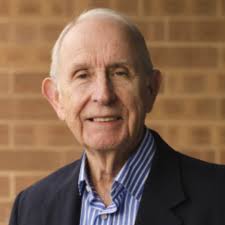
Doug Redford has served in the preaching ministry, as an editor of adult Sunday school curriculum, and as a Bible college professor. Now retired, he continues to write and speak as opportunities arise.

Author: Doug Redford
Doug Redford has served in the preaching ministry, as an editor of adult Sunday school curriculum, and as a Bible college professor. Now retired, he continues to write and speak as opportunities arise.