By Chad Broaddus
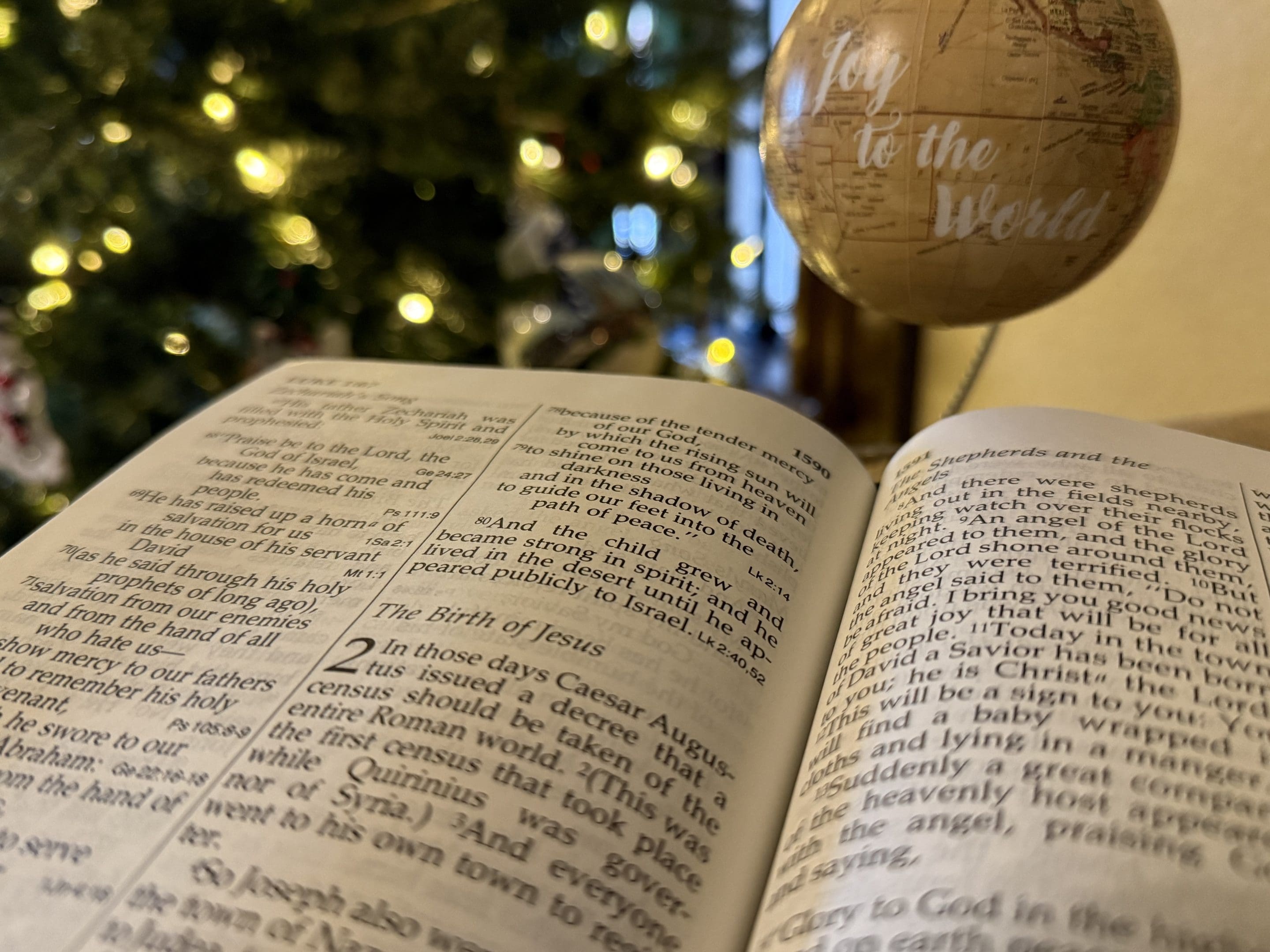
There’s a name my family mentions every Christmas. None of us really knows that much about him. We could find out more about his life and background, but we just never have. Some years, his name elicits eye rolls; some years, it brings laughter; some years, it prompts individuals to pause and scratch their heads. But almost every year, it’s mispronounced, which is why the above reactions occur. It starts with “q” and ends with a “ee-us.” Who is it? Quirinius, a Roman aristocrat, who served as governor of Syria in the first century. He’s the second person mentioned, right after Caesar Augustus, in the most well-known Christmas passage in the Bible, Luke 2. Whether you know how to pronounce his name or not, he’s present in the Christmas narrative, and he’s there for a reason.
My family has a long-standing tradition of reading the story of Jesus’ birth every Christmas. As a child, my dad’s job moved our family around a lot. We celebrated Christmas in a variety of places and houses. But one thing was consistent: every Christmas, before we opened gifts, we always read from the Bible about the greatest gift of all. It’s a practice that dates back to my maternal grandparents, and we continue it to this day. Every year, the story is read by a different family member, with each family member taking a turn. When someone is old enough and able, he or she is added to the rotation. Someone’s first reading is kind of a rite of passage.
I’ll never forget my first time reading the Christmas story from Luke 2 at my grandparents’ house. I stood before a room full of my extended family members and confidently began. “Caesar Augustus” easily rolled off my tongue, but everything changed when I came to “Quirinius.” I have no idea what I said, but I’m sure ole Quirinius would not have even recognized I was talking about him. Some of my cousins snickered, and I was embarrassed. However, my grandpa spoke up: “Don’t worry, Chad, I don’t know how to say his name either.” Everyone laughed, and I continued reading. I did wonder, however, why that guy’s name had to be in the story anyway?
Several years later, my son had the same question. It was his first time reading Luke 2 with our little family of four. When he hit Quirinius, he just stopped reading and said, “Who’s that guy?” I briefly explained who he was and how Luke mentions him to show that the story of Jesus is real. Jesus was born in a real place, at a real time, in real history. Jesus isn’t just some fairy tale or make-believe story. His birth was a very real event that changed everything. My son looked at me and said, “Daddy, I’m glad Jesus is real.” I let him know I was, too!
Many people treat the story of Jesus’ birth as a “once upon a time” type of story, but it’s not. Jesus not only entered our world at a real point in history; he came to have a very real relationship with all of us. Every time I hear Quirinius’ name read this time of year, I remember both the historical authenticity of Jesus’ birth and the reality of his presence in my daily life. In the midst of all the chaos and stress of the season, I’m glad Quirinius is there to give me that reminder. Jesus, our Emmanuel, really did come and really is with you and me.
Chad Broaddus serves as the Lead Minister of First Church (an Independent Christian Church) in Owasso, Oklahoma. He’s married to his best friend, Allison, and they have a son and daughter, Alex and Addi, who all take turns reading the Christmas story.

Author: Christian Standard
Contact us at **@********************ia.com