
Habakkuk’s prayer, and a Communion reminder
Habakkuk longed to see God’s mighty deeds repeated in his own day, and his prayer still resonates with believers who want to witness God at work. This Communion meditation points us to Jesus’ one-time sacrifice as the clearest display of God’s mercy and power. As we eat and drink, we remember why Jesus went to the cross.
- Habakkuk prayed for God to repeat his deeds “in our day” and to remember mercy.
- The bread and the cup point us to Jesus’ body and blood given for humanity’s sin.
- Communion calls us to remember the cross and God’s power to work again in our lives.
by Stuart Powell
As we read through the Old Testament narratives, we likely have a favorite story that stands out in our mind. Whether it is the spectacular awe of the Creation Song, the walls of Jericho falling in submission to the trumpet blast of Israel, or the gentle strumming on David’s harp to calm the sheep or the king. We all have a longing to catch God doing something similar for us to see. Don’t we want to see him do it again?
Habakkuk’s Prayer
That is what Habakkuk prayed when he sought God’s ear.
Habakkuk 3:2 (New International Version):
“LORD, I have heard of your fame;
I stand in awe of your deeds, LORD.
Repeat them in our day,
in our time make them known;
in wrath remember mercy.”
Surely Habakkuk was thinking of all the wonders of God in delivering the people of Israel from the slave-drivers of Egypt. Later, from the armies of the Philistines. Was he hoping for God’s deliverance from the injustices of the corrupt Jewish kings of his day? What he saw among his people drove his heart to despair and he turned to Israel’s liberator to ask for a revival among their hearts similar to what God had brought in the past.
Communion and the One-Time Sacrifice
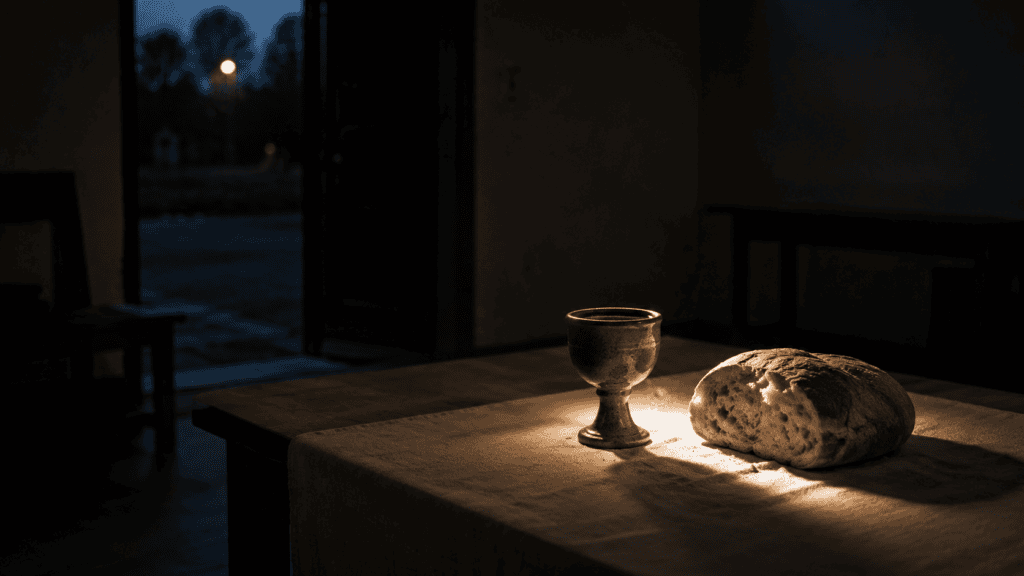
We can offer up the same prayer as Habakkuk in our generation. Habakkuk did not know the same mercy in God’s nature that we see over and over. While he looked backward on God’s deliverance from judgment, he did not know the wonders of Jesus’ sacrifice like we do. This time of Communion is to remind us of the power of that one-time sacrifice. The bread and the cup help us look on Jesus’ cross as we partake. We should see in the bread his body, nailed in place in order to deliver God’s judgment on the sin of humanity. We can taste in the cup the sweetness of his innocent lifeblood poured out to cleanse the stain of sin from our hearts. Both of these gifts are reminders of God’s power to do again in our lives the actions of love and justice required to bring us back into his presence. Every time we eat and drink, we should remember why Jesus went to the cross.

Author: Stuart Powell
Stuart Powell lives outside of Terre Haute, Indiana, where he serves with the North Side Christian Church.