Migration as a Teacher: What Ukraine Has Learned and Is Teaching the Global Church About Displacement and Return
A Ukrainian Christian reflects on war, displacement, return, and the church’s calling to help people rebuild relationships, trust, and hope after migration.
Migration, Return, and the Church’s Calling in Ukraine
This article reflects on the Ukrainian experience of war-driven migration, internal displacement, and the painful complexity of returning home. It argues that migration begins before people physically leave, that displaced people carry distinct stories, and that the church has a vital role in helping people rebuild relationships, trust, and hope.
- Migration often begins when people first lose their sense of safety, not when they cross a border.
- The church must listen to the distinct stories and wounds of displaced people rather than treating them as one category.
- Returning home after war may become one of Ukraine’s most difficult forms of migration and one of the church’s most important ministries.
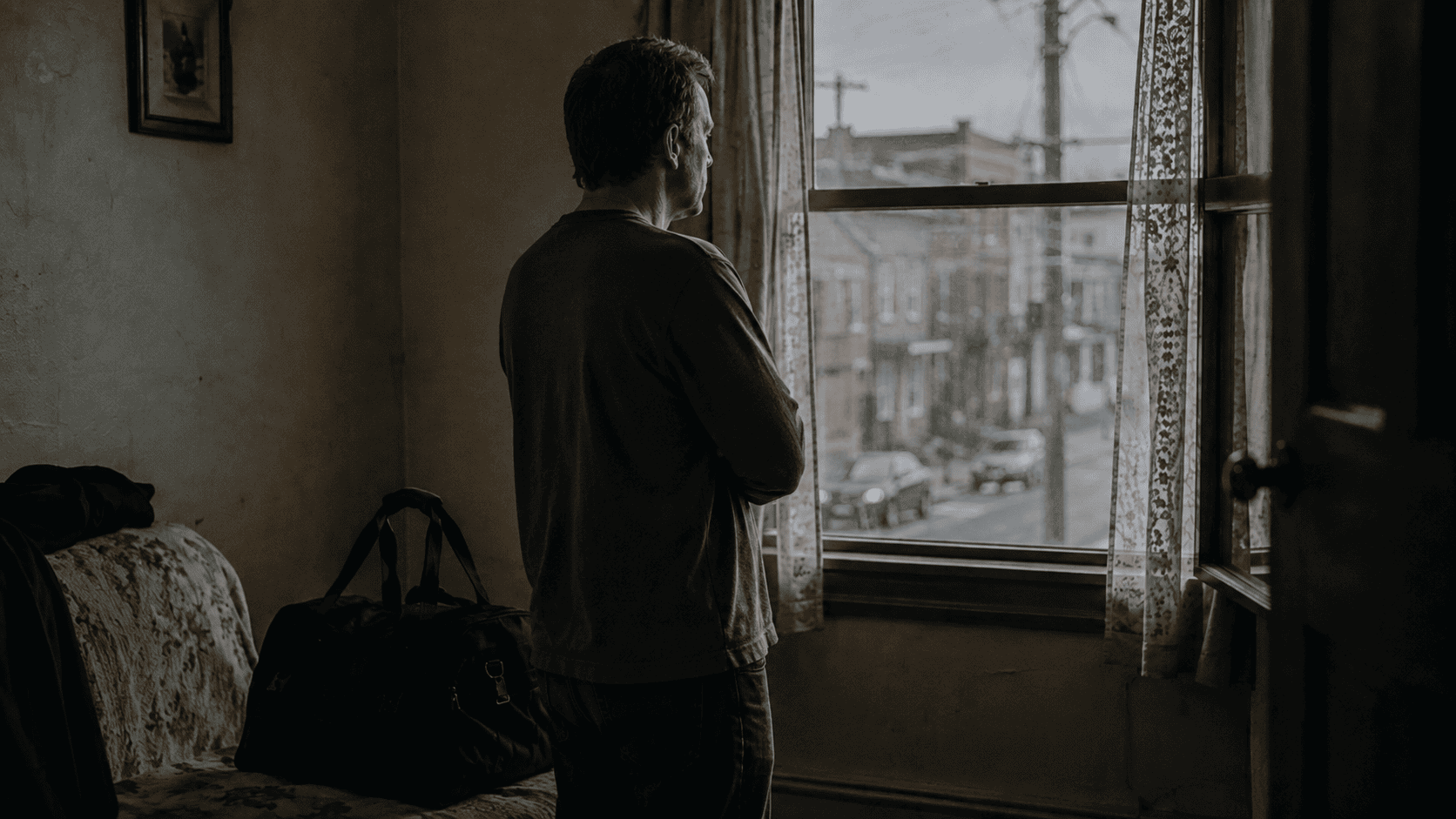
I still remember the last hours in our home in Kherson.
Even though we had an evacuation plan, we had only a few hours to decide what to take with us. Like millions of Ukrainians, we were convinced that we would return within a few weeks. None of us imagined that it would be years before we could come back.
During the war, I lived as an internally displaced person—first in Ivano-Frankivsk and later in Kyiv. I have returned to Kherson more than ten times, and through those visits I gradually came to realize one simple truth: We tend to oversimplify migration and internal displacement.
We often speak about migration as if it begins the moment someone crosses a national border or leaves their hometown, and ends once they find a job, rent an apartment, and settle into life in another city or country.
In reality, migration is far more complex. It does not end with employment or finding a new place to live.
When migration is caused by war—when people never intended to leave their homeland—the most difficult stage is often not leaving. It is returning home after the war, or facing the painful realization that you may never return at all.
This is one of the greatest questions Ukraine is wrestling with today. I believe that the Ukrainian experience may also offer an important perspective for the global church.
Migration Begins Before People Leave Home
When we hear the word refugee, we usually picture someone carrying a suitcase.
But migration begins much earlier.
It begins the moment a person first realizes: “I no longer feel safe in my own home,” or “I can no longer stay here.”
Sometimes the reason is famine.
Sometimes it is a calling.
The Bible is remarkably honest about this reality.
In some ways, it resembles the prodigal son’s decision to leave his father’s house after conflict within the family. It also resembles Jacob’s departure after his conflict with Esau, or Abraham’s decision to leave Ur in response to God’s call. The reasons people leave home are very different.
Abraham did not leave because he was fleeing danger. He left because God called him.
Naomi left her homeland because of famine.
Joseph was forced to leave after being sold into slavery.
Daniel was taken into exile.
Sometimes the reason is war. Being forced to leave one’s home because of war or political persecution is one of the deepest forms of human trauma. We also see politically driven displacement in the lives of Aquila and Priscilla, who were expelled from Rome under Emperor Claudius’s edict.
Every migration story begins differently.
Yet almost every major story of God’s people includes some form of migration.
For many Ukrainians, migration also began long before they crossed a border. In my hometown, the decision began the moment the first missiles exploded. The first thing we lost was not our homes but our sense of safety.
Within just three to five hours, many people realized that staying was no longer possible.
Leaving home was not simply the beginning of the journey. It had already become one stage of a much longer process.
During Migration, the Church Encounters Not “Refugees,” but Different Stories
One of the biggest mistakes has been trying to place millions of Ukrainians under a single label: refugees.
In reality, they are very different people.
There is a mother from Kherson who lost her home overnight. Like many who fled from the front lines, she never planned to move and never wanted to leave.
There is a student from a relatively safe region who used the opportunity to study abroad. There are also large families who decided to relocate primarily for economic reasons. For them, financial uncertainty became a stronger factor than the fighting taking place 900 kilometers from their city.
There is a father who sent his wife and children to Europe while he remained in Ukraine or went to the front. The tragedy of separated families has become one of Ukraine’s greatest challenges, although that deserves a separate conversation.
There is a pastor who became an internally displaced person himself while continuing to care for others in a different region. His church and hometown remain under occupation, and in his new community he is not always perceived in the same way he was by his own congregation.
All of them may be called migrants or displaced people.
But their stories are different.
Their emotional wounds are different.
Their financial needs are different.
Their questions about God are different.
Their challenges of social adaptation are different.
For this reason, pastoral ministry cannot be reduced to humanitarian assistance alone.
It begins with the ability to see the individual person and to listen carefully to his or her story.
When I say that the church is confronted not with “refugees,” but with diverse stories, I see this principle in Acts 6:1-7. We often hear this story about the election of seven deacons, but it is also a story about humanitarian aid, conflict over language, and the acceptance of displaced people. We see that the early church, in order to resolve the dilemma of settlers and migrants, invited representatives of the same group, inviting those who understood their history and experience to resolve this conflict. Unfortunately, the modern church very rarely, when attempting to resolve issues with settlers or migrants, invites them to coordinate projects for settlers.
Return Is the Least Recognized Form of Migration
One distinctive feature of Ukrainian migration is that, unlike many other migration movements, most Ukrainians have tried to obtain legal status in their host countries while continuing to hope that one day they will return home.
Living with the constant expectation of returning creates an ongoing form of retraumatization. Many Ukrainians live as though they have one foot in two different worlds. They try to adapt to a new culture while at the same time dreaming of going back. This tension creates additional stress and emotional exhaustion.
Naturally, as the war continues, the desire to return gradually declines.
Yet there is still far too little discussion about what returning home will actually mean.
Ironically, it may become the most painful stage of the entire migration journey.
When people return after several years away, they discover that it is not only the city that has changed.
They have changed.
Their neighbors have changed.
Their churches have changed.
Their children have changed.
Return becomes a new migration.
Once again, people must find their place.
This may become one of the most difficult stages of Ukraine’s post-war recovery. We should also acknowledge that many people may never be emotionally able to return, because returning itself has become another migration.
The most dangerous conflict after the war may not be between nations, but within Ukrainian society.
Between those who stayed and those who left.
Between people who experienced different kinds of trauma.
Helping these groups understand one another and become neighbors again may become one of the church’s most important ministries in the years ahead.
Scripture Reveals Three Movements of God
After the war began, I started reading Scripture differently.
I began to notice a pattern. Almost every major story of migration in the Bible includes one or more of three movements of God.
1 – God calls people to go—or allows them to leave.
Abraham.
Sometimes faith begins when a person leaves what is familiar.
2 – God accompanies his people on the journey.
The Exodus and the wilderness.
The Babylonian exile.
3 – God does not remain in a safe place. He goes with his people.
God brings his people back—or helps them return.
Nehemiah.
Returning is never a return to the past.
It is always the beginning of building a new future.
That is why returning requires no less faith than the original departure.
How Can the Global Church Help Ukraine?
Today, thousands of churches have opened their doors to Ukrainians.
This has been an extraordinary gift and a powerful testimony to the unity of Christ’s church.
But perhaps the next stage will be no less important—and no less difficult.
Ukraine will need more than churches that know how to welcome displaced people or organize humanitarian aid. In the years ahead, we will also need churches that can help people return. We will need men and women who are willing to come alongside us as we rebuild our cities, our homes, and our churches.
To return to our families.
To return to our church communities.
To return to ministry.
To return to trust.
To return to hope.
Perhaps the greatest contribution the global church can make will not be financing the reconstruction of buildings, but walking with people as they rebuild relationships and recover from trauma.
Conclusion
Nehemiah did not return because Jerusalem was beautiful.
He returned because God had not yet finished his work in that city. Nehemiah understood that the work of rebuilding Jerusalem was unfinished, and he recognized God’s call to take part in that mission.
One day, millions of Ukrainians may face the same decision: whether to join God’s work of rebuilding Ukraine after the war.
Our homes will no longer be the same.
Our churches will be different.
Our society will have changed.
But God will still be the God who accompanies his people on the journey and leads them home.
And perhaps the greatest migration after this war will not be crossing an international border, but learning once again how to live alongside one another.
The defining question after the war may be the same question that confronted the religious Jews in the days of Jesus: “Who is my neighbor?”
And we will have to learn once again how to become neighbors.

Author: Valentin Siniy
President of Tavriski Christian Institute in Ukraine and author of Serving Under Siege: How War Transformed a Ukrainian Community.
Sponsored

For 160 years Christian Standard has served the churches of the Restoration Movement. Your gift keeps articles like this one free for every church leader.
Sponsored

Keep reading
More in Care & Counseling



From the archive
Christian Standard has covered this since 1866.