Nepal Flood Relief: How Christians and Churches Can Respond
Flooding in Nepal calls Christians and churches to respond with prayer, wise generosity, and neighbor-love that crosses political, ethnic, and religious differences without turning relief into a tool.
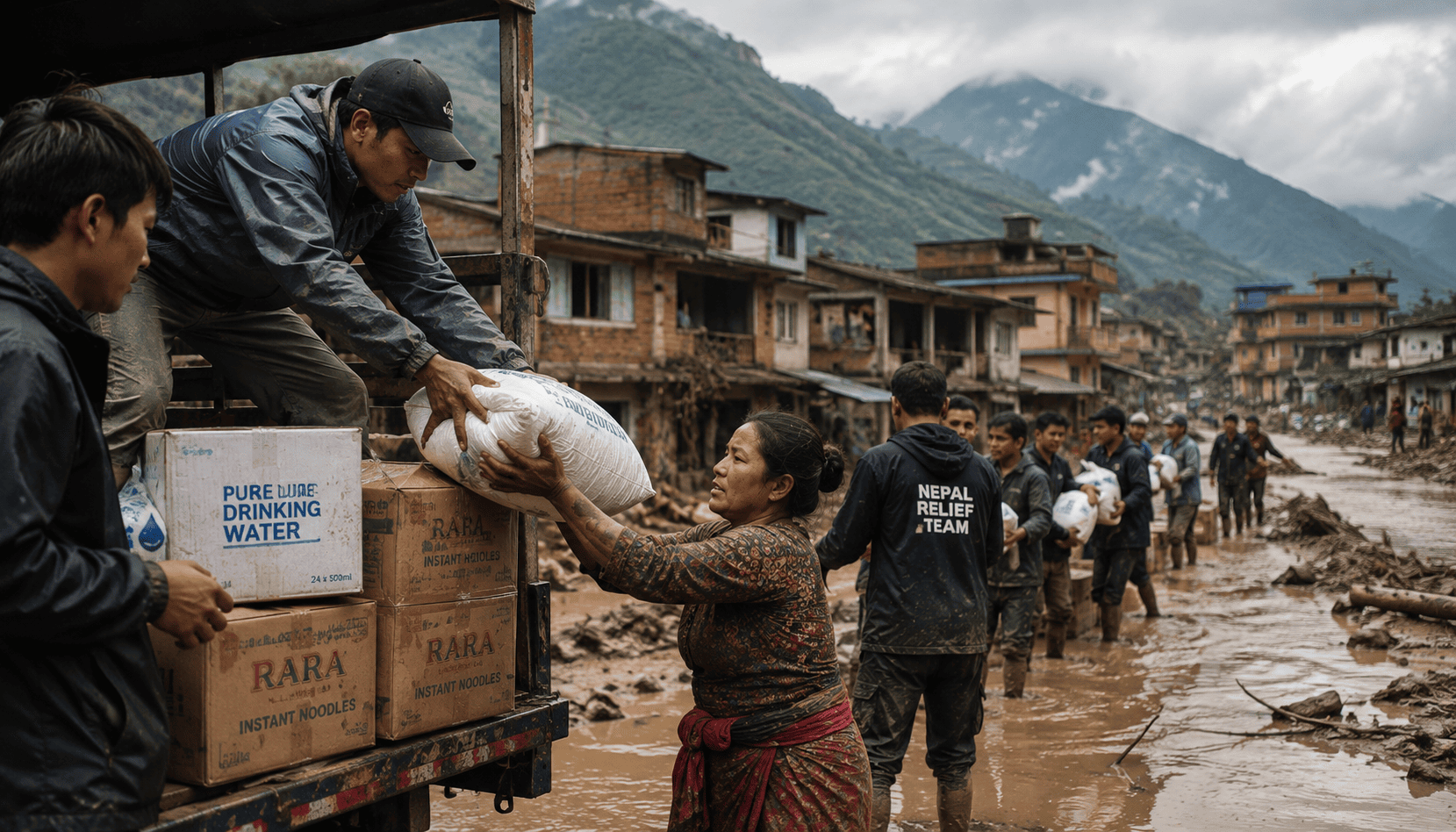
How Christians Can Respond to the Flooding in Nepal
Catastrophic flooding in Nepal has left families grieving, children vulnerable, and communities cut off from basic needs. Christians and churches can respond with prayer, wise giving, practical partnership, and a clear commitment to serve people in crisis cutting through all the things that might divide us.
- Christians should respond first as neighbors, not as spectators of a distant tragedy.
- Churches can help by giving through trusted partners already working with local communities.
- Christian compassion must never be limited by politics, nationality, ethnicity, or religion.
When floodwaters tear through a community, they don’t recognize economic status, ethnic group, or religious affiliation. Water takes homes, schools, roads, bridges, livestock, memories, livelihoods, and lives, leaving behind grief, mud, disease risk, displacement, and unanswered questions.
That is what Nepal is facing now.
On Aug. 26, 2026, severe flash flooding struck northern Nepal near the Nepal-Tibet border, with especially heavy impact reported in Rasuwa, Nuwakot, Dhading, Gorkha, and Tanahun districts. UNICEF’s first humanitarian situation report said thousands of children were among those affected, with homes, schools, health facilities, water systems, and sanitation infrastructure damaged or destroyed. The numbers of dead and missing have continued to change as access improves and rescue teams reach previously cut-off areas.
The tragedy is geographically far from most Christian Standard readers, but it is not spiritually distant. The question before Christians is not merely, “What happened?”, but “Who is my neighbor?”
Compassion Begins Before We Know Every Detail
In the parable of the Good Samaritan, Jesus answers a lawyer’s question by describing who truly is a neighbor. It wasn’t the priest or the Levite, two examples of piety inside Jewish religious culture, who passed the beaten and dying man who had been robbed on the road without helping him. These two would have undoubtedly used religious and cultural reasons for not helping, but they had missed the essence of what Jesus was calling attention to…love. Then a Samaritan stopped to help.
That detail is what makes this parable hit so hard. The Samaritan would be the least expected to become the moral example of the story. Samaritans had been an object of Jewish hatred for over 700 years, particularly from a religious perspective. He was, in the eyes of Jesus’ first hearers, exactly the wrong person in the story to be the moral hero. Yet Jesus made him the neighbor because he saw the person with love and moved to remedy it by binding his wounds, getting him to lodging, and paying all the expenses. He did so even knowing there were profound differences in views and culture, letting love and compassion govern the decisions of his heart.
This story provides a heart-shaped context for the disaster in Nepal. Nepal’s religious landscape is complex. The country is majority Hindu, with significant Buddhist communities and many Indigenous and ethnic traditions. Christians are a small minority, even persecuted. U.S. State Department reporting has noted that Nepal’s constitution provides for religious freedom while also prohibiting conversion and proselytism, creating legal and social challenges and danger for religious minorities. There are also political issues that complicate relief. That reality should make Christians more careful, not less compassionate.
We should be careful because not being ashamed of Christ isn’t a reason to let our zeal be a barrier to simple acts of love and kindness. Food, shelter, medicine, blankets, clean water, and child protection should never be used as leverage. We must remember what Paul taught us in Romans 5:8, that Christ first gave himself for us before any response was given. The Holy Spirit works through this kind of love in ways we could never begin to imagine.
How Individual Christians Can Respond
Most Christians in the United States can’t board a plane, reach a remote Himalayan district, or begin helping in a direct way that is useful. In the early days of a disaster, uncoordinated help can create more burden than benefit. Roads may be damaged. Communications may be down. Local authorities may be managing airlifts, shelters, medical response, and body recovery. Survivors may need trained responders more than well-intentioned visitors.
But individual Christians can still respond faithfully.
First, we must pray specifically. We must pray for grieving families, injured survivors, orphaned or separated children, rescue workers, medical teams, local churches, government officials, and aid organizations. We must pray for protection from disease as water and sanitation systems are restored. We must pray for wisdom in the distribution of aid, especially where roads and bridges have been destroyed.
Second, we can give quickly but wisely. In a sudden disaster, flexible cash gifts are usually more helpful than shipping physical goods. A church basement full of donated clothing may feel tangible, but getting those items through international shipping, customs, transport disruptions, and local distribution channels can be slow and costly. Money given to trustworthy organizations already working with local partners can be converted into food, clean water, temporary shelter, hygiene supplies, medicine, and transportation much closer to the point of need. The Restoration Movement is blessed to have organizations that make it their job to direct our love and dollars to hurting people in the most effective way possible. Two such organizations are Convoy of Hope (convoyofhope.org) or International Disaster Emergency Service (ides.org). Both organizations work with Christian Standard and our movement to most effectively use your gifts to make the greatest difference.
Third, we can use social media in a loving and caring way, remembering that many of the recently shared images aren’t accurate, often created through AI, to sensationalize this very real tragedy. Make sure to seriously check sources before posting as victims and survivors are people, not just content.
Fourth, remember that it’s going to be a long recovery. The first week brings headlines but the months that follow will be harder and people tend to have short attention spans. That’s all the more reason to partner with a relief organization that can keep you updated on progress and needs.
How Churches Can Send Money Wisely
Churches should be careful to recommend trusted organizations to their congregation and to the disbursement of their mission dollars. Urgency and wisdom belong together. Some churches may already support missionaries, church networks, or relief organizations with relationships in Nepal or South Asia. If so, contact those partners directly and ask what is needed, where they are working, whether they are coordinating with local authorities, and how funds will be used.
Church leaders should step up to lead and teach to protect their people from fraud. Disaster scams multiply when compassion is high and information is incomplete. Elders or mission teams can help by recommending one or two vetted giving channels rather than leaving members to navigate emotional online appeals alone.
A church might respond in several ways:
- Receive a special offering designated for Nepal flood relief.
- Send funds through an existing mission partner with verified local relationships.
- Choose a reputable relief agency and communicate why that channel was selected.
- Encourage small groups or Sunday school classes to pray for affected communities and contribute together.
- Set aside a portion of the church’s benevolence or mission budget for immediate relief and another portion for long-term recovery.
- Follow up with the congregation after the gift is sent so people know their generosity was handled responsibly.
When churches send money, clarity is critically important. Designated funds should be used for the designated purpose. If an organization states that excess funds may be used for broader emergency response, churches should disclose that to donors before collecting money. Trust is part of stewardship.
The Political Implications Should Not Paralyze Christian Compassion
Disasters are never purely natural events. Floods expose human systems. They reveal whether roads are strong, whether warning systems work, whether remote communities are protected, whether corruption is present, whether poor communities are more vulnerable, and whether governments can respond quickly.
Nepal’s flooding will raise broader questions about weather vulnerability in the Himalayas, infrastructure development, hydropower projects, tourism, border regions, and international coordination. Some of those questions are political. Some are scientific. Some are economic. Christians can acknowledge them but not let them become excuses for turning away. The church’s first word in the face of suffering should be mercy.
Romans 13 reminds Christians that government has a legitimate role in public order. First Timothy 2 calls believers to pray for those in authority. The prophets repeatedly warn rulers against injustice and neglect of the vulnerable. None of those texts allows Christians to turn away as a result of public or government failure, or allow us to withhold compassion until responsibility is placed.
In a flood zone, the neighbor doesn’t need our political or religious tests before he receiving a blanket. A grieving mother doesn’t need to pass an ideological test before receiving food. A child whose school has been destroyed does not need to share our faith before we care about her future.
The church can serve broken people in the midst of broken systems. In fact, serving broken people often gives the church a clearer voice about broken systems because it speaks from proximity rather than theory.
Religious Difference Is Not a Reason to Withhold Help
For Christians, religious difference isn’t an obstacle to mercy, but often the setting in which mercy becomes most visible. Jesus told his followers to love their neighbors and their enemies. Paul told the churches, “As we have opportunity, let us do good to all people” (Galatians 6:10). James warned against a faith that says warm words while refusing physical help. John asked how God’s love abides in a person who sees a brother or sister in need and closes his heart. The gospel makes us more concerned for those outside the church.
Nepal’s affected communities will include Hindus, Buddhists, Christians, Muslims, Indigenous religious communities, tourists, migrant workers, and people with no formal religious identity. A Christian response isn’t limited to Christians alone. While Galatians 6:10 says we should especially care for the household of faith, it also says to do good to all.
Prayer, Giving, and Presence
The needs in Nepal are immediate: rescue, medical care, shelter, food, clean water, sanitation, protection for children, and support for displaced families. The needs will also be long-term: rebuilding homes, restoring schools, repairing water systems, treating trauma, recovering livelihoods, and preparing for future disasters.
Most Christian Standard readers won’t be physically present in Nepal, but we are connected to real professionals who will be. Churches can be present through prayer. They can be present through generosity that reaches trusted hands. They can be present through missionaries and relief partners who serve quietly, locally, and faithfully.
When Paul collected money for suffering believers in Jerusalem, he treated giving as more than a financial transaction. It was fellowship. It was unity. It was evidence of grace. The churches were separated by by more than just distance but their generosity confessed that they belonged to one Lord.
Nepal’s suffering gives churches another opportunity to practice that kind of grace. Not loudly, not politically, but faithfully.
We pray. We give. We verify. We send. We serve. We remember.
And we do it because the mercy of Christ has reached us.

Author: Jerry Harris
Jerry Harris is publisher of Christian Standard and former teaching pastor at The Crossing, a large, multisite church located in three states across the Midwest.
Sponsored

Jerry Harris
Jerry Harris is publisher of Christian Standard and former teaching pastor at The Crossing, a large, multisite church located in three states across the Midwest.
More from Jerry Harris →For 160 years Christian Standard has served the churches of the Restoration Movement. Your gift keeps articles like this one free for every church leader.
Sponsored

Keep reading
More in Mission & Evangelism


From the archive
Christian Standard has covered this since 1866.