Capturing Glimpses of God’s Glory: An Interview with Nature Photographer Kenneth Keifer
Award-winning nature photographer Kenneth Keifer shares how his journey from ministry to photography, including his images on U.S. postage stamps, has helped him recognize God's handiwork and inspire others through creativity.
Kenneth Keifer on Nature Photography, Creativity, and Giving God the Glory
Award-winning nature photographer Kenneth Keifer shares how his journey from ministry to professional photography has deepened his appreciation for God’s creation. In this interview, he reflects on his photographs appearing on U.S. postage stamps, finding purpose in artistic work, and encouraging aspiring photographers to develop their craft while honoring the Creator.
- Keifer’s journey from ministry and worship leadership to award-winning landscape and nature photography demonstrates the role of creativity in his vocation.
- Two of his waterfall photographs were featured on U.S. postage stamps in 2023, creating opportunities to share his faith in professional settings.
- Keifer encourages aspiring artists to master their craft, recognize beauty in ordinary surroundings, and use their talents to glorify God.
Recently I had the chance to connect with accomplished nature photographer Kenneth Keifer. Ken graduated from Kentucky Christian College (now Kentucky Christian University), and was a minister and worship leader before “officially” diving deep into photography. In our interview it was clear that his love for God and his creation has motivated him to embark on the journey he has been on to capture what God is doing in spaces and places in the natural world. He has been honored with distinguished awards for his work in photography and, in 2023, two of his photos were selected to be featured on the “Waterfalls” series of postage stamps.
I hope you enjoy my interview with Ken as much as I did.
Kenneth Keifer’s Journey into Nature Photography
Landon: I have to start with a simple question: Who is Kenneth Keifer?
Ken: I was born and grew up in the small Ohio River town of Paden City, West Virginia. My childhood was filled with Little League, swimming, scouting adventures, and miles and miles of riding my bike. In high school I participated in band and during my senior year was the photographer for my school’s yearbook. I became a Christian just before my junior year while attending church camp and decided to attend Bible college a year later. I graduated from Kentucky Christian College (University) in 1985 with degrees in Bible, Preaching and Speech, and History.
After college I served congregations in Ohio and North Carolina as a youth minister, eventually becoming a worship leader, and then later moving to Indiana for several years. I am married to my wife of nearly four decades, Megan, a retired elementary school educator and graduate of Milligan College in Tennessee. We now make our home in the rural North Carolina community of King.
This year has been spent traveling to art fairs with our travel trailer camper. Lord willing, by the end of 2026 I will have participated in sixteen art shows in eight states.
Landon: Tell me about your journey into the photography world.
Ken: When I was a teen, my father acquired a somewhat nice camera and I became fascinated with it. I tried to learn as much as I could, but film and developing costs were expensive and funds were few, so my efforts were limited. I served as the photographer for my high school yearbook team, but did not really do much with photography until, at the age of thirty-nine, I purchased my first digital camera. Being able to instantly view what was required to improve my shooting was revolutionary for me.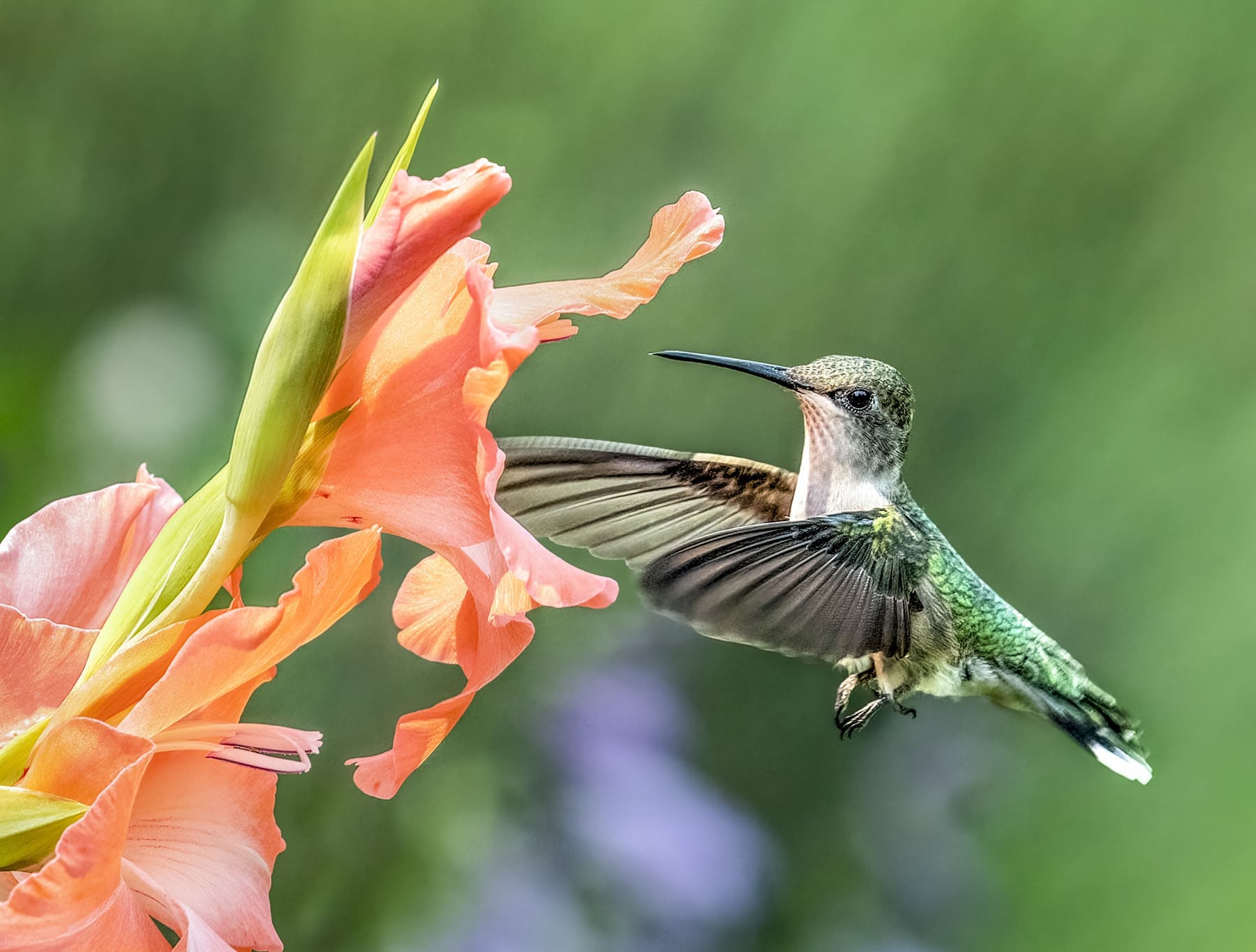
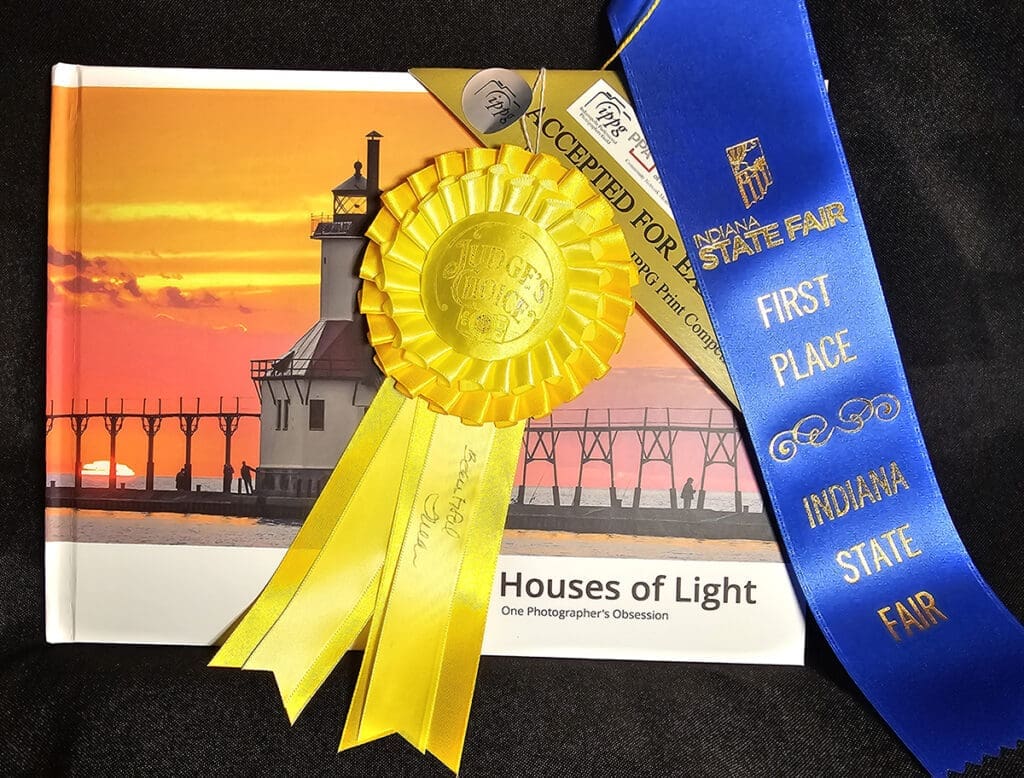
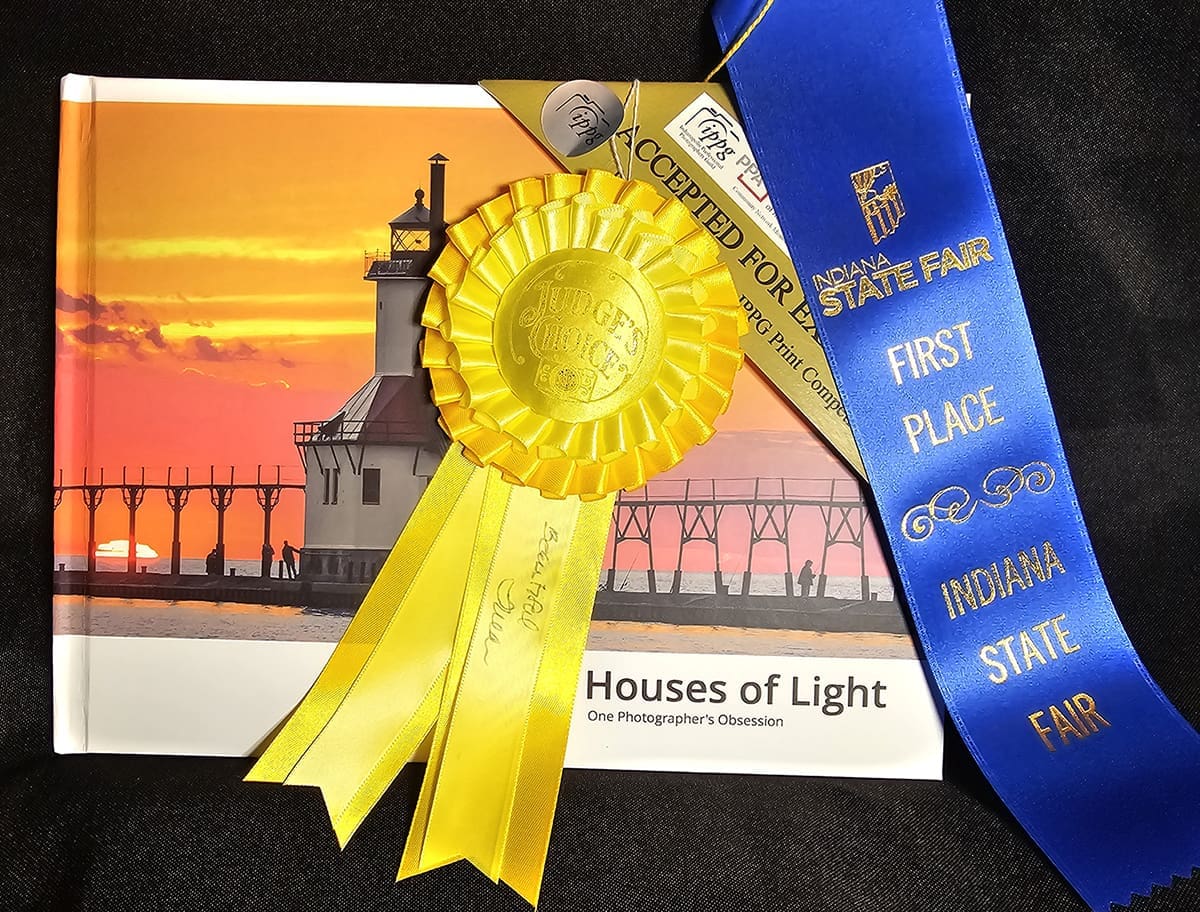
Since then, and several cameras later, I have gradually ramped up my involvement in photography, becoming a professional landscape and nature photographer over the years. My first “professional” venture was to apply and be accepted with stock agencies. This led to seeing my work published all over the place. Later a friend encouraged me to enter competitions which led to dozens of ribbons in county and state fairs over the years. I have also been named one of Indiana’s Top Ten Professional Photographers multiple years by the Indianapolis Professional Photographers’ Guild.
In 2015, I became an artist/owner with a cooperative gallery in Carmel, Indiana’s Arts and Design District, and began doing art fairs with my work a few years later. My photography has been published in numerous travel guides, magazine articles, videos, and much more. It also hangs in thousands of homes, businesses, and public spaces.
In 2023, two of my waterfall photographs were featured on U.S. postage stamps and I was asked to speak at the first-day stamp issuance ceremony, held at Yellowstone National Park. It was such a humbling honor and a wonderful opportunity to thank God and give him the glory throughout my brief remarks.
Finding God’s Handiwork Through Photography
Landon: Where have you seen God at work in your photography career?
Being a believer and knowing that God is active and interested in our days, I see God and his handiwork practically everywhere. Sometimes, when I stand before a breath-takingly beautiful landscape with my camera, I am reminded of Psalm 14:1 and Psalm 53:1. Both Scriptures begin with, “The fool says in his heart, ‘There is no God.’”
I often relate to the late great Ansel Adams, arguably the greatest landscape photographer ever, when he said, “Sometimes I do get to places just when God’s ready to have somebody click the shutter.” When people at art fairs or exhibitions tell me my photography is beautiful, I often feel a little guilty when I say, “Thank you!”, knowing that I was not responsible for creating the amazing scene featured in my work. I merely recorded it and processed it to produce a final piece that hopefully comes close to looking and feeling like it did when I stood there with my camera.
I love when people say, “Your photography makes me feel like I am really standing there!” As in every aspect of life, God truly deserves all the glory. With photography, one literally works with light, the first spoken component of creation in Genesis 1, and, when it comes to what I do, I am often reminded of one of my colleague’s words: “We learn our craft, master our cameras, and perfect our processes, but when you are a landscape photographer, someone else is in charge of the lighting.” And everything else, I might add!
Landon: Have you ever encountered any challenges along the way? If so, what did you do to get to the other side?
Ken: Though I have not experienced any real, significant challenges, I believe most of the journey as a fine art photographer for me has been dealing with the acceptance and praise, or lack thereof, from others, especially those on the secular side of my profession. I do not have an art degree, have not taken formal classes in photography, and am largely self-taught. It took a while for me to even answer “yes” with confidence when someone would ask, “Are you an artist?” as though I was wrongly appropriating that term.
Things like holding a display chairman position at my gallery, speaking to camera clubs and seminars, blue ribbons at fairs, being widely published, serving on the committees of two well-established regional art fairs, and having my work on U.S. postage stamps have certainly helped me get over that. But honestly, I sometimes still feel like one who sneaked into the art world tent via crawling under a flap in the back when no one was looking. What gets me past all that, even more than all the wonderful accolades achieved and positions held? Remembering that I am a child of the One True God, the very Creator of Heaven and Earth! Any talent I possess or merit I have achieved is because of him and for his glory, honor, and praise!
Landon: What is the story behind your photos becoming images on postage stamps?
Ken: That began one day when I received a phone call from a representative of the Postal Service saying they had seen one of my waterfall photographs online and were interested in featuring it in an upcoming collection focused on American waterfalls. I honestly just about fell over. Those conversations led to a second image of mine also being featured in the same series.
Since one of my stamp photographs was of the Lower Falls of Yellowstone, I was asked to speak at the first-day stamp issuance ceremony held at Canyon Village in Yellowstone National Park. I took that honor as a great opportunity to weave God’s praise throughout my remarks that day. It was all quite surreal and an accomplishment that will be hard, if not impossible to top. I give the Lord all the credit and glory for making that happen. That achievement still opens doors for me to speak and present my work, affording me more opportunities, in largely secular venues, to tell of God’s wonders.
 Landon: Is there one place you haven’t visited that you dream to capture on camera?
Ken: No … there are many! Though I am most grateful that God has richly blessed me in being able to photograph so many amazing and sublime scenes, there are many, many more I want to capture. Some that stand out are Glacier National Park, the Pacific Northwest, and many places in the American Southwest. When viewing my art fair booth, people often say to me, “It looks like you travel a lot!” Attempting to inject a little humor, I typically reply, “Well, I don’t travel as often as it might appear. I’m just getting old, and it all accumulates.”
Advice for Aspiring Nature Photographers and Christian Artists
Landon: What would you say to aspiring nature photographers?
Ken: Get as much advice and instruction as you can, but also find your own path that God has uniquely prepared for you. Obsess over the process, technique, experience, and artistic theory rather than merely photography gear and cameras. What is done in processing a photograph is just as important, if not more, than merely getting a good shot. Clicking the shutter button is only the beginning.
Quoting Ansel Adams again, he said, “You don’t take a photograph, you make it.” Study shooting techniques, but do not neglect or ignore learning everything you can about post processing. It is a huge part of the artistic process and what will truly make your style stand out and be noticed. One of the most peculiar remarks my wife and I hear over and over at any given art fair is when well-meaning folks say, “Wow! You must have a nice camera!” Though I do not say this, I want to reply by asking, “When you have a delicious meal in a restaurant, do you say to the waiter, ‘Wow, the chef must have an incredible stove back there in the kitchen?’”
Most people just starting in photography seem to want to know, more than anything else, about which camera to purchase, but that really ought not to be one’s primary focus. Learn as much as you can regarding technique, the nature of light itself, and artistic composition. The rules and “tricks” of composition are so incredibly important! Ignore these concepts and you will likely fail, aside from the “lucky” shot every now and then.
“Creatio ex nihilo” is a Latin term for making something from nothing. Though artists speak all the time of “their creations,” in the truest sense, only God can truly “create” anything. However, since we ourselves are created in God’s image, perhaps some of God’s creative spark and drive is present within us. In light of that, perhaps nothing, aside from sacrifice, can bring us, as humans, closer to God’s nature than when producing art.
As a Christian you know that God is ever present in your life. As a Christian photographer, or for that matter, any kind of artist, remember to allow him to be an ever-present part of your artistic efforts. That can and will make all the difference. God has richly decorated and blessed our lives with his wonderful creation, his indescribable grace, his mercies that are new every morning, and his ever-lasting love. I feel our duty here is to live our lives in such a way that we attempt to bless God’s heart with our offerings of praise, thanksgiving, and service, utilizing the very talents he has apportioned to us.
As an artist who believes, part of that is directing the focus and attention of others to him via our artistic endeavor. I have spent most of my adult life earning a living as a singer and an artist. Because of that, though his work is not my personal “cup of tea,” I love the words of artist Jean-Michel Basquiat when he said, “Art is how we decorate space; music is how we decorate time.” As created beings, locked in time and space, our goal should be to decorate that time and space with our praise to the only One worthy of it. May he receive all the glory!
Landon: Any last words of encouragement for our readers?
Perhaps this is advice I need to heed myself of late … I’ve been doing so many art fairs this past year that I find I am not getting out there and taking many new photographs.
The familiar phrase, “stop and smell the roses” is superb advice. Traveling to beautiful landscapes, iconic places, and grand vistas is wonderful if you have the time and means to do so. But don’t neglect the majesty all around you in your everyday routine, even in the bad and down times. I learned quickly when photographing landscapes that it is not the cloudless, sunny bright days that typically make for the best photography. The best and most remarkable imagery often comes out of the shadows, the seasons of change, and even moments of apparent chaos. It is in those times when we can become most aware of God’s awesome nature and that he is completely and absolutely in control of all things.

Author: Landon Shuman
Landon Shuman is a freelance writer who graduated from Lubbock Christian University and has served as a supported missionary in Tanzania for over a decade. He now live with his family in Lisbon, Portugal, and works alongside the Igreja de Cristo Lisboa.
Sponsored

For 160 years Christian Standard has served the churches of the Restoration Movement. Your gift keeps articles like this one free for every church leader.
Sponsored

Keep reading
More in Christian Living

From the archive
Christian Standard has covered this since 1866.