Christians and the Changing Voting Landscape
This article reflects on the history of voting rights in the United States and asks how Christians have participated in that long public debate. It considers voting access, Christian influence across different eras, and several ways believers think about political participation today.
- Voting rights in America have expanded through a long and contested historical process.
- Christians have spoken from multiple positions throughout the voting rights journey.
- The article challenges believers to continue caring about voting, even amid political polarization.
By Landon Shuman
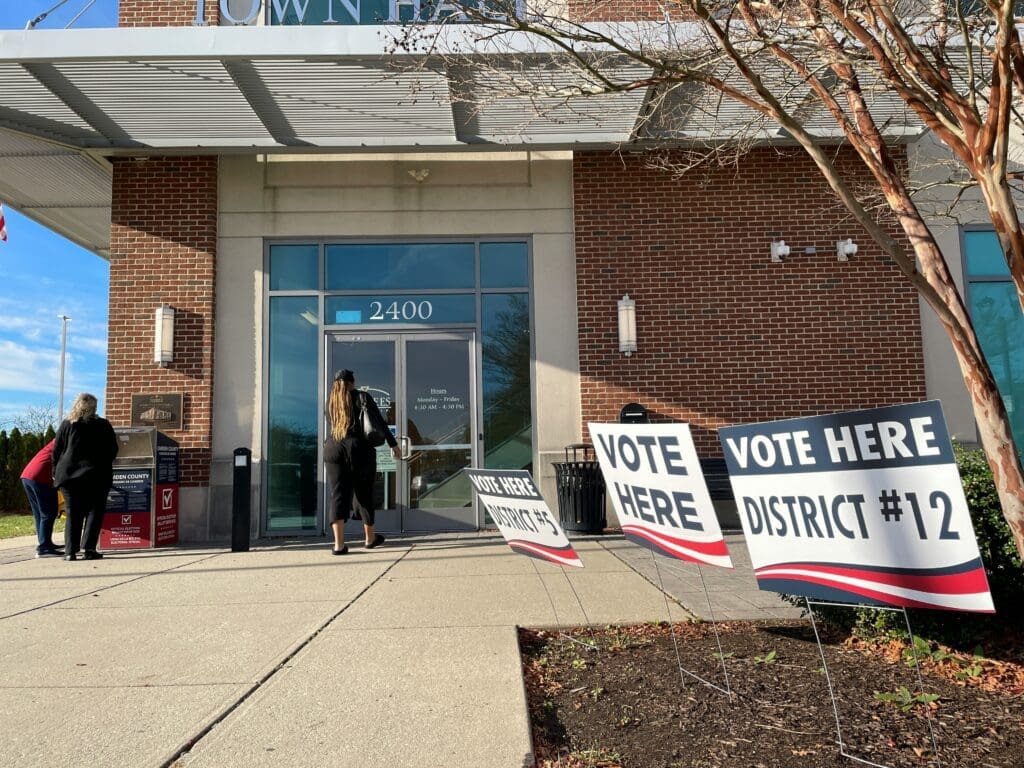
The voting landscape in the United States is changing. Over the past several weeks and months I have been captivated by this particular topic as I have found it creeping into the news cycle on a more and more regular basis, especially with the major court rulings on redistricting and political gerrymandering. I find it strange how open our representatives have become about their willingness to alter voting maps to suit their political party of choice.
Which got me thinking: What has our role been in the development of voting in America as Christians? And how should we think about voting as believers?
The backdrop to these questions is astounding.
Historical Context
First, some background.
Voting, for a very long time, was reserved as a right for white, male landowners. This limited group of individuals held influence over the direction of our fledgling nation and, at first, this extension of power to normal citizens was unheard of in any other country in the world. It was an act of faith in and of itself to give a voice to anyone outside of a monarchy or central governing body. In both the Northern and Southern regions of the United States this included a significant number of people, but over time successful landowners were able to squeeze out smallholder farmers which limited the number of individuals who could influence the political world around them.
People typically don’t realize that one major underlying cause of the Civil War was the issue of the concentration of power into the hands of fewer and fewer wealthy landowners. Northern states ultimately extended voting rights to all white men (regardless of land ownership). Unfortunately, Southern and Southwestern states wanted to limit voting rights to people who were in favor of slavery since slave ownership was the backbone to the Southern agricultural economy.
Limiting voting was about money and power.
Once the Civil War ended, the United States ultimately passed the Fifteenth Amendment to the Constitution that granted Black men the right to vote. It then took until the 1920s for women to gain suffrage and then, finally, the Voting Rights Act of 1965 solidified some of the important legislation that protected Black/Minority Voters from efforts to curb their voting rights through means such as poll taxes, literacy tests, and other means to suppress the vote.
Those opposed to these basic rights were generally afraid of what might happen if minority voters and women were permitted to have a voice in the public square as equal voting members of our society.
Christians on the Voting Rights Journey
There have been outspoken Christians on every side of the voting rights debate. The honest truth is the Christian voice was never (and is still not) unified regarding a central position on voting access.
However, no matter the position and worldview, one fact holds true:
Christians care about voting rights.
Around the time of the Civil War there were many believers, specifically in the South, who believed that the limitation of voting rights was beneficial for the economic progress of white landowners but, as we know now, the slow remission of limitations on voting did not align with a national economic downturn. Prominent figures like Presbyterian theologian Robert Dabney attempted to reinforce the biblical basis for holding slaves and preventing women’s voting rights (specifically on the basis of scriptures found in Ephesians 4 and 5) which was popular for a time in the South.
This didn’t hold up as we well know.
On the other end of the spectrum, prominent American Christians like Susan B. Anthony, Francis Willard, and, most notably, Martin Luther King Jr. stood on the side of voting expansion which ultimately led to where we are today as a nation. This quote from Dr. King sums up the essence of the Christian struggle for equal voting rights:
“We must meet hate with love. (Yeah) We must meet physical force with soul force. There is still a voice crying out through the vista of time, saying: “Love your enemies (Yeah), bless them that curse you (Yes), pray for them that despitefully use you.”
These words, spoken in 1957, eight years before the passage of the 1965 Voting Rights Act, center the reality of the struggle for voting rights and protections on the greater human struggle for a renewed world built on a foundation set by Christ and the life he calls his followers to live.
Christians care about voting.
Three Ways to Believe About What Voting Represents
The result of the push for voting rights causes Christians to fall into three basic camps today. We can see that these groups are a direct result of the long and deep back-and-forth struggle around who should have the right to vote.
The “Pray at the Polls” Camp
This group generally sees the right to vote as less about the candidates available at the time, but more about an individual’s or group’s ability to participate equally in the democratic process. Informal groups advocate for participation in the democratic process as a form of loving neighbor and community. This group would be most likely to link back in some way to the principles Martin Luther King Jr. personified by counting voting as a personal act of love and justice.
The “Citizenship: Heaven” Camp
The “Citizenship: Heaven” idea is deeply rooted in specific theological traditions and has strong influence in the Reformation Movement. The idea that “where the Scripture does not speak, we do not speak” reinforces the idea that our participation in earthly political processes is disconnected from our eternal reality. Many in this category see the political landscape as corrupted and irredeemable as a product of the world. Famously (for us Reformation folks) David Lipscomb was a strong proponent of this framework.
The Christian Preservation Camp
The ideology among some Christians says that our nation was founded on a certain set of Christian principles and that we, as believers, should use every tool at our disposal to preserve or reclaim Christian power and authority. Voting, then, is deemed good among those acceptable to the group and bad for anyone who might vote in a way that compromises or contradicts a set of political ideals.
So…How Should We Think About Voting?
Unfortunately there isn’t a quick answer! We are often free to engage the political process as actively (or not) as we want because of our Constitution. However, one thing must remain true: We must continue to care.
The discussion must also continue to be open and diverse. The voices of Christians from every place on the spectrum should be heard.
So the question is: Do the polarizing efforts of political gerrymandering in red and blue states limit or expand our ability to care about voting?

Author: Landon Shuman
Landon Shuman is a freelance writer who graduated from Lubbock Christian University and has served as a supported missionary in Tanzania for over a decade. He now live with his family in Lisbon, Portugal, and works alongside the Igreja de Cristo Lisboa.