Preaching Communication: Five Lessons from Winston Churchill
Effective preaching communication requires more than having something important to say. Max R. Hickerson draws on James Humes’s book The Sir Winston Method to explore five practical speaking principles inspired by Winston Churchill. He encourages Bible teachers and preachers to communicate with strong openings, focused themes, simple language, vivid imagery, and emotional impact.
- Effective preaching communication begins with a memorable opening that captures attention and encourages thoughtful listening.
- A clear central theme and simple language help listeners understand and remember a message.
- Word pictures, humor, and emotional connection can make biblical teaching more engaging and compelling.
By Max R. Hickerson
A glance at The Sir Winston Method by James Humes gives us an insight into what made Churchill a compelling speaker. Churchill’s approach can help every Bible teacher and preacher. The following outline, borrowed from the book, shows us how.
A Strong Beginning
Refuse to start your message, “It is a pleasure to be here to speak.” Invent your own quotable line. Start with a quotation or a question that provokes thought:
“What would you do for a million dollars?”
“What is your favorite adventure story?”
“Which is more important to you, 9/11 or 11/9?”
“A man gave his sister $5,000 dollars . . . would you rather be the sister or the brother?”
Aim for shock or humor impact. “Would you rather have a million dollars or 10 children?” (If you had 10 children, you would not want any more!)
One Theme
A speech is like a symphony—it can have three movements but it must have one dominant theme. You should be able to write your theme in one short sentence. Pick the message and do not meander.
A woman was asked, “What was the minister’s sermon about?”
She answered, “Sin.”
“Well, what did he say about it?”
She replied, “He was against it.” Concise and to the point.
Simple Language
You could say, “It is obligatory to extinguish all illumination before the premises are vacated.” But you’ll get better results if you just remind folks, “Turn the light off when you leave.”
We can’t grasp, “I have nothing to offer but sanguinary fluids, sudorific secretions and lachrymal elements.” But we’re moved to hear about “blood, sweat, and tears.”
The lesson? Use one-syllable Anglo-Saxon, not, polysyballic Latinate.
Word Pictures
An Arab proverb says, “The best speaker is he who turns ears into eyes.” . . . Think of what we see when a speaker mentions an iron curtain or tells us, “Death is like a covered bridge; it leads from light to light,” or asks us, “Did you ever take an afternoon walk on the tongue of a whale?”
The Lord used stories with pictures: “Dad, I want a second chance”; “Don’t bury your money, invest it.”
Need some help drawing word pictures? Here are two books crammed full of them: Peculiar Treasures by Frederick Buechner and The Language of Love by Gary Smalley and John Trent.
Laughter and Tears
Fred Buechner, a great preacher and teacher of preachers, said, “Every significant response to God begins with a lump in the throat.”
Carol Kent wrote in Speak Up With Confidence,
Years ago Walt Disney discovered an important ingredient in successful feature-length animated cartoons. Snow White was a huge success, but other films that followed, although equally well constructed from a technical viewpoint, never did as well. Disney’s team tried to analyze what made the difference. They made an incredible discovery! Every one of the truly successful productions, the films that people would pay to see again and again, had two ingredients—laughter and tears! Everything they did from that point on had to have both elements before it was released.
Martin Luther King stirred us with “I have a dream.”
Abraham Lincoln inspired hope with, “This nation under God shall have a new birth of freedom.”
As the bombs fell on London, Churchill proclaimed, “It is not the beginning of the end. But it is, perhaps, the end of the beginning.”
Express feelings. Touch the heart!
Pericles, the Athenian statesman of the fifth century BC, once said of his own speechmaking: “When Pericles speaks, people say, ‘How well he speaks!’ But when Demosthenes speaks, people say, ‘Let us march!’”
Touch their emotions, and you will have your audience marching with you!
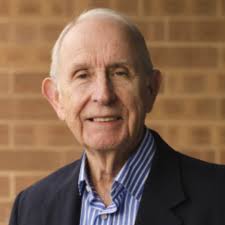
Max R. Hickerson, now retired, started preaching in Christian churches in 1950. He lives in Houston, Texas.