A Macro View on Generosity

A Macro View on Generosity

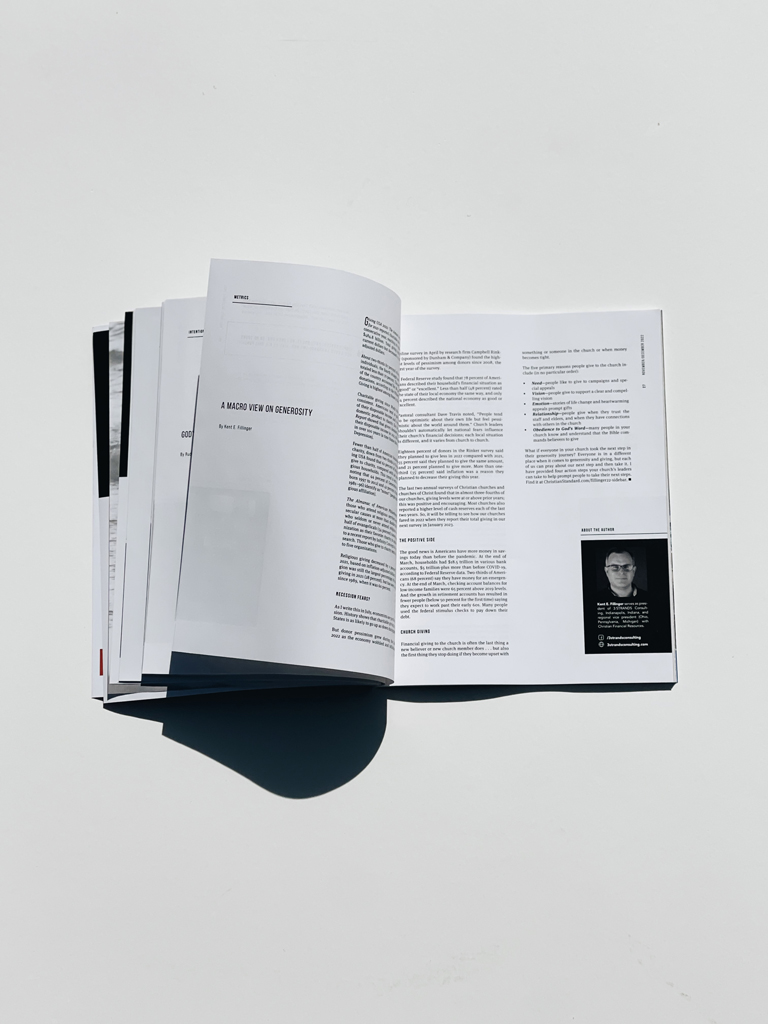
By Kent E. Fillinger  Giving USA 2022: The Annual Report on Philanthropy for 2021 reported charitable giving rose for its fourth consecutive year, reaching its highest level in history, $484.8 billion. Total giving increased 4 percent in current dollars but decreased 0.7 percent in inflation-adjusted dollars.   About two-thirds (67 percent) of total giving came from individuals, the fourth straight year individual giving totaled less than 70 percent. The wealthiest 1.4 percent of the country accounted for 86 percent of charitable donations, according to the Philanthropy Roundtable. Giving is highest among those in their 60s and 70s.     Charitable giving since World

How to Be a 'Cheerful Giver' (and How to Develop More of Them at Your Church)

How to Be a ‘Cheerful Giver’ (and How to Develop More of Them at Your Church)

By Megan Rawlings   I first heard of Chuck Lane from my husband’s time at Alliance Defending Freedom, where they worked together. Chuck mentored me in development (sometimes referred to as fundraising). He taught me everything I know.   Fundraising is all about relationships and not being afraid to ask.  It is a ministry to teach people how to be cheerful givers.  Chuck’s insight was unrivaled, and his warmth was immeasurable. We talked a couple of times a month until his untimely death last year. So, to honor his legacy, I want to share with you several thoughts about giving that have

10 Foundation Stones of the Church—No. 9: Giving

It’s clear from reading Acts 2:42-47 that the early church was a generous church—and not simply generous, but contagiously generous. Scripture offers no hint that generosity was considered a burden; rather, it was a privilege. The people responded immediately by selling their houses and not considering material possessions as their own. The people freely gave and shared so that no needy people were among them. Such generosity was not dictated by the government or enforced by law; instead, it was done in response to one another and to God. In contrast, people in churches today can be filled with personal

Sharon’s Vision

My wife, Sharon, always wanted to be a philanthropist and donate millions to visionary causes. Alas, she married a teacher, not a banker. Even so, she has found ways to practice philanthropy on a shoestring. Creator. Most mornings my redhead works at her sewing machine, making quilts in bright-colored patterns. She donates most of her creations to International Disaster Emergency Service (IDES), a Christian church organization that uses relief work to implement evangelism. They auction off her quilts, and the proceeds go to the relief efforts. Most of her quilts earn between $200 and $500, but some have gone for

Church Giving Seems to Stabilize after Rough Start to COVID-19 Closures

We spoke with ministers of churches large and small in several states about how their church finances have been impacted by COVID-19 and the resulting stay-at-home orders. The sampling size is small—five ministers—but most report improved giving after a rough first couple of weeks. _ _ _ By Chris Moon When asked about church finances during the COVID-19 pandemic, pastor Vince Antonucci had a quick answer. “It’s scary,” he said. The lead pastor of Verve Church in Las Vegas—which averaged 285 people in attendance before the shutdown—is in a city that’s been particularly hard hit because of the outbreak. The

The Dollar Club

“I was hungry and you gave me something to eat, I was thirsty and you gave me something to drink.” _ _ _ By Steve Poe Remember when a dollar was worth something? I remember paying a little less than a dollar for a gallon of gas. Today gasoline commonly costs triple that amount. Some time ago, if you wanted hot coffee, you could buy one for yourself and one for a friend and still get change back from your dollar. Today a Starbucks coffee starts at $1.85. You just can’t do much with a dollar anymore. And yet, what

Senior Pastor . . . Senior ‘Fundraiser’: A Biblical Approach

By Ken Idleman In 1977 I was a 29-year-old, green-as-grass Christian leader when I was body-slammed with a vocational reality: I had been called by the trustees of Ozark Bible College to be, among other things, a “fundraiser.” I was vaguely aware of that item on my list of job responsibilities as executive vice president/president-elect, but I did not understand its impact on my future leadership priorities. I learned the importance of that responsibility early on because one of my first assignments was working to eliminate a $300,000 cash-flow deficit. That doesn’t sound like much money now, but the equivalent

Stadia’s Generosity to Church Planters Pays Off in First Year

By Jim Nieman Stadia Church Planting’s decision to give away the majority of its services starting last January had little noticeable effect on its financial bottom line in 2019, but the change helped Stadia to double the number of U.S. churches it helped plant last year. In 2018, Stadia assisted in planting 34 churches in the United States; that figure jumped to 68 in 2019, said Matt Murphy, strategic services and marketing executive with Stadia. How is that possible, when Stadia provides, on average, about $74,000 in services to help each new church get off the ground? It has a

Harmony in Giving

This article from 1964 obviously wasn’t the last word on the appropriate level of Christian giving, but it did contain interesting information and the writer effectively applied Scripture to make her points. Before diving in, here’s some context that should help with the section of the article titled “Sacrificial?” The writer says her family’s “take-home pay” in 1964 was $600 per month, or approximately $7,200 for the year. A U.S. Census Bureau online document says, “The median income [not take-home income] of all families in 1964 was about $6,600.” From this we can conclude that the writer’s family was earning

‘Your Debt Is Forgiven’

Pathway Church in Wichita redirected some funds and worked with a nonprofit to pay off the medical debt of 1,600 Kansas families as an Easter gesture demonstrating how Jesus Christ forgave our debts. “We decided to take some of the money that we would normally give to people who are in financial need,” lead pastor Todd Carter told the church on Easter, “and we took some of the money we would normally use to be able to promote our Easter services” via advertisements and direct mail. “We wanted to send out a different kind of mail this year.” Letters to

Generosity as Discipleship: Do Campaigns Still Work?

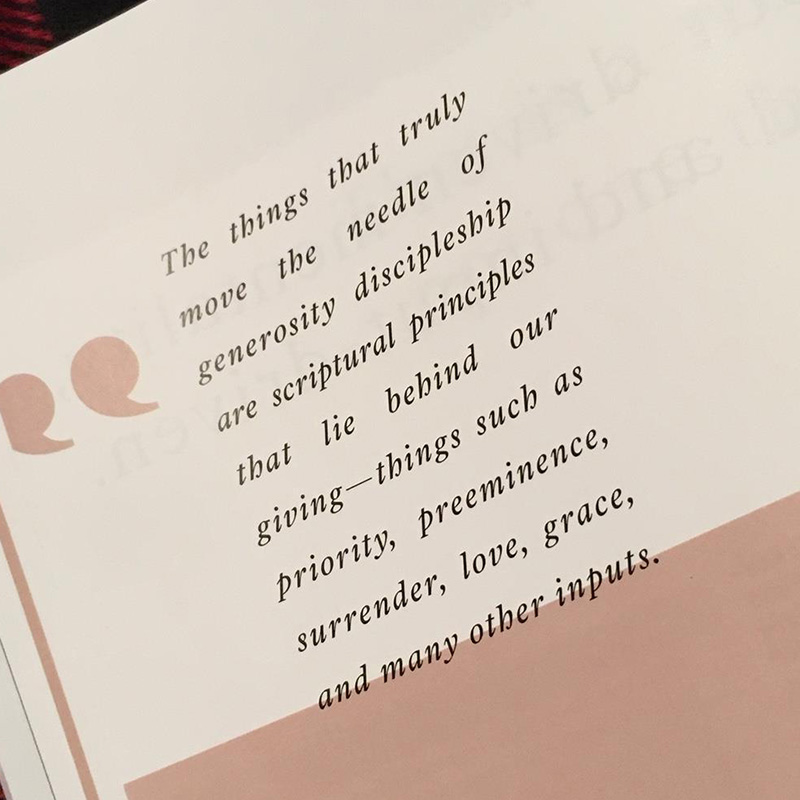
By Julie Bullock I was asked a question by my good friend Jerry Harris (lead pastor of The Crossing in Quincy, Illinois) the first time we spoke on the phone a few years ago: “Julie, do campaigns really still work? I mean, I know you have to say they do because it’s your job to do them, but do they still work? Shoot me straight.” An hour of vibrant conversation ensued as I sat in an airport lounge in Dallas and had the privilege of sharing with one of America’s great pastors why yes, campaigns—or generosity initiatives, as I prefer

Secret Link