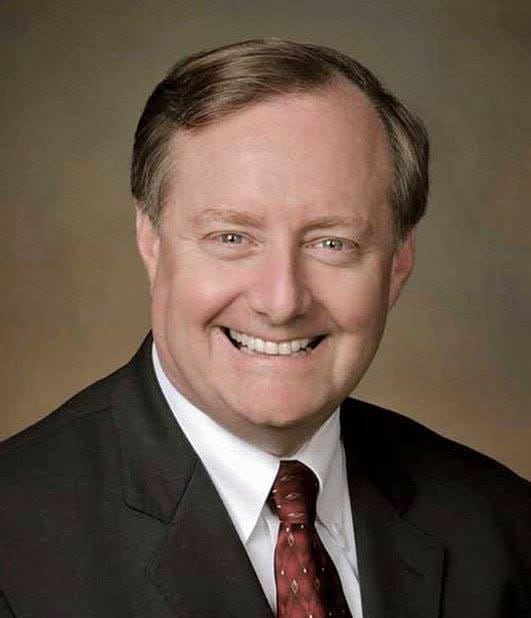
NACC Viewpoints: A Subjective Observer”s Recommendation

By Gary E. Weedman I like the North American Christian Convention. I have attended since the 1960s and have many great memories of workshops, worship services, and reunions with old friends and former colleagues. I have participated in workshops and twice led morning Bible studies. I have fond memories of sermons that inspired and gave new perspective, of worship services that brought us into the presence of God, and of Communion services that helped us in “discerning the Lord”s body.” So, I”m not a completely objective observer. I”ll try, however, to put on my administrative hat and consider this project

The Discipline of Worship

By Becky Ahlberg Worship is a spiritual discipline. It is relationally driven, to be sure, but like any healthy relationship it takes dedicated nurture to overcome our selfish nature. Healthy relationships require constant attention and, yes, discipline. They are dynamic and ever changing. Bookstores are full of books that offer help and insight into building better relationships with parents, children, spouses, coworkers, employers, employees, and even our pets! They all seem to agree we are drawn into relationships by our nature (to love and be loved and to find companionship and meaning for our lives), but we stay in them

Honoring God in Weekly Worship

By Shockley Flick When I transitioned from teaching college to serving in church ministry, I asked a fellow music minister who had traveled that path before me what I should expect. He said, “Well, it will seem like Sunday comes every three days.” Most of us who plan worship services would agree. The demand of weekly planning is a taskmaster that never lets up. And with everyone a “worship expert” these days (that”s someone who wants you to plan services meaningful to him), it”s sometimes hard to know when you”ve put together a God-honoring, church-edifying service. The framework for my

Keeping God in the Worship Planning Process

By Tim Foot A worship service, without divine intervention, is going to be some nice music, maybe some creative elements, and a feel-good message at best! It”s only when we surrender to God”s presence and his ultimate plan that amazing moments happen. So while I like to see the creative process of service planning as a partnership with God, it”s certainly weighted heavily in the heavenly direction! As worship leaders our role, as I see it, is to facilitate a connection with God through worship. It is to do what we can to help folks discover grace, grow, and be

More Than Music

By Danielle Frankland For many churches worship has become largely about what happens on Sunday, and specifically about music. We may not want to admit it, but the amount of time, attention, and resources given to the musical portions of our gatherings suggest this. Furthermore, our language betrays us. When we are “led in worship,” we generally sing. The Bible, however, in no way equates worship with music. There is very little singing mentioned in the Old Testament until the time of David. Because music was important in ancient cultures, Israelite gatherings probably included it, but they were centered on

He Is “˜I AM,” I am “˜I”m Not”

By Mandy Smith We”ve heard about the Spanish Inquisition and the Salem witch trials””moments in history when, with the blessing of the church, Christians stood in judgment of one another. But that”s all history, isn”t it? Why is it, then, that in national surveys of young people, the authors of the book UnChristian found that 87 percent believe modern-day Christianity is judgmental? On the other hand, their surveys showed “only a small percentage of outsiders strongly believe the labels “˜respect, love, hope, and trust” describe Christianity.”1 We may not be hunting for witches anymore, but we point out believers who

Just Asking: Five Questions for the Restoration Movement

By Jim Tune I shouldn”t be writing this article. I”ve never seen myself as a poster boy for the Restoration Movement. I”ve never been much of a joiner of causes. My early days as a preacher were marked by zeal for the ministry but ambivalence toward the movement. I”ve changed a lot. This will sound decidedly uncool to my church planting peers, but the Restoration plea as first envisaged by men like Thomas and Alexander Campbell, Walter Scott, and Barton Stone actually quickens my pulse these days. I”ll be the first to admit that the vision for unity around simple

Getting There Is Worth the Cost

By Gary L. Johnson Did you ever think gasoline would sell for more than $4 a gallon? The increasing cost of fuel is having an impact on driving habits. In particular, many rethought summer travel plans because of fuel costs. Long-distance travel plans were canceled. Maps were put away in favor of staying close to home. The value of a vacation wasn”t as great as the cost of getting there. Regretfully, some churches are making a “change in their travel plans” by not practicing strategic planning. “Moving” the local church strategically to a distant point in the future doesn”t happen

Worth the Wait: The Power of Patience

By Victor M. Parachin Agitated that the driver of the car in front of her didn”t go when the light turned green, a woman began screaming and making obscene gestures. Finally, after the light turned yellow, the first driver suddenly accelerated through the intersection, leaving the woman to wait for another green light. The woman was still screaming and pounding her steering wheel when a police officer, with gun drawn, arrested her. After she was searched, photographed, fingerprinted, and placed in a cell for an hour, the same officer came to release her. But first he offered an explanation. “I

Golf Scores & Dashboards: Keeping Track of How the Church Is Doing

By Dave Ferguson Golfer 1: “What was your score?” Golfer 2: “Seventy-two.” Golfer 1: “That”s not too bad at all!” Golfer 2: “Thanks! I hope I”ll do better on the second hole.” When a golfer steps up to a tee, he knows how to keep score. It”s simple: Every time he hits the ball it counts as a stroke. At the end of 18 holes, he tallies up how many strokes he took, and that is his score. WHAT”S THE SCORE AT YOUR CHURCH? So, how does your church keep score? Usually churches keep score by counting the attendance and

Welcoming the “˜Strangers” in Your Life

By Jan Johnson I wanted to talk to a friend before the church service, but I remembered the “three-minute guideline” presented at a leadership meeting. For three minutes before and after the service, we were asked to talk to folks we didn”t know. Umph! So I looked for newcomers. I spoke to a man I didn”t recognize, but he seemed nervous. He hadn”t been to church in a long time, so I asked him about himself to put him more at ease. At first, I thought the guideline was superficial. I enjoy deeper friendships, and this seemed so shallow, akin

Parents Matter

By Curtis Booher and Phyllis Fox Parents matter. More than anyone””peers, teachers, youth ministers””the greatest single influence on a teen is his parents. That may shock some parents who feel like a discarded shoe when their children reach adolescence. Research proves parents have the greatest effect on their children”s choices, including their religious and spiritual practices. Teens long to be cared for and taken seriously and they need authentic relationships with their parents and other caring adults. Christian parents need support from the church and that means more than youth group and Bible studies. The alarming rate of teen church

Everyone Connected: Relational Strategies to Get Your Whole Church Involved

By Michael C. Mack Two of the most common questions I hear church leaders ask is, “How do we connect people? What is the best method for assimilation?” I”ve given those questions a lot of thought and study, and I have been frustrated trying to figure out what methods the early church used to assimilate the 3,000 believers baptized on the Day of Pentecost (as well as all those who continued to be added to the church). We know what their values were and some of what they did together. We know they met in homes and the temple courts.

Elders, Leadership, and Women

By Steve Edgington A dozen years ago the elders of Anaheim (California) First Christian Church invited the chairperson of the missions committee, a woman, to join with the elders, whenever they met together, as part of the church”s leadership council. She accepted, and served in this leadership capacity alongside the elders and the senior minister. Several years later another very capable woman became missions committee chairperson and, in turn, served on the leadership council. Whether this place on the leadership council for a woman is viewed as radical (“You”ve wrongly made a woman an elder in everything but name”) or

Especially in Bible Translation . . . Close Only Counts . . .

By Jeff Miller The list usually begins with horseshoes, followed by a couple clever additions. Thankfully, however, no one has proposed Bible translation as an area where “close only counts.” Indeed, problems with the details of a translated text can nudge a reader off course to the point that accurate understanding is all but impossible. Many Christians and many congregations are engaged in discussions about women in ministry and leadership. While some disagreement is inevitable, we all agree the Bible should drive these discussions. The accuracy of our English Bibles is therefore at the heart of the matter. How can

Masculinity, Femininity, and Church Leadership

By Kelvin Jones The rise of secular feminism has made the subject of church leadership a sensitive one. The feminist movement entered the mainstream in the 1960s and rightly criticized the failure of men to respect women. Yet feminism, lacking a biblical worldview, defined sexual equality as the removal of gender distinctions and rejected biblically grounded feminine identity and sexual morality. Searching for spirituality, many feminists have turned to neopaganism, and goddess worship is accepted in several liberal denominations. In contrast to the mainline denominations, the majority of evangelical churches and Christians are complementarian. They believe the Bible teaches that

Life-Influencers

By Sam E. Stone When we read Paul”s list of greetings near the end of his letter to the church in Rome, we may be tempted to skip over the names (Romans 16:3-15; 21-24). Although we don”t know the people, each must have played an important role in the apostle”s life. He saw each one as he wrote the name. Remembering those who made a positive difference in your life can be valuable. Let me tell you about a few Christians who contributed to mine. They may remind you of folk who influenced you over the years, as well as

Two Views: Complementarian””Men Are Authoritative Teachers

By Joe Harvey Joe Harvey and Lana West adapted these articles from presentations they made to a doctor of ministry class at Lincoln (Illinois) Christian Seminary.  Be sure to read Lana West”s  article. _________________________ As Christianity moves through the first decade of the 21st century, it has entered a cultural vortex pulling it toward political correctness and moral relativism. It”s only natural that students of the Bible and theology react on many fronts, and some of the most heated discussions revolve around issues of gender discrimination and “traditionalist” (presumably nonprogressive) modes of thinking. The question of women”s role in church leadership

How Much Is Much?

By Mandy Smith The front page of The New York Times carried the headline “The Millionaires Who Don”t Feel Rich.” The article told of millionaires in the Silicon Valley who, because they”re surrounded by multimillionaires and billionaires, don”t consider themselves wealthy. One multimillionaire admitted, “Everyone around here looks at the people above them.” Another added, “Here, the top 1 percent chases the top one-tenth of 1 percent, and the top one-tenth of 1 percent chases the top one-one hundredth of 1 percent.”1 We may roll our eyes, but don”t we do the same? If we rank in the 50th percentile

Mega Ministry in Miniature Actions

By Mike Cahill The kingdom rarely comes as we expect. Jesus” humble beginning was a stumbling block for some because power does not normally come from weakness. Yet, Christ”s kingdom advances through surprisingly simple means. Smallness is big in Scripture. Jesus uses the smallness of a mustard seed as the pattern for potential in the kingdom””from a tiny seed to a great tree, from a handful of disciples to a kingdom spread over all the earth. When disciples act within God”s will, the power of his kingdom is shown through their lives. The results look like mountains moving or””a picture

Help Keep Christian Standard Free & Accessible with a Tax Deductible Donation

We can do more together!

Every gift makes a difference!

No, thank you.
100% secure transactions - receipts provided.
Does Your Church Want to Support Christian Standard?

Would your church consider including support for Christian Standard in its annual missions budget? Your support would help us not only continue the 160-year legacy of this unifying ministry, but also expand the free resources, cooperative opportunities, and practical guidance we provide to strengthen churches in the U.S. and around the world.

We can do more together!

Every gift makes a difference!

No, thank you.
100% secure transactions - receipts provided.
Secret Link