Orrin Root and ‘Sound the Battle Cry!’

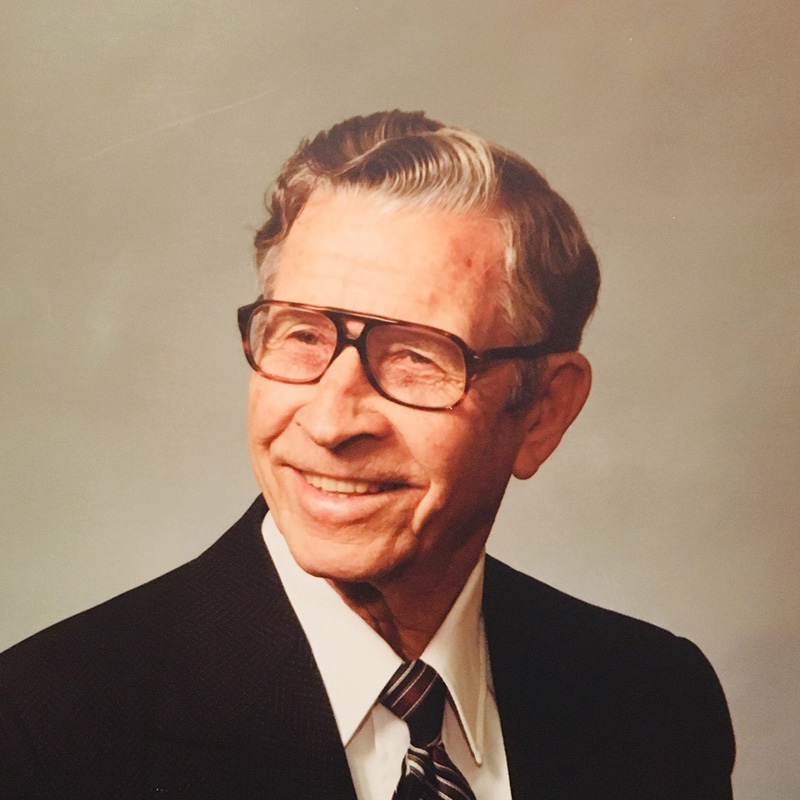
I was thinking about Orrin Root the other day. He comes to mind quite often. Mr. Root was retired when I met him in 1998, but he still was writing The Lookout’s weekly Sunday school lesson commentary, as he had done since 1949. When Mr. Root died in 2003, he was several months ahead on his lesson writing. Oh, and he was 98. I always thought he wrote like a young man, only with much wisdom. Mr. Root came to work at Standard Publishing (former parent company of this magazine) in 1945, when he was 40 years old. He became

August 27, 2016

Mark A. Taylor

What About Tomorrow?

By Mark A. Taylor In recognition of CHRISTIAN STANDARD”s 150th birthday earlier this year, the North American Christian Convention featured a workshop led by three of the magazine”s contributing editors. We asked each of them to think about hopes and challenges they see for the future of the churches served by this magazine for a century and a half.  The comments below are edited from the hour-long workshop. See the whole session here. Matt Proctor What will be the future of the independent Christian churches? As I considered the churches I”ve seen, I thought of three answers to that question:

Opening Doors

“You don”t have to leave the movement to lead beyond it.”Â  Six perspectives on a provocative statement ________ By Jennifer Johnson These leaders love the Restoration Movement and its principles, but they also work and minister “outside” of it with the churches they serve, the partnerships they pursue, and the parachurch ministries they lead.  Here are their thoughts on what it means to go beyond the movement, why it matters, and how it can honor God. Brent Storms The biggest question for me is how does one “get in” and “get out” of our movement?  We”re coming across planters and church

Different but the Same

By Mark A. Taylor “CHRISTIAN STANDARD sure isn”t what it used to be.” The Facebook comment was meant as a critical jab, but it seems more like a compliment to me. With this issue, the magazine is 150 years old, and we”re proud of many ways it is different today than in the past. We have a more attractive format today. In its earliest years, CHRISTIAN STANDARD was a dense, type-heavy newspaper filled with doctrinal essays crafted from long sentences and complex thoughts. Today”s readers, bombarded by media at every turn, need something different””more graphics, more color, shorter articles, and

In All Things, Charity

By Richard J. Cherok People and movements frequently search for pithy statements to encapsulate ideas they deem worthy of remembering. Within United States history, for instance, citizens were once called upon to “Remember the Alamo” or vote for “Tippecanoe and Tyler too.” Whatever the slogan or motto, it is meant to strike an emotional chord and evoke a precise belief or action. One such statement within the Restoration Movement goes something like this: “In essentials, unity; in nonessentials, liberty; in all things, charity.” Though often expressed with variant wording, this slogan has become one of the movement”s most enduring mottoes.

The Spirituality of Shutting Up

By Casey Tygrett We may hear those who speak to us from different theological platforms. But have we really learned to listen to them? If not, we may be missing the most spiritual thing we can do when confronted by those with whom we disagree. The conductor steps to the platform. His back is firm and straight, posture perfect, and he lifts the baton gently into the air. The musicians with their instruments wait for the moment and the motion to begin the performance. The musician”s score contains different parts, but all the performers are pointed toward one pinnacle””the sweeping moment

Not the Only Christians on Campus

By T.R. Robertson Believers””and nonbelievers””from a wide range of backgrounds gather under the influence of campus Christian ministries. How do they experience and express the reality of this motto? James was raised in a Christian family, part of a rural Missouri church that brought him up to know and follow the teachings of the Restoration Movement. Gary was the product of a church that does not share the legacy of the Restoration Movement. Both James and Gary attended the University of Missouri when they left home, and both became involved with the Mizzou Christian Campus House, a Christian church/church of

Witness and Cooperation

By C. Robert Wetzel I can think of several examples where cooperation with other groups enhanced Christian witness. And my relationship with Lesslie Newbigin taught me principles that can guide all of us. Members of Christian churches and churches of Christ are heirs to a movement that attempted to hold in balance two ideals that could sometimes seem contradictory. On the one hand, there was a commitment to restore New Testament Christianity. Restoration would, in turn, be the means upon which Christians could unite. Hence, we wanted to be “Christians only.” But on the other hand, there was a desire

Extending a Hand and Standing Firm

By Mark A. Taylor The cover headline on Christian Standard”s July 2, 2006 edition was “We Are NOT the Only Christians.” The lead article was from a book written by Rick Atchley and Bob Russell, a small volume about Christian unity titled Together Again*. The book”s publication coincided with the historic 2006 North American Christian Convention, whose theme and goal was to repair wounds and open doors between a cappella churches of Christ and independent, instrumental Christian churches and churches of Christ. But the book talked about more than that division. It also offered a challenge for how we view

A Phrase for Today?

By Paul Blowers Slogans are rare in the New Testament. One thinks of the Corinthians’ slogan, “All things are lawful,” which Paul carefully revised to “All things are lawful, but not all things are helpful” (1 Corinthians 10:23)1. It was a wise admonition on the apostle’s part and played a key role in his instructions to the Corinthian church. Stone-Campbell Christians of the 1800s loved their slogans too, and many of those slogans stuck around well into the 20th century. They provided public shorthand for the principles, ideals, and aspirations of the movement’s followers, though sometimes they could also be

“˜Not the Only Christians”

By Robert Oldham Fife As the sun arose on a spring morning in 1945, I stood at the gates of Dachau, one of Hitler”s horrendous concentration camps. It had been liberated only a few hours. I will not here attempt to describe the horror, but will say only that what you may have read in disbelief is true. Other soldiers and I could talk only in shocked whispers as we gazed upon the scene. I did not know at the time that imprisoned within those very gates was a now famous Lutheran pastor, Dr. Martin Niemöller. After years of harsh

Collaboration Without Compromise

By Rick Grover The congregation I serve has a long tradition of cooperation in our city. We intend to continue on this path without compromising what we hold dear. John said to him, “Teacher, we saw someone casting out demons in your name, and we tried to stop him, because he was not following us.” But Jesus said, “Do not stop him, for no one who does a mighty work in my name will be able soon afterward to speak evil of me. For the one who is not against us is for us” (Mark 9:39, 40)1. Sectarianism is as

Which Do You Perceive as the Bigger Danger? . . .

By Darrel Rowland Which do you perceive as the bigger danger: Christian churches and churches of Christ being overly exclusive and thus missing out on opportunities for real service and growth available by greater interaction with other Christian groups, . . . or brotherhood churches losing their scriptural distinctive, especially on baptism and weekly observance of the Lord”s Supper, by interacting with other Christian groups? Bob Russell, Retired minister, Louisville, Kentucky Twenty-five years ago I would have answered that the greater danger was that we were too exclusive””we isolated ourselves too much. Today I think the greater danger is we

Ships in the Night?

By Darrel Rowland Churches across the country are shedding denominational names, and well-known Evangelical leaders, such as Francis Chan, are expressing the importance of biblical baptism. Are the heirs to the Restoration Movement headed in the other direction? “I find that denominational preachers are really finding an interest in our doctrine and our stand,” says Ben Merold, minister-at-large with Harvester Christian Church in St. Charles, Missouri. “At about the time they”re kind of coming our way, we”re not making much of our doctrine and our Restoration Movement stand.” Victor Knowles, founder of Peace On Earth Ministries, remarked, “It is more

The Christians Only Challenge

By Darrel Rowland Most of us love this old Restoration Movement slogan: “We are not the only Christians, but Christians only.” But Christian leaders from across the country contacted by CHRISTIAN STANDARD all wrestle with big-picture questions about what overarching principles flow from the adage. Most generally agree with Bob Russell, retired senior minister of Southeast Christian Church in Louisville, Kentucky, about what to do when invited to attend or speak at an event outside the immediate fellowship. “I will go anywhere as long as I”m not restricted in what I can say or my presence doesn”t leave the impression

Staying Connected”“It”s to Our Benefit!

By Mark A. Taylor The following column first appeared at this site in 2008, but it strikes me, with a couple of tweaks,  as remarkably current still today. So while I’m on vacation this week, let me offer it for your consideration. I’m guessing many readers have forgotten it or missed it when it first appeared! Christ followers outside our movement are often intrigued when they get to know us better. They”re impressed first with the accomplishments of Christian churches and churches of Christ: “¢ Dynamic missions work “¢ World-class church planting initiatives “¢ Creative leadership of new approaches like

A Conversation with Jim Tune

By Jennifer Johnson Meet Our Contributing Editors: This month we talk with Jim Tune, senior minister with Churchill Meadows Christian Church in Toronto, Canada, and director of Impact Canada about why he still believes in the Restoration Movement and thinks you should, too. You”ve developed this reputation as “the Restoration Movement guy.” And I”ve always appreciated your balanced perspective on it; on the one hand, you live in a post-Christian country and you”re more interested in telling people about Jesus than engaging in doctrinal battles. At the same time, you have a high value for the movement. What”s the story

Rediscovering the Sacred Stones

A church”s new multisite campus. A town steeped in history. The grave of a Restoration Movement pioneer”s wife. A reflection on what this frontier preacher stood for, and the message we still proclaim today.  By Jerry Harris There she was. Her stone lying on its back, broken and weathered among scores of neglected reminders of lives long since past. The inscription was hard to read because of a combination of age, moss, and dirt, but careful examination gave witness to the precious soul long forgotten to so many.   Celia W. Wife of Elder B.W. Stone Died Apr. 23, 1857

The Passion of Barton Stone

By Jim Tune Barton Warren Stone was one of the foremost leaders for religious freedom on the western frontier during the first half of the 19th century. He led a movement with goals many—including me—are still pursuing today. Barton Stone was born in Maryland in 1772 and as a boy decided to become a preacher. At age 19 he was ordained a minister in the Presbyterian church. In 1801, Stone moved to Cane Ridge, Kentucky. As he took up his preaching ministry, he discovered that some of the things he read in his Bible seemed inconsistent with the strong Calvinist

Secret Link