June 12, 2023

June 18 | Warning for Temple Worshippers
God’s people had undergone physical circumcision, but their hearts still required spiritual circumcision (Jeremiah 4:4). . . .
June 12, 2023
God’s people had undergone physical circumcision, but their hearts still required spiritual circumcision (Jeremiah 4:4). . . .
June 21, 2021

The Bible describes the Hebrew faith as a celebratory faith. The major festivals were essentially parties. Major life events—even funerals—were celebrated. And so were other big events, including the finishing of the tabernacle.
June 21, 2021

Imagine you witnessed the events described in 2 Chronicles 5. How would you describe the demeanor of the people as the ark was carried into and placed in the temple?
May 24, 2021
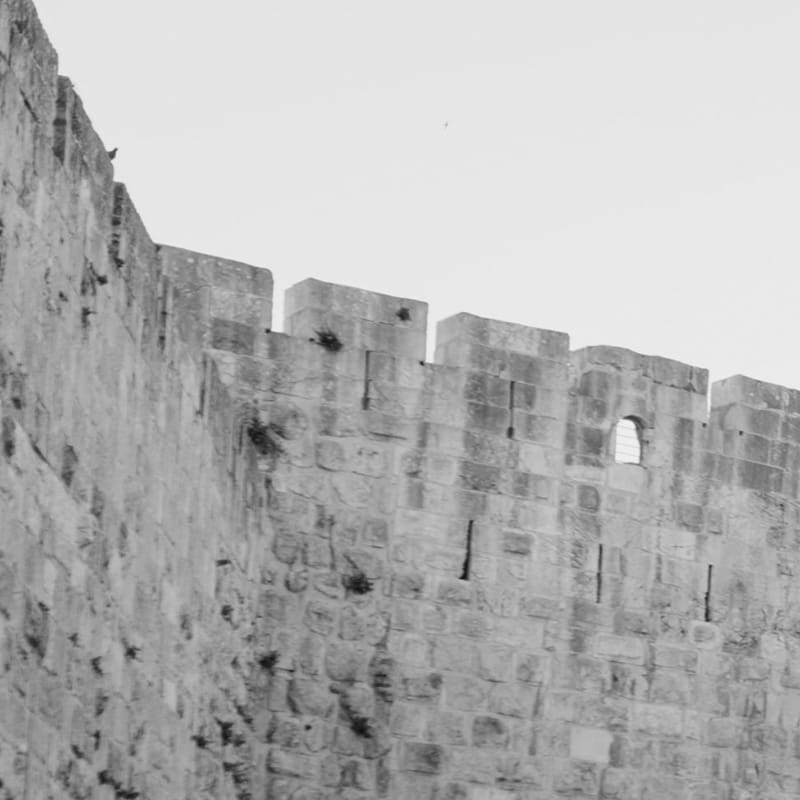
David’s reign would be centralized in Jerusalem and the presence of God would be located there as in no other city.
July 20, 2020

Dr. Mark Scott wrote this treatment of the International Sunday School Lesson. Scott teaches preaching and New Testament at Ozark Christian College, Joplin, Missouri. This lesson treatment is published in the July 2020 issue of Christian Standard + The Lookout. (Subscribe to our print edition.) ________ Lesson Aim: Be strong and courageous; God is faithful to keep all his promises. ________ By Mark Scott Proverbs 13:12 says, “Hope deferred makes the heart sick, but a desire fulfilled is a tree of life” (English Standard Version). Israel had longed for the Promised Land for years. Their hearts were sick for their
February 17, 2020

Dr. Mark Scott wrote this treatment of the International Sunday School Lesson. Scott teaches preaching and New Testament at Ozark Christian College, Joplin, Missouri. This lesson treatment is published in issue no. 2 (weeks 5-8; February 2-23, 2020) of The Lookout magazine, and is also available online at www.lookoutmag.com. ________ Lesson Aim: Appreciate the tabernacle as a type of the redemption and sanctification available in Christ alone. ________ By Mark Scott How should we speak of “sacred space?” On the one hand, all space belongs to God, and therefore it is all sacred. Since God is infinite, what house could be built
March 5, 2018

Dr. Mark Scott wrote this treatment of the International Sunday School Lesson. Scott teaches preaching and New Testament at Ozark Christian College, Joplin, Missouri. This lesson treatment is published in issue no. 9–12 (March 4–25, 2018) of The Lookout magazine, and is also available online at www.lookoutmag.com. ______ By Mark Scott This lesson could be brought to you by the letter “P.” The text is a “prayer.” Solomon prayed it on a “platform.” He assumed a certain “posture.” He prayed it at a certain “place” (temple). He acknowledged God’s “promise.” He admitted that it would be “preposterous” to think that God could be contained
October 16, 2017

Dr. Mark Scott wrote this treatment of the International Sunday School Lesson. Scott teaches preaching and New Testament at Ozark Christian College, Joplin, Missouri. This lesson treatment is published in the October 15, 2017. issue of The Lookout magazine, and is also available online at www.lookoutmag.com. ______ By Mark Scott In Florence, Italy stands the magnificent marble statue of King David. Michelangelo completed it in 1504, and it stands 17 feet high on top of its base. It is ginormous. But King David himself was taller still in regard to God”s covenant with his people. Five hundred years had passed since the events in
February 15, 2016
Dr. Mark Scott wrote this treatment of the International Sunday School Lesson. Scott teaches preaching and New Testament at Ozark Christian College, Joplin, Missouri, and has held preaching ministries in Missouri, Illinois, and Colorado. This lesson treatment is published in the February 14 issue of The Lookout magazine, and is also available online at www.lookoutmag.com. ______ By Mark Scott “The forgiveness of God, in my opinion, is the most powerful and therapeutic idea in the world,” said Leslie Weatherhead. A Christian counselor from Colorado said, “The lack of forgiveness is at the root of most all interpersonal conflicts.” We should not be surprised that forgiveness
November 18, 2013
By Sam E. Stone In the account of the building of the tabernacle, one refrain stands out above everything else: “Moses did everything just as the Lord commanded him“ (see Exodus 40:16, 19, 21, 23, 25, 27, 29, 32). Wilbur Fields calls these eight verses “An overview of obedience! A chronicle of compliance!” James E. Smith put it this way: “The Tabernacle is rooted in divine revelation. The Israelites merely implemented the directives of God. Eighteen times in the last two chapters the narrator emphasizes the complete compliance to the commandments of God . . . God”s commands are meant
November 8, 2013
By Neal Windham God warned Israel in various ways to follow him, but not to come too close. For example, Moses demanded a full disclosure of God”s glory, but was allowed only a glimpse from the safe vantage of shielded rock. Israel was to approach God”s holy mountain, but not touch it, which of course led to certain death. Similarly, the ark of the covenant could be seen but never touched. Isaiah”s peek at God”s fantastic holiness left him totally undone, a man of “unclean lips” dwelling among people of similar spiritual darkness. And only the high priest ascended the
July 1, 2013
By Sam E. Stone This is the second week of studies from the book of Ezra. It describes the time when God”s people were able to worship in Jerusalem once again. Being released from Babylonian captivity was not enough. Now they needed not only to rebuild the altar but also to restore the entire temple, following God”s directions for worship. The books of Ezra, Nehemiah, and Esther contain the inspired record of what took place at this time period. James E. Smith explains, “The first six chapters of the Book of Ezra cover a single generation, 538-515 BC. The major
June 25, 2012
This treatment of the International Sunday School Lesson is written by Sam E. Stone, former editor of CHRISTIAN STANDARD. ______ By Sam E. Stone Further evidence of God”s desire for justice is found as we move from the patriarchs and judges to the kings. Samuel is a “bridge” figure between the latter two groups. He had a role unique in Hebrew history. He was a prophet (1 Samuel 3:20), but he was also a judge (7:15). It was Samuel who anointed both King Saul (10:1; 15:1), and later King David (16:13) to rule over Israel. He was a strong and

Ethan Magness reflects on David, the ark, and the Obama inauguration to call the church toward humble service and blessing in the public square.

Christian leadership isn’t just strategy or skill—it’s a matter of the heart. Through David’s story, this article warns against pride, highlights humility, and calls leaders to remember that God, not the gifted, is the source of true leadership.
Sponsored

Sponsored

Sponsored


Learn how to make the Sermon Content you’re already producing draw people into your local church.
For preachers, church media and website teams, and anyone who’d like to learn how to increase the visibility of their local church online.
August 28, 2026
Quentin Davis
August 25, 2026
Rick Cherok

August 25, 2026
David Faust