Articles for tag: Christian Higher Education

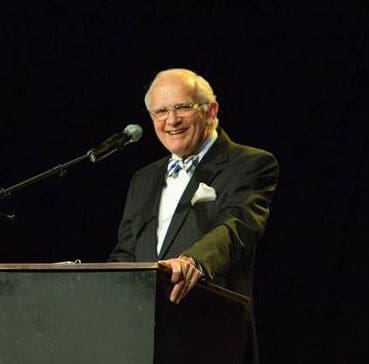
Interview with Mike Kilgallin

By Brad Dupray As the newly appointed president of Crossroads College in Rochester, Minnesota, Mike Kilgallin is crafting a vision for what Crossroads College can do for the churches of Minnesota and beyond. Mike brings a broad base of experience to his new role, having served as the senior pastor of churches in Minnesota and Illinois, as the head of the Business Department and as staff development officer at Lincoln (Illinois) Christian College, as a regional vice president with Church Development Fund, and most recently, as the vice president of church and faith-based services with Fifth Third Bank. Mike and


What Will Keep Us Together?

By John Derry Christian churches have long resisted being identified or referred to as a denomination, preferring instead to be called a brotherhood or fellowship. In many cases we emphasize our local autonomy by adding the word independent when describing who we are. Our perspective is such that we object to any form of bureaucracy or hierarchical structure that would impose limitations on how we choose to function. The Bible is all we need to inform our doctrinal positions, church governance, and mission. Denominational churches may find security in having a regional or national office establish operational policies and assist

Why Bible Bowl?

By Gayle Gresham On the surface, Bible Bowl appears to be a simple quiz game requiring good memorization skills and speed in answering questions, but those who participate in Bible Bowl will tell you there is much more to Bible Bowl than the game. “Students involved in Bible Bowl acquire a vast amount of Bible knowledge they can apply to their lives as they mature in their Christian walk,” says Bret Talley, National Bible Bowl director. “The knowledge, experience, friendships, and spiritual growth they gain through Bible Bowl is something they will carry with them throughout their adult lives.” Knowledge

Why Go to a Christian College?

By Dusty Rubeck This article is no academic exercise for a college president to justify his vocation. At least not totally. You see, my 17-year-old daughter is a senior in high school and wrestling through her own decision about what college to attend next fall. My son is just two years behind her. Neither one is clear about what they want to do for their life vocations. Why go to Christian college? Answering this question is not simply an intellectual exercise for me. I”ve got skin in the game. Literally. GREAT VALUE Why go to Christian college? First of all,

The Future of Christian Church Colleges

By John Derry For the past 20 years I”ve saved the annual Christian Standard issue that highlights enrollment statistics and recent developments in the colleges and universities of the Christian church. That file shows me just how much our schools have changed. We”ve expanded programs, added facilities, relocated to new campuses, changed names, and in some cases ceased to exist. Among the accredited colleges and universities of our fellowship, enrollment has increased more than 70 percent, with some institutions more than doubling in size since 1987. The most recent data for independent Christian church colleges indicates those schools now have

Training Second-Career Ministers: An Introduction

By Staff Our October 7, 2007, cover article asked, “Should We Hire From Within?” This week we”re offering solutions for Christian leaders who decide to change careers and enter professional ministry. We asked six schools with graduate divisions or offering graduate degrees how they”re helping the nontraditional student who believes God is calling him or her away from a chosen field to full-time church service. Here’s how they responded: — Hope International University, Fullerton, California — Johnson Bible College, Knoxville, Tennessee — Cincinnati (Ohio) Christian University — Kentucky Christian University, Grayson, Kentucky — Emmanuel School of Religion, Johnson City, Tennessee

Our Colleges in Historical Perspective

By Gary Tiffin Undergraduate colleges (and now universities) founded and supported by independent Christian churches have transformed significantly in recent decades.* From Margin to Mainstream Our colleges were small and relatively unknown as late as 1960. They struggled for students, stability, and recognition. Professional accreditation for Bible colleges (initiated in 1947) was considered unattainable, undesirable, or even unnecessary by some, although some of our colleges helped found that accrediting association, now the Association for Biblical Higher Education (ABHE). Beginning with Hope International University in 1971, 13 of our institutions now share regional accreditation. Some no longer retain their ABHE accreditation,

Secret Link