April 30, 2026

TWO TEMPLES
A reflection on Solomon’s temple, the torn veil at Jesus’ death, and the believer as God’s temple. In Christ, the barrier is removed—and Communion reminds us we live in God’s presence forever.
April 30, 2026
A reflection on Solomon’s temple, the torn veil at Jesus’ death, and the believer as God’s temple. In Christ, the barrier is removed—and Communion reminds us we live in God’s presence forever.
October 18, 2021

This text (Hebrews 8:1–9:10) is at the heart of the writer’s argument about how the high priesthood of Jesus interfaces with the old and New Covenants.
October 11, 2021

As the writer moved his argument along about Jesus’ priesthood and New Covenant, Melchizedek became the perfect type of Christ in the Old Testament to connect some interpretative dots between Jesus and his non-Aaronic tribe.
October 4, 2021

No one can simply decide they want to be a priest, let alone the high priest. God alone can do this. Not even Jesus just showed up and expected to serve in that office. He needed to be designated by God—and he was.
October 4, 2021

How do these passages (Hebrews 5:1-10; 6:13-20) assure you that God will always keep his promises?
September 20, 2021

What images are used to describe Mount Sinai (vv. 18-21) and what images are used to describe Mount Zion (vv. 22-24)?
September 13, 2021

When Jesus was done, he sat down at the right hand of God. These days, people sit down to work. By contrast, in the ancient world when someone sat down, it meant their work was finished (John 19:30)
September 6, 2021

The writer of Hebrews makes the case that Jesus was superior to everything and everyone, including the ginormous person of Moses. Was Moses in fact a “type” of Christ (Deuteronomy 18:15-18)?
August 30, 2021

Many wanted to know, “Jesus, who do you think you are?” However, he turned the question around and asked, “Who do you say I am?” Some compared him to prophets like Elijah or Jeremiah, but Peter gave the most logical answer . . .
October 1, 2019

By Jon Wren Beginning this Tuesday evening [October 8, 2019], over a period of the next 24-plus hours, Jews around the world will observe Yom Kippur. The holiday has its origins in Leviticus, where God instructed the Israelites to observe a “day of atonement,” which served to remind the people that sin separates them from God, and they cannot atone for it on their own. Over many centuries, the Jewish people have developed traditions and customs for observing Yom Kippur, and many of them come directly from Leviticus 16. One custom came from the instructions God gave the high priest
October 3, 2016
Dr. Mark Scott wrote this treatment of the International Sunday School Lesson. Scott teaches preaching and New Testament at Ozark Christian College, Joplin, Missouri. This lesson treatment is published in the October 2 issue of The Lookout magazine, and is also available online at www.lookoutmag.com. ______ By Mark Scott Our grandkids enjoyed watching a television show called Bob the Builder. The refrain in the theme song went, “Can we fix it? Yes, we can!” Our lesson text today deals with two builders. Jesus the Builder | Hebrews 3:1-6 The Hebrew Christians were tempted to compromise Jesus. Some of the people were mesmerized by angels (Hebrews
February 15, 2016
Dr. Mark Scott wrote this treatment of the International Sunday School Lesson. Scott teaches preaching and New Testament at Ozark Christian College, Joplin, Missouri, and has held preaching ministries in Missouri, Illinois, and Colorado. This lesson treatment is published in the February 14 issue of The Lookout magazine, and is also available online at www.lookoutmag.com. ______ By Mark Scott “The forgiveness of God, in my opinion, is the most powerful and therapeutic idea in the world,” said Leslie Weatherhead. A Christian counselor from Colorado said, “The lack of forgiveness is at the root of most all interpersonal conflicts.” We should not be surprised that forgiveness
January 8, 2016
By Rick Chromey Blood is indispensable to life. The average human holds 10 pints of blood, which transports oxygen to our body, battles disease, and removes harmful toxins. Blood coagulates and helps form scabs to heal wounds. Recently, science has attempted to create synthetic blood, but there”s simply no substitute for this uniquely divine liquid. Blood is part of our cultural vernacular. It”s in the blood. We”re blood brothers. Blood is thicker than water. Bad blood. Hot-blooded. Sunday, bloody Sunday. Historically, blood sealed contracts, confirmed friendships, and solidified treaties. Today, blood is often the clue that solves crimes through DNA
December 13, 2013
What are we to think of ourselves, to make of ourselves, because God became a man in Jesus? How does Jesus help us understand and define our own humanity? By Jon Weatherly What is a human? The story is told of two medieval philosophers discussing that question. One said, “A human is a featherless, two-legged creature.” The second excused himself, then returned an hour later with a plucked chicken. We need a better definition. Or perhaps we humans are better off describing our experience rather than formulating a definition. So what is our experience? We are like and unlike other
November 8, 2013
By Neal Windham God warned Israel in various ways to follow him, but not to come too close. For example, Moses demanded a full disclosure of God”s glory, but was allowed only a glimpse from the safe vantage of shielded rock. Israel was to approach God”s holy mountain, but not touch it, which of course led to certain death. Similarly, the ark of the covenant could be seen but never touched. Isaiah”s peek at God”s fantastic holiness left him totally undone, a man of “unclean lips” dwelling among people of similar spiritual darkness. And only the high priest ascended the
August 27, 2012
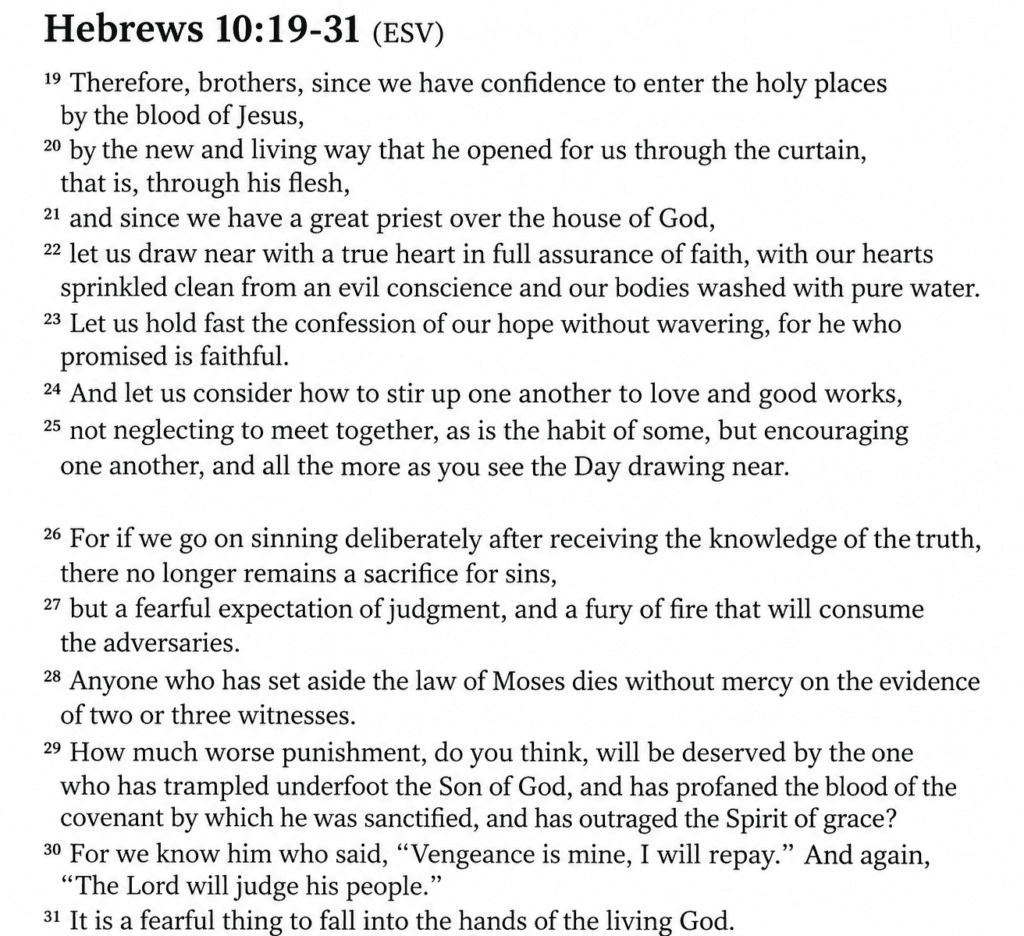
Explore Hebrews 10:19-31 with Sam E. Stone as he explains how Christ's sacrifice gives believers confidence to approach God, encourages faithful fellowship, and warns against deliberate sin while emphasizing the importance of perseverance.
March 27, 2011
Matt Proctor explains how Christians can read Old Testament Law as a window into God’s heart, a mirror exposing sin, and a picture pointing to Christ.
Sponsored

Sponsored

Sponsored


Learn how to turn the sermons you’re already preaching into searchable, shareable content that helps people discover and connect with your local church. Access Be Seen, Be Heard on demand with Wes Woodell and Trey Sheneman. A two hour course for preachers, church media and website teams, and anyone who wants to help their church reach more people online.
October 6, 2026
Rick Cherok

October 6, 2026
Landon Shuman

October 6, 2026
Doug Redford