February 25, 2009
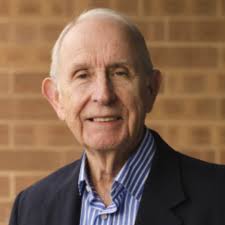
Interview with Joe Grana
Joe Grana discusses baptism as a relational act of faith, a Restoration Movement conviction, and a point of Christian unity without requiring total agreement.
February 25, 2009
Joe Grana discusses baptism as a relational act of faith, a Restoration Movement conviction, and a point of Christian unity without requiring total agreement.
February 8, 2009
Gary L. Johnson describes how Elder Governance helped The Creek create a healthier church structure by focusing elders on policy, pastoral care, doctrine, and prayer.
February 1, 2009
Robert C. Kurka critiques nonfoundationalist theology, arguing that Christians can reject modernity’s overconfidence without abandoning truth, biblical authority, mission, and gospel proclamation.
January 25, 2009
Robert C. Kurka examines biblical and historical difficulties in post-conservative theology, arguing that Christian truth-talk begins with God’s self-revelation rather than modern human reason.
January 18, 2009
Robert C. Kurka examines postmodern theology, Beyond Foundationalism, and the challenge of preserving biblical truth talk while acknowledging legitimate critiques of modern evangelical rationalism.
November 30, 2008
James Riley Estep Jr. urges congregations to recover substantive Christian education that prepares believers for deeper biblical questions, spiritual transformation, and resilient faith.
November 9, 2008
Fred Hansen reflects on scholarship in the church, highlighting Restoration Movement examples and urging ministers, missionaries, and educators to pursue deep learning marked by humility and service.
September 14, 2008
Danielle Frankland urges churches to see worship as more than Sunday music, recovering Scripture, prayer, communion, obedience, and whole-life surrender as central acts of worship.
September 10, 2008
Gary Johnson explains how Indian Creek Christian Church plans creative worship experiences around one clear “bottom line” to encourage transformed lives and reach people not yet following Christ.
July 13, 2008
Christian Standard introduces a series of responses from Restoration Movement leaders, inviting readers to consider whether the movement still matters and to continue the discussion in their own churches.
July 13, 2008
Robert Lowery reflects on the Restoration Movement’s ongoing relevance, emphasizing John 17, Christian unity, Scripture, baptism, the Lord’s Supper, and the enduring call to world evangelism.
July 13, 2008
Brian Lowery reflects on the Restoration Movement, doctrine, baptism, the Lord’s Supper, evangelical churches, and the movement’s ongoing relevance in a changing world.
March 16, 2008
As Christian colleges and universities grow and adapt, issues like accreditation, accountability, and accessibility will shape how they prepare leaders for the church. John Derry outlines key factors for planning strategically and serving future generations well.
Chuck Sackett reflects on ordination and the call to ministry, urging churches to pair careful evaluation with long-term encouragement and accountability for those they ordain.
December 16, 2007
A first-time attendee describes the Stone-Campbell Journal (SCJ) Conference—its distinctive scholarly fellowship, purpose, leadership, and the journal’s role as a safe forum for thoughtful engagement.
December 2, 2007
Six graduate-level schools share how they support nontraditional students who feel called to leave a chosen career and enter full-time church service, offering guidance for leaders considering a ministry transition.
December 2, 2007
Lincoln Christian Seminary’s 2007 incoming class reflects growing diversity in age and vocational background. Paul Boatman explains how LCS is adapting with flexible scheduling, updated degree paths, and expanding distance education.
November 18, 2007
Robert Lowery explains an amillennial reading of Revelation 20, arguing the “1,000 years” is symbolic and points to the saints’ reign with Christ in heaven, not a future earthly kingdom.
November 11, 2007
A sober look at sexual temptation among church leaders—why assumptions of immunity collapse, how secrecy and loose connections enable repeated harm, and why true restoration requires time, accountability, and deep character formation.
As larger churches add specialized ministry roles, many are hiring proven volunteers from within their own congregations. Paul Boatman explores the benefits, risks, and the need for strong partnerships between local churches and theological education.