December 8, 2025

Precious Memories (Part 2)
Our gracious Father will never forget us, but he is willing to forgive us. That's something I hope we never forget.
December 8, 2025
Our gracious Father will never forget us, but he is willing to forgive us. That's something I hope we never forget.
November 24, 2025
Through the body and blood of Jesus of Nazareth, our sins are removed. They are cleansed. They are forgotten.
November 4, 2025
As we drink from the cup, may it speak of his blood, shed in the face of overwhelming darkness, securing our eternal rescue and freedom.
July 22, 2024
By Sandy Mayle You may have watched a parade, a horse race, or a team of draft horses, and noticed that some of the horses wore little cups around the outside of their eyes. These are called blinders, and they limit what the horses see so that they’ll stay focused on what’s in front of them. Blinders block the horses’ peripheral vision so they aren’t spooked by waving flags, crowds of people, or other horses who meet them. Instead, they focus on what their driver or rider is asking them to do. Without blinders, some horses can become anxious or
June 24, 2024
The very core of Christianity is the death, burial, and resurrection of Jesus. . . .
September 1, 2023

By Marty Solomon “Trust me.” Those aren’t popular words these days. We’re waking up to the reality of institutional abuses, cultural messaging, and half-truths. Simply put, we don’t trust anybody but ourselves. God has always invited his creation into a place of trust. Hebraic thought talks about this using words in which we place great theological stock: belief, trust, hope, faith. These words speak of the dynamic relationship between God and his creation. From the opening chapters of Scripture, God invited humanity into a place of trust—trust in the goodness of creation, in his acceptance of and provision for you,
August 21, 2023
Jesus lived so that his death would not be for his own guilt, but for the guilt of others. . . .
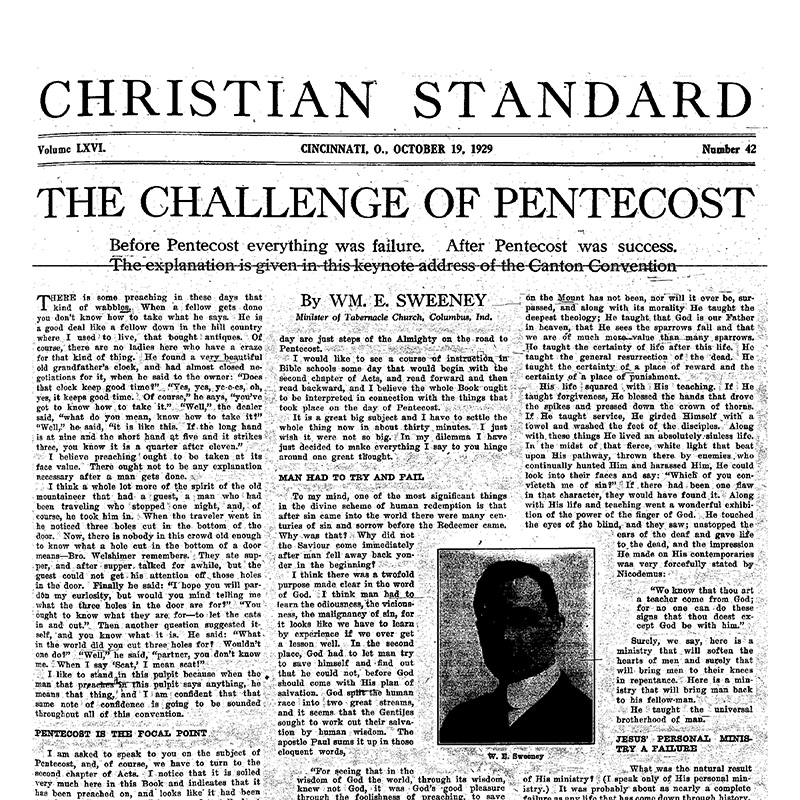
"It is my conviction that the day of Pentecost is the focal point in the history of the world," Wm. E. Sweeney wrote in 1929, ". . . that all the lines of history before that time converge to that great day, and that all the lines of history since that time have diverged." . . .
November 7, 2022
By Lee Magness Many of us call the meal “the Lord’s Supper” (1 Corinthians 11:20), but the Greek word translated “Lord’s” is not a possessive noun, but a descriptive adjective. Although the meal does belong to the Lord (Jesus inaugurated the meal, is present in the meal, presides at the meal, etc.), Paul was emphasizing that the meal is characterized by the Lord. It is the Lordly Supper. In every way it is focused on him—past, present, and future. The meal is a remembrance of Jesus past, not just a memorial of the meal he instituted, but a recollection of
August 22, 2022

Thinking about what we have studied over the past three weeks in Ezekiel, what is the reason for God’s glory departing?
August 15, 2022

Is our ranking of “really bad sins” and “not so bad sins” supported by the text from Ezekiel, or are we more likely to excuse things we’re comfortable with?
July 11, 2022
The Lord’s Supper was instituted in a time of darkness. And, so, when we are going through dark times of our own, we can partake of Communion and remember Jesus, and what his sacrifice means for us.
April 4, 2022
Today, we are about to do something that completes the third panel of the story. Our Communion time is our Passover. . . .
November 15, 2021

After spending significant time and space describing why the New Covenant is superior to the Old Covenant, the writer gives what some call the fourth major exhortation of the Epistle.
November 1, 2021
By Stuart Powell Early in World War I the British army made an amphibious landing at Suvla Bay in what is now western Turkey. The invasion was part of the August Offensive of 1915, the final attempt to break the deadlock of the Battle of Gallipoli. There are numerous descriptions of the Allied forces landing in their battle against German and Ottoman defenders. Among those who landed was a soldier named William Henry Littlejohn. Sargent Littlejohn survived the landing, the months-long stalemate, and the Allies’ withdrawal in December 1915, but he did not survive the war. The company sergeant major
October 25, 2021

What is the difference between being made “outwardly clean” and having our consciences cleansed?
October 18, 2021
This text (Hebrews 8:1–9:10) is at the heart of the writer’s argument about how the high priesthood of Jesus interfaces with the old and New Covenants.
October 11, 2021
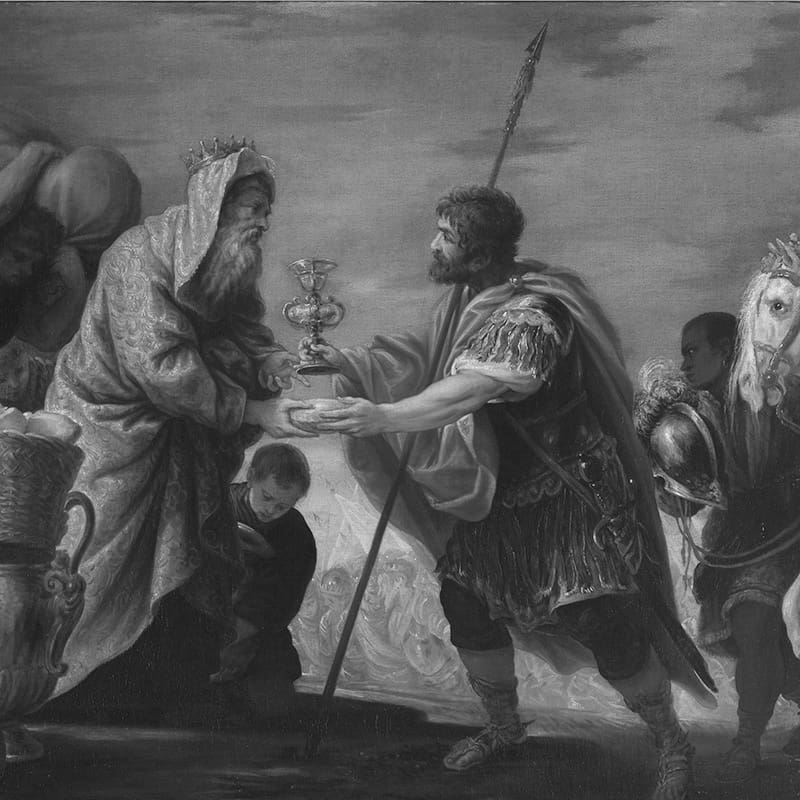
As the writer moved his argument along about Jesus’ priesthood and New Covenant, Melchizedek became the perfect type of Christ in the Old Testament to connect some interpretative dots between Jesus and his non-Aaronic tribe.
September 20, 2021

Jesus is the ultimate mediator, and he mediates a superior covenant, between heaven and earth.
September 20, 2021

What images are used to describe Mount Sinai (vv. 18-21) and what images are used to describe Mount Zion (vv. 22-24)?
March 27, 2026
Rick Cherok
March 27, 2026
David Empson
March 27, 2026
David Faust