February 26, 2024

March 3 Application | ‘Unity and You’
Are we willing to make Christian unity a personal goal? Practically speaking, how can we encourage the unity of God’s people? . . .
February 26, 2024
Are we willing to make Christian unity a personal goal? Practically speaking, how can we encourage the unity of God’s people? . . .
November 7, 2022

Psalm 8 and Psalm 131 can easily be juxtaposed. Psalm 8 celebrates the worth and dignity of humankind as cocreators, while Psalm 131 celebrates the humility of humankind. . . .
April 19, 2021

Ironically, we don’t find personal fulfillment by making personal fulfillment our primary goal.
March 1, 2021

Truthfully, brothers and sisters, when did it become so easy to lie? “I am praying for you” (but have you been . . . really?). “I’m running late because there was traffic” (or maybe you just got a late start). “I am going to do that right away” (well . . . perhaps). I recently called our local butcher shop and ordered a 3-pound tomahawk steak for a family celebration dinner, but before I could pick it up, a friend who knew of the celebration plans called to tell me she picked up a standing rib roast for me. I
June 15, 2020
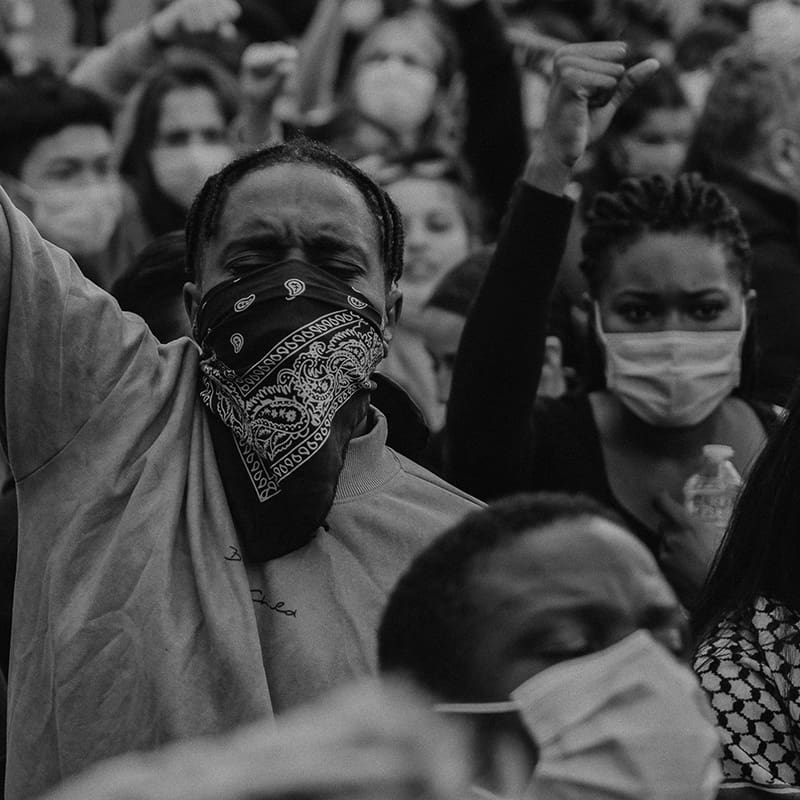
By Larry Griffin, LaTanya Tyson, and David Fincher (The column about racial justice, equality, and reconciliation was written by three Christian college presidents. Larry Griffin serves as president of Mid-South Christian College, Memphis, Tenn.; Dr. LaTanya Tyson serves as president of Carolina Christian College, Winston-Salem, N.C.; and Dr. David Fincher serves as president of Central Christian College of the Bible, Moberly, Mo., while also leading the Association of Christian Church Colleges and Universities.) As presidents of Christian church colleges that serve the Restoration Movement, we lament the examples of injustice and division that have sadly become too commonplace in America.
June 23, 2018

By Victor Knowles In our American Restoration Movement, we have been paddling in separate streams for more than 100 years. Like Paul and Barnabas, we had a “sharp disagreement” (Acts 15:39) over issues like instrumental music and missionary societies. We too “parted company” and had our own journals to spread the good news (Gospel Advocate and Christian Standard), started our own Bible colleges and Christian universities to prepare gospel workers (Lipscomb University and Johnson Bible College—now Johnson University), and developed our own lectureships and conventions to encourage and equip Christians (Pepperdine Bible Lectures and the North American Christian Convention). Since
July 29, 2007
By Lisa Jernigan I recently attended a training conference for women themed, “The Masquerade.” We talked about the various masks women wear and how we have become very good at disguising who we really are. I spoke with a sweet older woman who seemed to show the spirit of Jesus. As we were talking she began to tear up as I complimented her genuine smile and sweet spirit. She graciously thanked me and said, “If you only knew my past.” Well, I didn’t and I couldn’t imagine that this gentle lady could have ever had a “past.” I said her
March 18, 2007
Editor”s note: Last week”s article introduced the “openness of God” (open theism) debate by listing difficult questions about God and time that have faced sincere believers throughout history. The author also offered a long list of Scriptures that seem to support the openness idea. He concludes this week with a parallel Scripture list that seems to refute this doctrine and then offers suggestions for reconciling the paradox. Â Â By Knofel Staton Those who advocate open theism say God does not know what will happen in the future because there is nothing yet to know. The future is open not
June 21, 2006
By Mark A. Taylor Like most men in their 80s, Roger Angell is looking back. And since he is a writer (and editor at New Yorker magazine), he’s combined his memories into a book. But what happens to memories once they’re recorded? “Since I’ve written these pieces, these people are further away than they used to be,” Angell told a National Public Radio interviewer last month. “These stories don’t come back anymore. Because if you write them, it’s as if you put them away.” He spoke with a little melancholy, but in his words I see a great possibility. Could

April 7, 2026
John B. Penrose Jr

April 7, 2026
David Faust
March 27, 2026
Rick Cherok