August 21, 2023

August 27 | Justified
A theological dilemma in the biblical story is this: How can God punish sin (and thereby stay true to his promise and character) and yet absolve the sinner? . . .
August 21, 2023
A theological dilemma in the biblical story is this: How can God punish sin (and thereby stay true to his promise and character) and yet absolve the sinner? . . .
December 26, 2022

God had planned from eternity past to get his people back home and give them a fresh start. Ezra and Nehemiah tell of this new start (these books were once combined as one). . . .
December 26, 2022

What were God’s roles and what were the people’s roles in the Jewish exiles’ return to Jerusalem?
July 19, 2021

The last king of Judah (Zedekiah) was horribly corrupt, and Nebuchadnezzar came and burned the city and the temple. But offstage a note of hope was being played that would allow God to fulfill his promise to save the world through Jesus.
August 15, 2020

Lessons from the Babylonian Captivity for Modern-Day ‘Exiles’ By Arron Chambers During this pandemic, quarantine, and sheltering at-home orders, I’ve found myself drawn to Bible stories of liberation and freedom from captivity. We were created to be free—not isolated, alienated, held in captivity, or exiled indefinitely. Even so, such things happen, and it happened to the people of God during a period of 70 years we call the Babylonian captivity. They’d been warned. Warning In the early days of the COVID-19 pandemic, President Trump and a team of doctors gave daily briefings. Day after day they presented numbers and charts
December 24, 2019
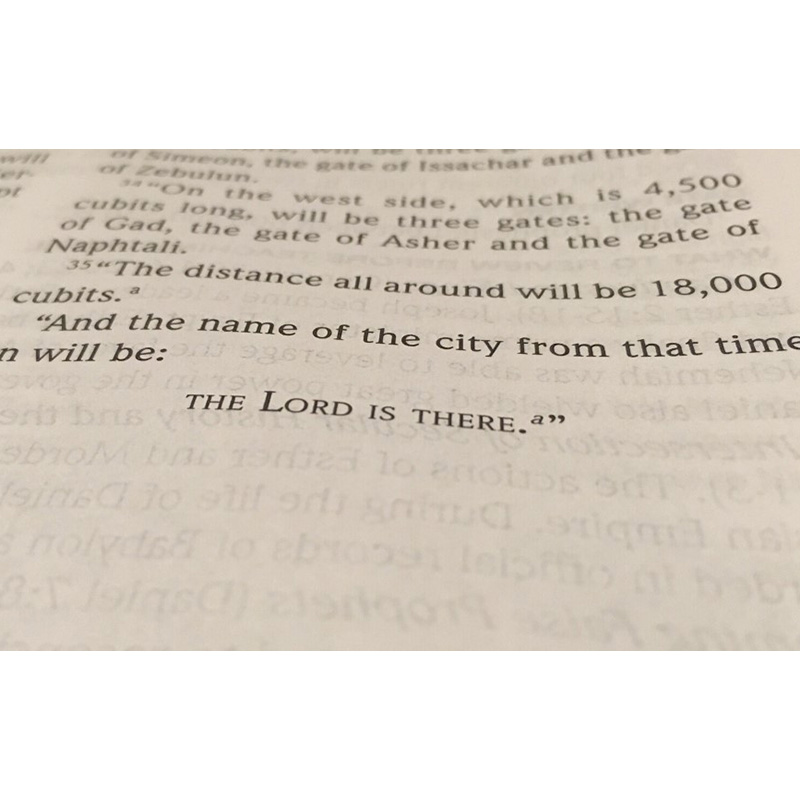
By Stuart Powell In the twenty-fifth year of our exile, at the beginning of the year, on the tenth day of the month, in the fourteenth year after the city was struck down, on this very day, the hand of the Lord was on me, and he brought me there. By means of divine visions he brought me to the land of Israel and placed me on a very high mountain, and on it was a structure like a city, to the south (Ezekiel 40:1, 2, New English Translation). In exile, Ezekiel measured the passing of time from two national
September 18, 2017

Dr. Mark Scott wrote this treatment of the International Sunday School Lesson. Scott teaches preaching and New Testament at Ozark Christian College, Joplin, Missouri. This lesson treatment is published in the September 17, 2017, issue of The Lookout magazine, and is also available online at www.lookoutmag.com. ______ By Mark Scott A chiasm (or chiasmus) is a literary device named after the Greek letter “chi,” which looks like an “X.” A chiasm is a crosswise arrangement writing style of words or concepts that repeats things in reverse order to achieve memory and emphasis. The main idea occurs at the point at which the lines cross.
June 13, 2016
Dr. Mark Scott wrote this treatment of the International Sunday School Lesson. Scott teaches preaching and New Testament at Ozark Christian College, Joplin, Missouri, and has held preaching ministries in Missouri, Illinois, and Colorado. This lesson treatment is published in the June 12 issue of The Lookout magazine, and is also available online at www.lookoutmag.com. ______ By Mark Scott Have you ever considered God in the role of a tailor? He knows about making something out of remnants””and so did the prophet Zephaniah. Jeremiah, Habakkuk, and Zephaniah formed the triad of prophets whom God used to prepare his people for Babylonian captivity. But way before
August 17, 2015
This treatment of the International Sunday School Lesson is written by Sam E. Stone, former editor of CHRISTIAN STANDARD. It is published in the August 16 issue of The Lookout magazine, and is also available online at www.lookoutmag.com. ______ By Sam E. Stone The people of Israel were taken captive to Babylon. After 70 years, God allowed a remnant of his people to return to the promised land. There they set about to rebuild the temple. Although this effort began with much excitement and devotion, the project slowed considerably (Haggai 1). The Lord sent Haggai and Zechariah as prophets to encourage the people to
By Neal Windham Jesus” last supper was almost surely some sort of Passover meal. It was eaten at night while in Jerusalem, as custom would have it. Our Lord likely explained the meal”s key features, much as Jewish fathers would have done for their own children, though in Jesus” case the symbolism was developed in new and astonishing ways. “This is my body,” he said, “my blood.” More than this, Jesus ended the meal with a hymn, as was also customary at Passover, and celebrated it with his new “family,” the disciples, a Passover tradition dating to the time of
July 22, 2013
By Sam E. Stone Today”s lesson is the last of five studies in the life and ministry of the respected Old Testament leader Ezra. In the book that bears his name, he describes how the Jews came to return to Israel from their Babylonian captivity. Ezra includes seven official documents or letters, in addition to his own memoirs. Especially striking is the prominence of Levites and temple personnel. When Ezra realized that no Levites were among those committed to return with him, he sent a delegation to a nearby area (Kasiphia) to recruit some. They were to “bring attendants to
July 8, 2013
By Sam E. Stone Worship with both song and sacrifice was once again practiced by the people of Israel after their return to the promised land. Ezra, a famous priest and scribe, tells us of the event. In Ezra 4 he describes the opposition faced by the Jews as they worked to rebuild the temple. Chapters 5 and 6 record their eventual success. Today”s printed text highlights the dedication of the rebuilt temple in Jerusalem. Herbert Lockyer described Ezra this way: “He conducted the Jewish exiles back to Jerusalem in peace and safety, and establishing himself as their leader, reformed
June 24, 2013
By Sam E. Stone Continuing this quarter”s theme, “God”s People Worship,” we now turn from Isaiah to two other helpful resources””the books of Ezra and Nehemiah. Along with the book of Esther, these two writings form the closing section of Old Testament history. They tell of the Jews” return from Babylon, the rebuilding of the temple and Jerusalem, and the reestablishment of life in their homeland. J. Stafford Wright observes, “It is possible that sacrifices had been offered at times on the temple site during the exile (compare Jeremiah 41:5). But the purpose now was to reinstate the divinely prescribed

April 7, 2026
John B. Penrose Jr

April 7, 2026
David Faust

March 27, 2026
Rick Cherok