We Can Agree on Some Things About Elders
A reflection on elders who quietly shepherd, encourage their preacher, and serve without pretense. Even amid differing conclusions, the church still needs humble leaders who protect and support the local flock.

Year of the Elder: Humble Elders Who Shepherd the Flock
This reflection highlights elders who quietly serve, encourage their preacher, and tend God’s people with steady love. It also acknowledges that churches will differ on practical questions, even among those committed to Scripture. The enduring need is for humble shepherds who help the church reflect Christ in its community.
- Elders lead best through humble service and faithful shepherding.
- Scripture-committed leaders may still disagree on important practices.
- The local church still needs steady elders who protect and support the flock.
Serving as Shepherds
The elders described by Bob Wetzel and Roy Lawson this week seemed sure about what they were supposed to be doing.
They didn’t need a Greek scholar to explain shepherd.
They didn’t argue about who was “in charge” of their church; they just served it.
They didn’t wait to define differences between elders’ and the preacher’s role before they encouraged the preacher and interceded for him.
Without fanfare or pretense they simply tended the flock of God because they loved the Lord and they loved the flock.
The elders described here were a humble lot, like several who have written us since we announced the “Year of the Elder” in January. Eager to learn more and do better, they have nothing to prove, only an endless task to achieve: Prod people to maturity. Deflect the devil’s initiatives. Protect and support the local church so it can reflect Christ in their community.
Room for Discussion
To be sure, there are issues to discuss and controversies to resolve. We’re making plans to delve into some of them this year. In the process we’ll probably prove once again that not everyone will agree on everything; those with equal commitment to the authority of Scripture may end up with opposite answers to some questions.
When that happens, we need not doubt the reliability of Scripture or question the orthodoxy of one who sees things differently. (But we should question the infallibility of our own conclusions.)
- Some will decide the minister should be one of the elders; others will decide he should always be separate from them.
- Some will welcome the input of women in ways others can’t accept.
- Some will meet weekly for hours at a time; others will meet monthly and always get home well before bedtime.
- Some will conduct formal evaluations of a minister’s work; others will guide and counsel only one-on-one.
- Some will operate like a corporate board; others have never sat on a committee or task force to see how one should function.
Following the Example
We are inviting leaders among us to lend clarity and share ideas about issues like these. They will stimulate meaningful discussion with every “Year of the Elder” article we publish.
But while we gather and edit, and while readers discuss and decide to agree or disagree, the church will remain in need of elders like those described in this week’s articles. There’s something to say about their example. There’s more to accomplish in following it.

Author: Mark A. Taylor
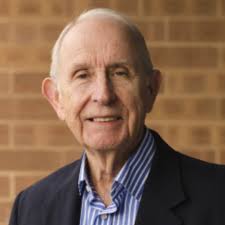
Mark A. Taylor, who served as Christian Standard editor from 2003 to 2017, retired in June 2017 after almost 41 years with Standard Publishing (Christian Standard Media).
Sponsored

For 160 years Christian Standard has served the churches of the Restoration Movement. Your gift keeps articles like this one free for every church leader.
Sponsored

Keep reading
More in Church Leadership


From the archive
Christian Standard has covered this since 1866.





