Communion Meditations Sponsored by …

Foolishness and Communion
What seems foolish in Communion reveals the wisdom and power of God. Tom Lawson reflects on how ordinary bread and the cup connect physical reality with the spiritual significance of Christ's sacrifice.
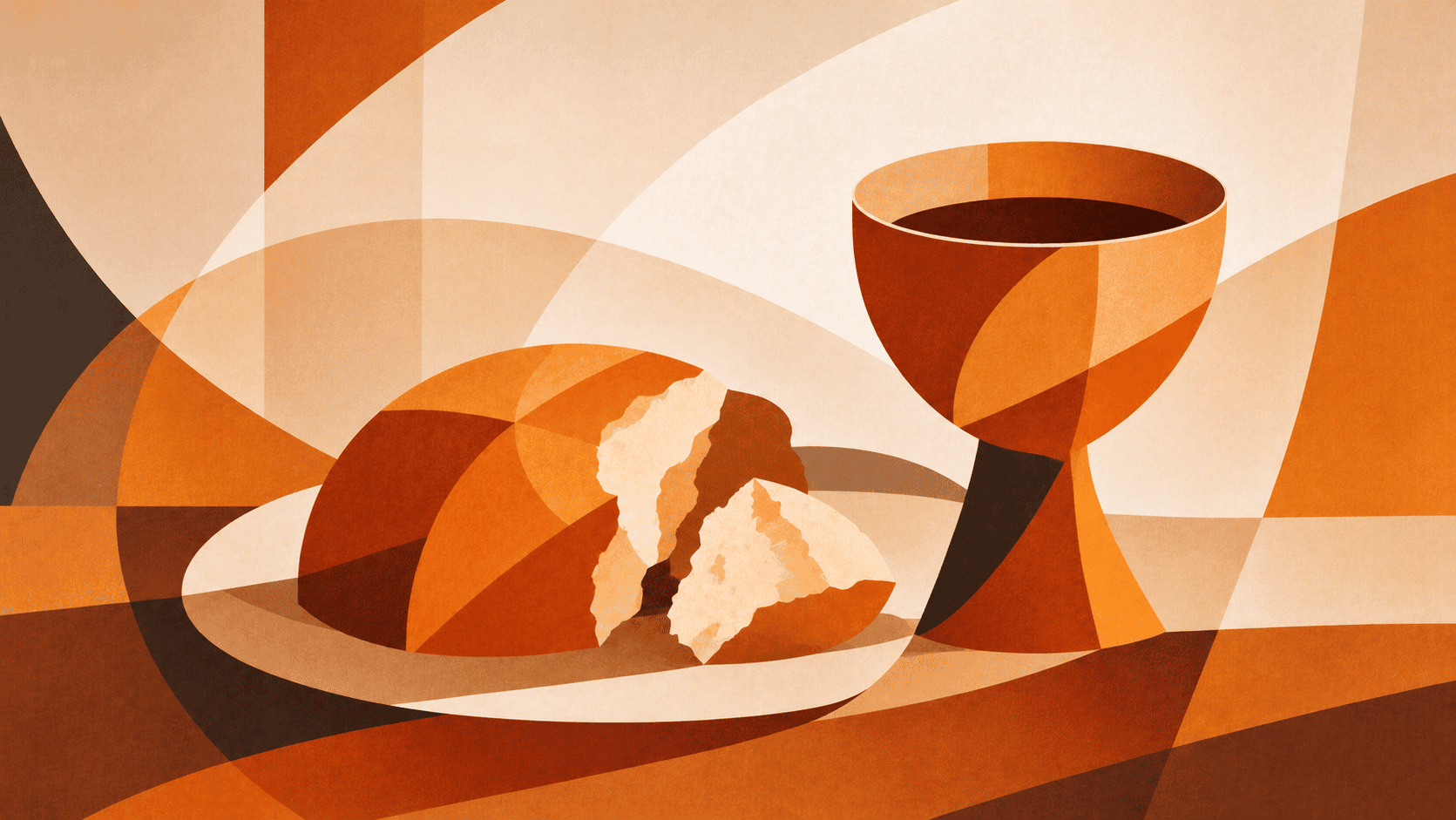
Foolishness of Communion: Discovering the Wisdom of the Cross
The foolishness of Communion reveals a profound connection between the physical and spiritual realities of Christ’s sacrifice. Reflecting on 1 Corinthians 1:18, Tom Lawson explores how ordinary bread and the cup point to God’s extraordinary work through the cross. Communion reminds believers that God’s power is not dependent on what we can see, feel, or fully understand.
- The message of the cross reveals God’s wisdom and power through what the world considers foolishness.
- Communion brings together physical elements and spiritual realities through the bread and the cup.
- God’s work through Communion does not depend on our ability to feel or fully understand what he is doing.
“For the message of the cross is foolishness to those who are perishing, but to us who are being saved it is the power of God” (1 Corinthians 1:18).
What could be more foolish than Communion—a little bread and grape juice or wine through which we are invited to experience Christ? Perhaps the only thing more foolish is saving the world with some wood, a few nails, and torn, bleeding flesh.
When the Physical and Spiritual Meet
 We like to make the chasm between the spiritual and the physical as clear as the difference between day and night. The unseen spiritual is all “up there” somewhere or inside our hearts—by which we never mean the muscle circulating blood. The spiritual is so separate we sometimes think of the two as opposing ideas. Spiritual equals good. Physical equals bad. Spiritual is about God. Physical is about secular, earthly things.
It is no wonder many believers find a good musical presentation about the cross, especially if accompanied by video, far more moving than eating small bits of bread and drinking a tiny amount of juice. After all, during the music our hearts, that unseen inside part of us, can be moved to reach out toward the equally unseen Spirit of God. Some suggest we skip the actual bread and cup, or at least incorporate them into a nice musical presentation.
Paul reminds us, however, that what seems like foolishness may be the wisdom and power of God. That actual crucifixion of Jesus had no moving music and lasted a grueling six hours. Wood, nails, and flesh stood there in visible reality. Yet God did something beyond understanding. I don’t think those watching actually felt it. I’m sure they didn’t understand it. But, there it was. Right in front of them. As clear as the difference between day and night, God was in Christ reconciling the world to himself.
In Communion, God is also doing something we may not always feel and will likely never fully understand. If the difference between spiritual and physical is like the difference between day and night, Communion is the merging of both. Communion, with the wood, nails, and flesh of Calvary, is the physical acting as a conduit for the spiritual.
Bread. Body. Cup. Blood. Communion. Christ.
Tom Lawson is a professor at Ozark Christian College in Joplin, Missouri.

Author: Tom Lawson
Sponsored
For 160 years Christian Standard has served the churches of the Restoration Movement. Your gift keeps articles like this one free for every church leader.
Keep reading
More in Theology & Bible



From the archive
Christian Standard has covered this since 1866.





