Communion Meditations Sponsored by …

Beauty in Brokenness
Brokenness and communion reveal the beauty of Christ's sacrifice. J. Michael Shannon reflects on broken bread, repentance, forgiveness, and how God's grace brings renewed joy and restoration to broken hearts.

Brokenness and Communion: Finding Beauty in Christ’s Sacrifice
Brokenness and communion come together in a powerful reflection on the broken bread and the sacrifice of Jesus Christ. J. Michael Shannon explores how broken things can reveal unexpected beauty, power, and joy. At the Lord’s table, believers are reminded that repentance, forgiveness, and God’s grace can transform broken hearts and restore their lives.
- The broken bread of communion reminds believers of Christ’s suffering and sacrifice for sin.
- Brokenness can reveal unexpected beauty, power, and joy when viewed through God’s grace.
- Repentance and forgiveness allow God to bring new life and restoration to broken hearts.
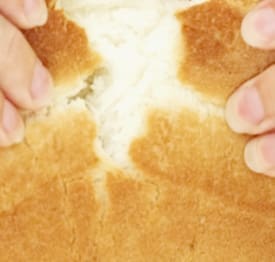
“While they were eating, Jesus took bread, gave thanks and broke it, and gave it to his disciples, saying ‘Take and eat; this is my body'” (Matthew 26:26).
At one time or another we all must deal with broken things. As children, we break toys. Later we deal with a broken car or a broken appliance. Occasionally we drop a cup or glass and it breaks. More significant is the certainty of broken relationships.
Broken things often tell a story of sorrow and disappointment, but there is also power and, occasionally, joy in what has been broken. Great power for good or ill can come from a broken atom. An archeologist may rejoice in the discovery of a broken jar.
Finding Beauty and Meaning in Broken Things
There is beauty in the broken. Broken pieces of glass can be placed in a kaleidoscope that, when held up to the light, brings great pleasure. An artist can take pieces of broken tile and create a mosaic masterpiece.
The Broken Bread of Communion and Christ’s Sacrifice
There are power, joy, and beauty in the broken elements we encounter at the Lord’s table. First, there is broken bread, the product of crushing grain, at the table. Often, as part of the service, we ceremonially break the bread. Behind that image is the broken body of Christ. His bones were not broken, but his body was broken by the thorns, spear, and nails. Can we also see the broken heart of Jesus as he died for our sins?
And here we can remember our own brokenness. Our hearts may be broken as we ponder our own sins and consider the price Jesus paid for their remission. Our broken hearts will lead us to repent and seek God’s grace. When our hearts are broken, God can bring new power to our lives. When we experience forgiveness, there is new joy in our lives. When our broken hearts are given to God, he can make our lives beautiful again.
We embrace brokenness and communion as essential parts of our spiritual journey.
Each act of brokenness and communion restores our faith and renews our spirit.
Through brokenness and communion, we are reminded of our shared humanity and connection to Christ.
The journey through brokenness and communion leads us closer to the heart of God.
In moments of brokenness and communion, we find opportunities for growth and healing.

Author: J. Michael Shannon
Sponsored
For 160 years Christian Standard has served the churches of the Restoration Movement. Your gift keeps articles like this one free for every church leader.
Keep reading
More in Theology & Bible


From the archive
Christian Standard has covered this since 1866.





