Starting at the Bottom
Jim Tune reflects on the profound mystery of the incarnation, exploring how Jesus humbled himself without ceasing to be God and why the wonder of Christ's coming should never become merely a familiar Christmas tradition.

Mystery of the Incarnation at Christmas: God Begins at the Bottom
The mystery of the incarnation at Christmas is the focus of Jim Tune’s reflection on God the Son taking on human flesh. Drawing from Philippians 2:7, Colossians 2:9, and a quotation from John Calvin, Tune explores how Jesus humbled himself without ceasing to be God. He encourages believers to approach the incarnation with enduring wonder rather than treating it as an elementary teaching revisited only during Christmas.
- The incarnation deserves lifelong reflection, not just an annual place in Christmas celebrations.
- Jesus humbled himself and took on human flesh without surrendering his essential deity.
- The union of divine and human nature in Christ invites awe, worship, and deeper contemplation.
Most religions begin “at the top,” but Christianity begins “at the bottom.” The mystery of the incarnation should stir our hearts every day. Much of what we learn about the incarnation we learn as children and revisit annually during the Christmas season. I wonder if we are ever guilty of treating the incarnation as a beginner’s doctrine: a nice opportunity to do something for the children and invite our friends to church.
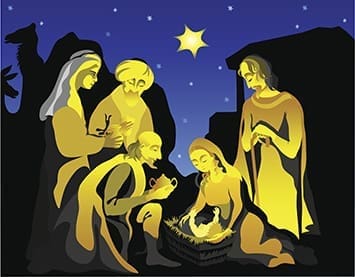
The remarkable union of God and man in the incarnation is no minor point of theology. God the Son took on flesh and dwelt among us—to make God known, to draw people to him, and to take away the sin of the world. The shepherds fell on their faces in awe. The Magi surrendered their most treasured gifts. Angels watched, scratching their heads in wonder, and so should we! We should never outgrow thoughts of the incarnation, as if we could grow beyond it in order to contemplate deeper things.
Jesus’ Humility and Divine Nature
When I think about the incarnation, I can’t help but reflect on the risky, vulnerable nature of Jesus, the creator, beginning at the bottom. Yet, while never ceasing to be God, Jesus “made himself nothing” (Philippians 2:7). I agree with many biblical scholars who contend this was not a voiding of his essential deity. It was a self-willed emptying, consisting of Jesus’ refusal to employ all divine abilities at his disposal; it was not an emptying or a subtraction from the Godhead.
When we read Colossians 2:9—”For in Christ all the fullness of the Deity lives in bodily form”—the bewildering miracle of incarnation widens. The baby Jesus, who was wrapped in swaddling clothes, lying in a manger, was also omnipresent Lord of the universe. John Calvin explained this astounding mystery in a way that captured the wonder of it all:
For even if the Word in his immeasurable essence united with the nature of man into one person, we do not imagine that he was confined therein. Here is something marvelous: the Son of God descended from heaven in such a way that, without leaving heaven, he willed to be borne in the virgin’s womb, to go about the earth, and to hang upon the cross; yet he continuously filled the world even as he had done from the beginning!
The Wonder of God Becoming Human
This supposes that God’s incarnation in Christ was not an exit from Heaven so much as a descent. The beginner of the universe began at the bottom. Mystery. Beauty.
Veiled in flesh the Godhead see,
Hail, the incarnate deity
Pleased as Man with men to dwell,
Jesus, our Emmanuel.
Hark! the herald angels sing,
“Glory to the New-born king!”
—”Hark the Herald Angels Sing,” words by Charles Wesley

Author: Jim Tune
Sponsored

For 160 years Christian Standard has served the churches of the Restoration Movement. Your gift keeps articles like this one free for every church leader.
Sponsored

Keep reading
More in Theology & Bible



From the archive
Christian Standard has covered this since 1866.





