Communion Meditations Sponsored by …

Let Us Celebrate
Why is every Sunday a holy day? Rick Chromey explores the Lord's Supper as a memorial, connecting America's traditions of remembrance with Jesus' Passover meal and the enduring significance of Communion.

The Lord’s Supper as a Memorial: Why Every Sunday Is a Holy Day
The Lord’s Supper as a memorial reminds Christians that remembering Jesus’ sacrifice is central to their weekly worship. Rick Chromey compares America’s many holidays with the meal Jesus established during Passover. He reflects on how Communion connects generations of believers through remembrance, gratitude, and celebration.
- Holidays help people remember important individuals, events, and shared history.
- Jesus used the Passover meal to establish a lasting remembrance of his sacrifice.
- Communion unites Christians across generations as they remember Jesus together.
Every culture has holidays, but few sanctify more special days than Americans. Perhaps it’s because we embrace our past as good and godly. Perhaps it’s because we hunger for any reason to party or get a day off. Or perhaps it’s because we need another special day to capitalize on our consumerism.
Regardless of the reason, Americans celebrate famous people like Martin Luther King Jr., St. Patrick, and Columbus. We memorialize Mondays into three-day weekends to rest from our labor. We throw parties on July 4, October 31, and December 31. We love to give thanks around turkey, football, and reruns of Miracle on 34th Street. We particularly relish chocolate holidays like Christmas, Valentine’s Day, and Easter, but won’t forget mother and father need their day, too.
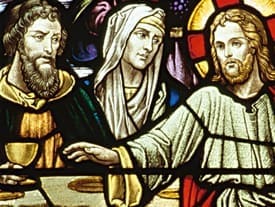
Remembering Jesus Through the Passover Meal
Of course, designating a day as holy, or set apart, is nothing new. It’s how we get the word holiday in the first place. Americans simply have learned how to make a buck off most cultural celebrations (and that’s nothing new, either). Ultimately, we create holy days to remember a person, event, or thing. We don’t want to forget how we got here, who made us who we are, or why we fought.
Consequently, it’s no surprise Jesus used the ancient Jewish holiday of Passover to celebrate his life. He built a memorial around a meal of Exodus and then chose to recline and rest. Jesus lifted the cup of wine and gave thanks, revealing this drink as a new blood covenant. He broke the bread with gratitude and grace, teaching its brokenness was his body. Jesus was the ancient Passover lamb. He was the blood painted on the doorframe. He was their Moses.
Jesus created a holiday to remember his sacrifice. “Do this in remembrance of me,” he told his disciples. And they did. And we still do, every Sunday, set apart time to reflect, recall, and rewind.
Communion: A Weekly Memorial of Christ’s Sacrifice
For Christians, every Sunday is a holy day and this meal is the glue that connects generations of believers, globally, for all time. It’s our Memorial Day, Thanksgiving, and Easter all rolled into one.
Come, let us celebrate.
Rick Chromey is a motivational speaker, writer, and online professor with Hope International University, Fullerton, California.
Ultimately, The Lord’s Supper as a Memorial is a celebration of life, love, and sacrifice.
Thus, every time we partake, we acknowledge that The Lord’s Supper as a Memorial is vital to our faith journey.
The Lord’s Supper as a Memorial emphasizes the importance of unity among believers.
Moreover, The Lord’s Supper as a Memorial invites us to reflect on our faith and community.
In the context of the church, The Lord’s Supper as a Memorial is not just a ritual but a profound act of remembrance.
The Lord’s Supper as a Memorial serves to deepen our connection with Jesus every week.

Author: Rick Chromey
Dr. Rick Chromey is the founder and president of MANNA! Educational Services International. and the author of GenTech: An American Story of Technology, Change and Who We Really Are (Morgan James, 2020).
Sponsored
For 160 years Christian Standard has served the churches of the Restoration Movement. Your gift keeps articles like this one free for every church leader.
Keep reading
More in Theology & Bible



From the archive
Christian Standard has covered this since 1866.





